
Seamless Square Tube & Round-to-Square Conversion
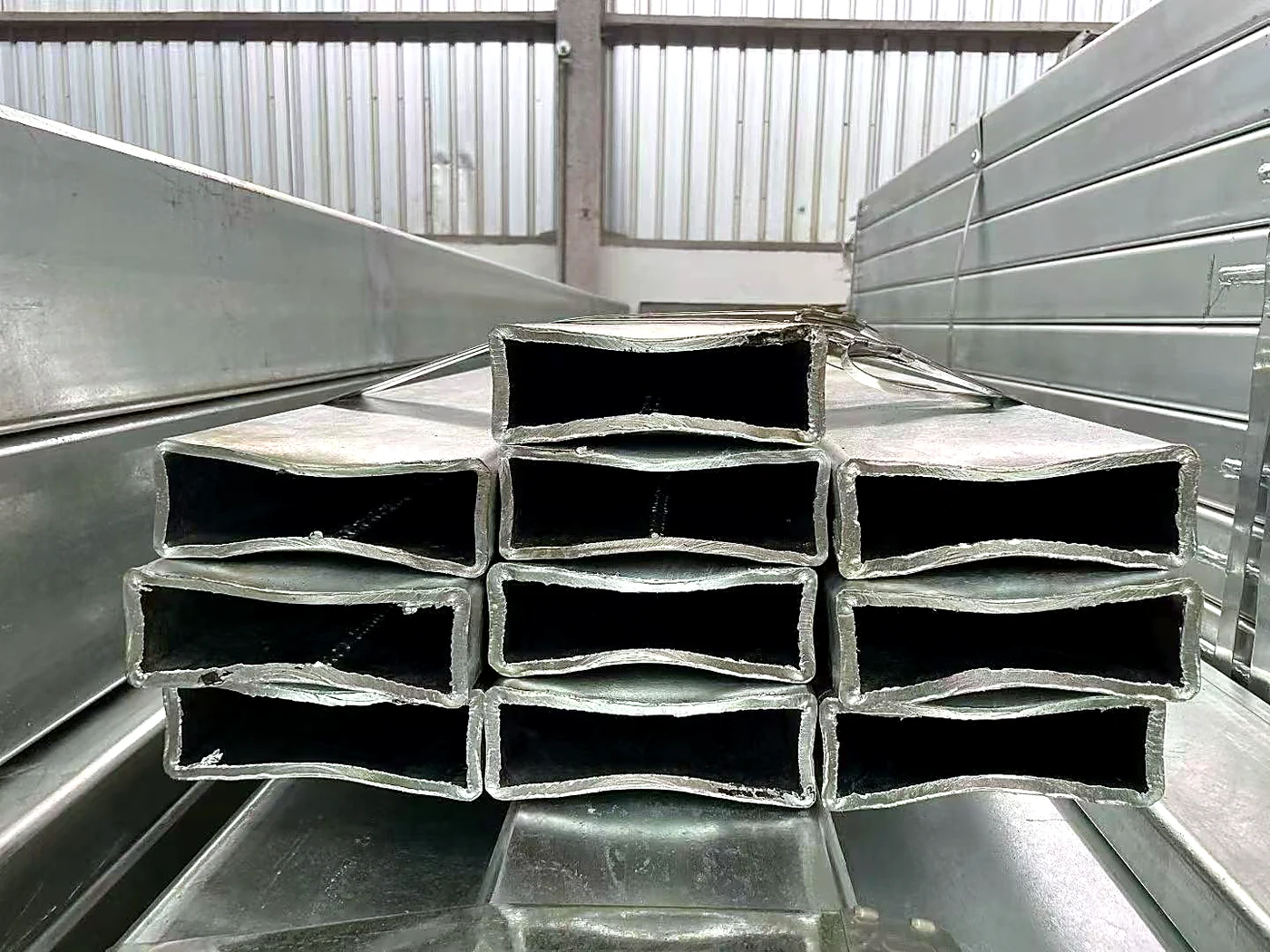
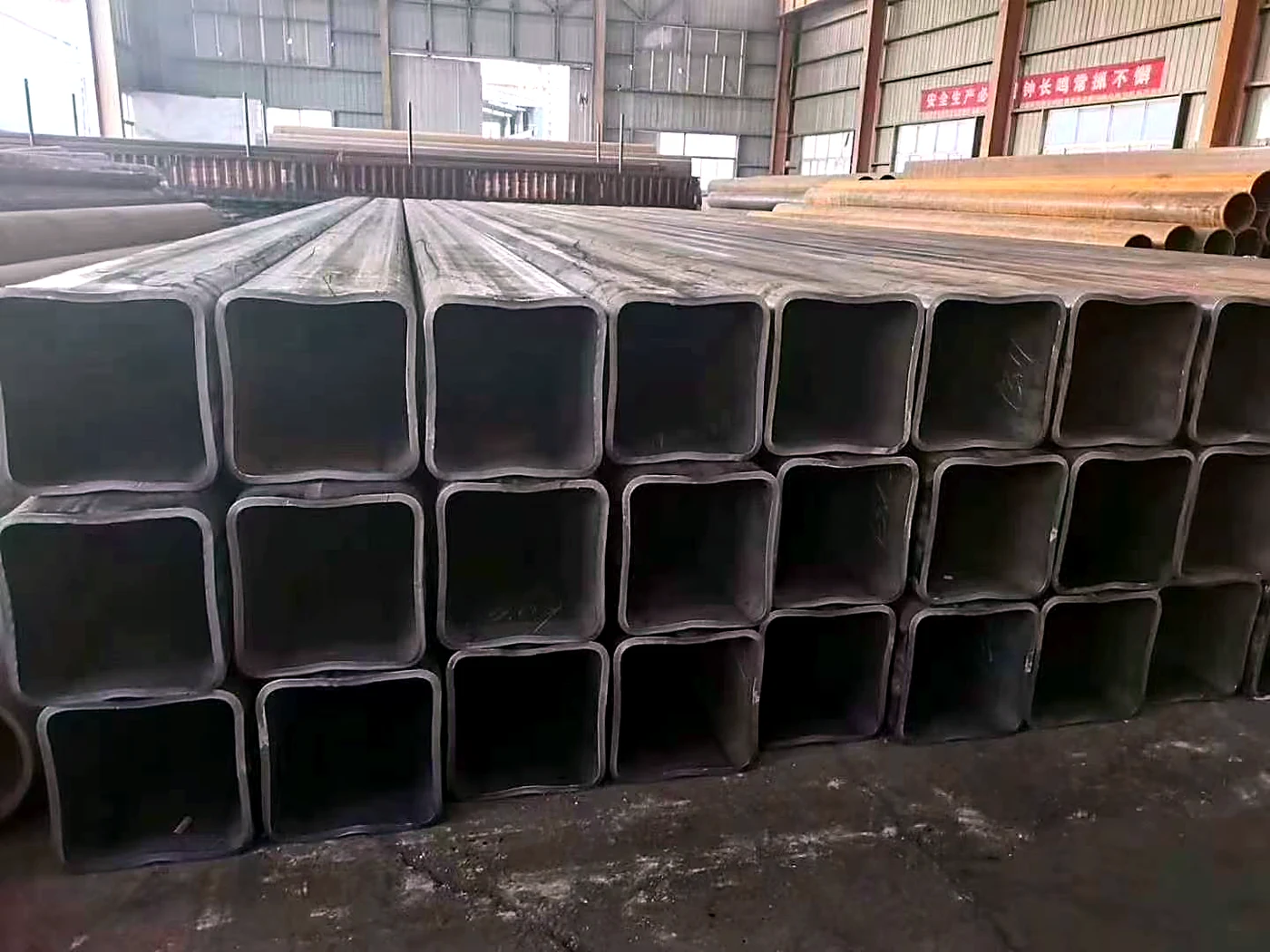
Seamless square and rectangular tube produced by reshaping a seamless round pipe, so there is no weld seam anywhere in the section. From 20×20 mm to 300×300 mm with 2 mm to 20 mm walls, in 20# and A106 Gr.B equivalent material, for pressure, fatigue and precision frame work.
Product Overview
Ordinary square tube is formed from strip and always carries a longitudinal weld seam. A seamless square tube starts from a seamless round pipe and is then converted to a square or rectangular section — the process known as round-to-square conversion — by heating the pipe and pushing it through a square die, or by cold drawing and rolling the section to shape. The result is a tube with no weld seam in the wall, so the wall is homogeneous all the way round.
Why does that matter? A weld seam is a real discontinuity. In pressure service the seam is the first place to fail; in fatigue service a seam can act as a crack initiator; and in precision work the seam disturbs the even wall thickness and the internal surface that a hydraulic cylinder or a machine frame depends on. Where a square section has to carry pressure, take a reversing load, or hold tight dimensional accuracy, the seamless route is the correct choice.
We supply seamless square tube from 20×20 mm to 300×300 mm with wall thicknesses from 2 mm to 20 mm, in 20# quality carbon steel (equivalent to AISI 1020 and close to A106 Gr.B) and in A106 Gr.B where the elevated-temperature specification is required. Standard lengths are 6 m, and cut-to-length, machined-end and honed-bore options are quoted on request.
Specifications & Size Range
Common seamless square and rectangular sections produced by round-to-square conversion. Wall thickness can be held evenly because the section is formed from a seamless pipe rather than from strip. Sizes outside the range and heavy walls are made to order.
| Section type | Common sizes (mm) | Wall thickness (mm) | Standard length | Typical use |
|---|---|---|---|---|
| Seamless square | 20×20, 25×25, 30×30, 40×40, 50×50 | 2.0 – 5.0 | 6 m, cut to order | Hydraulic and pneumatic components, precision frames, machine guards |
| Seamless square | 60×60, 70×70, 80×80, 100×100 | 3.0 – 8.0 | 6 m, cut to order | Cylinder bodies, press frames, heavy machine structures |
| Seamless square | 120×120, 150×150, 200×200, 250×250, 300×300 | 5.0 – 20 | 6 m, cut to order | Heavy machinery, crane and excavator structures, process plant |
| Seamless rectangular | 30×50, 40×60, 50×100, 60×120 | 3.0 – 8.0 | 6 m, cut to order | Cylinder and valve bodies, hydraulic manifolds, guide frames |
| Machined / honed | Any size above | as ordered | to drawing | Honed-bore cylinder tube and precision-cut members to length |
Tolerances
Dimensions and wall thickness follow the referenced seamless pipe standard for the base material and the conversion drawing for the finished section. Because the section is formed from a seamless pipe, wall thickness is held evenly around the periphery and there is no seam thickening. Bore concentricity and wall uniformity are checked after conversion, and mechanical properties are reported on the mill certificate for the base heat.
Steel Grades & International Equivalents
All grades below are supplied with a mill test certificate. The right-hand column shows the material type and the Chinese standard the grade is produced to; the middle columns give the nearest recognised equivalent in other national standards. Exact equivalence for a specific project should be confirmed on the enquiry.
| GB (China) | ASTM / AISI (US) | EN (Europe) | JIS (Japan) | DIN (Germany) | Type / Standard |
|---|---|---|---|---|---|
| 20# seamless (A106 Gr.B equivalent) | A106 Gr.B / A53 Gr.B | P235GH (EN 10216-2) | STPG370 (JIS G3454) | St37.0 | Seamless carbon steel pipe (GB/T 8163 / GB/T 3087) |
| 20# (20 carbon steel) | AISI 1020 / ASTM A29 1020 | C22 (EN 10083) | S20C (JIS G4051) | CK22 | Quality carbon structural steel (GB/T 699) |
Grade Notes
- 20# seamless (A106 Gr.B equivalent) — High-temperature service seamless pipe for steam, water and process lines. Supplied with mill test certificate.
- 20# (20 carbon steel) — Low-carbon quality steel with good weldability and cold formability. Standard material for seamless pipes, boilers and machined parts.
Chemical Composition (%, ladle analysis)
Typical specification limits. Actual heat values are reported on the mill test certificate supplied with every shipment.
| Grade | C | Si | Mn | P max | S max | Other elements |
|---|---|---|---|---|---|---|
| 20# seamless (A106 Gr.B equivalent) | ≤0.30 | ≥0.10 | 0.29–1.06 | ≤0.035 | ≤0.035 | — |
| 20# (20 carbon steel) | 0.17–0.24 | 0.17–0.37 | 0.35–0.65 | ≤0.035 | ≤0.035 | — |
Mechanical Properties
Minimum values at room temperature unless stated. ReL = yield strength; Rp0.2 = 0.2% proof stress; Rm = tensile strength; A = elongation after fracture.
| Grade | Yield (ReL) | Proof (Rp0.2) | Tensile (Rm) | Elongation A | Impact / others | |
|---|---|---|---|---|---|---|
| 20# seamless (A106 Gr.B equivalent) | ≥240 MPa | — | ≥415 MPa | ≥22% | — | — |
| 20# (20 carbon steel) | ≥245 MPa | — | ≥410 MPa | ≥25% | — | — |
Standards & Documents
- GB/T 8163 — seamless steel pipes for liquid service, base pipe specification
- GB/T 3087 — seamless steel pipes for low and medium pressure boilers
- ASTM A106 Gr.B — seamless carbon steel pipe for high-temperature service
- GB/T 699 — quality carbon structural steels, covering 20# base material
- GB/T 6728 — cold-formed hollow steel sections, applied to the converted section where relevant
- EN 10204 3.1 mill test certificate for the base heat; hydrostatic test and ultrasonic wall check on request
Typical Applications
| Industry / Application | Typical use |
|---|---|
| Hydraulic & pneumatic cylinders | Cylinder bodies and rod housings that must hold pressure and bore accuracy with an even wall and no seam to distort under load. |
| High-pressure process piping | Square-section pressure components, manifolds and jacketed assemblies where a weld seam would be a pressure or fatigue concern. |
| Petrochemical & heat-exchanger parts | Heat-exchanger tube bundles, reactor internals and structural parts exposed to elevated temperature and corrosive media. |
| Heavy machinery & construction equipment | Excavator and crane structural members, crusher frames and mining equipment where reversing loads quickly find a weld defect. |
| Power plant & boiler components | Boiler pressure parts, superheater supports and steam line components in A106 Gr.B material for higher-temperature service. |
| Precision machine frames | Machine tool beds, gantries, test rigs and instrument frames where straightness, even wall and a clean internal surface are specified. |
| Specialist structural members | Corner columns, slender compression members and architectural frames where the customer specifies a seamless section for engineering reasons. |
Common Problems Buyers Face — and How We Prevent Them
These are the issues that most often cause claims on steel imports. Each one is controlled in our process before shipment.
The square section is not uniform in wall thickness around the periphery
Why it happens: Conversion from a round pipe to a square section stretches the wall unevenly if the die, the temperature or the drawing pass is not controlled, leaving one face thinner than the opposite face.
Our control: Wall thickness is measured on all four faces after conversion and the section is rejected if the variation exceeds the agreed figure. For pressure or machined parts, specify the permissible wall variation on the enquiry so the acceptance rule is set before production, not after arrival.
The corner radius or internal surface is unsuitable for a machined part
Why it happens: Round-to-square conversion produces a defined corner radius, and a customer working from a square drawing may have assumed a sharp corner or a specific internal finish.
Our control: Send the drawing with the corner radius and the internal finish you need. We confirm what the conversion process produces, and where a tighter radius or a smoother bore is needed the member is machined or honed after forming.
Straightness is lost after conversion
Why it happens: The thermal cycle and the forming pass both introduce residual stress, and a long, thin-walled converted section will bow if the stress is not relieved.
Our control: Converted sections are straightened and inspected for straightness before despatch, and stress relief can be applied where the part will be machined. For long members, tell us the straightness figure the application really needs so we can choose between straightening and machining.
Fatigue cracking appears at a corner under a reversing load
Why it happens: Even a seamless section can crack at a corner if the conversion has left a sharp radius or a surface defect that acts as a stress raiser.
Our control: For fatigue-loaded components we specify controlled corner radii, inspect the formed surface, and can perform ultrasonic or dye-penetrant examination on the finished member. State the fatigue duty on the enquiry so the inspection level is matched to it.
Delivery documents show a round pipe heat and the customer questions the material
Why it happens: Seamless square tube is traceable to a round pipe heat because that is genuinely what it was made from, and the certificate therefore describes the base pipe rather than the finished square section.
Our control: The certificate is issued for the base heat with the conversion process described on the accompanying inspection document, so traceability is complete from pipe heat to finished section. If your quality system needs the converted section certified separately, tell us and we will add that inspection record.
Our Supply & Manufacturing Advantages
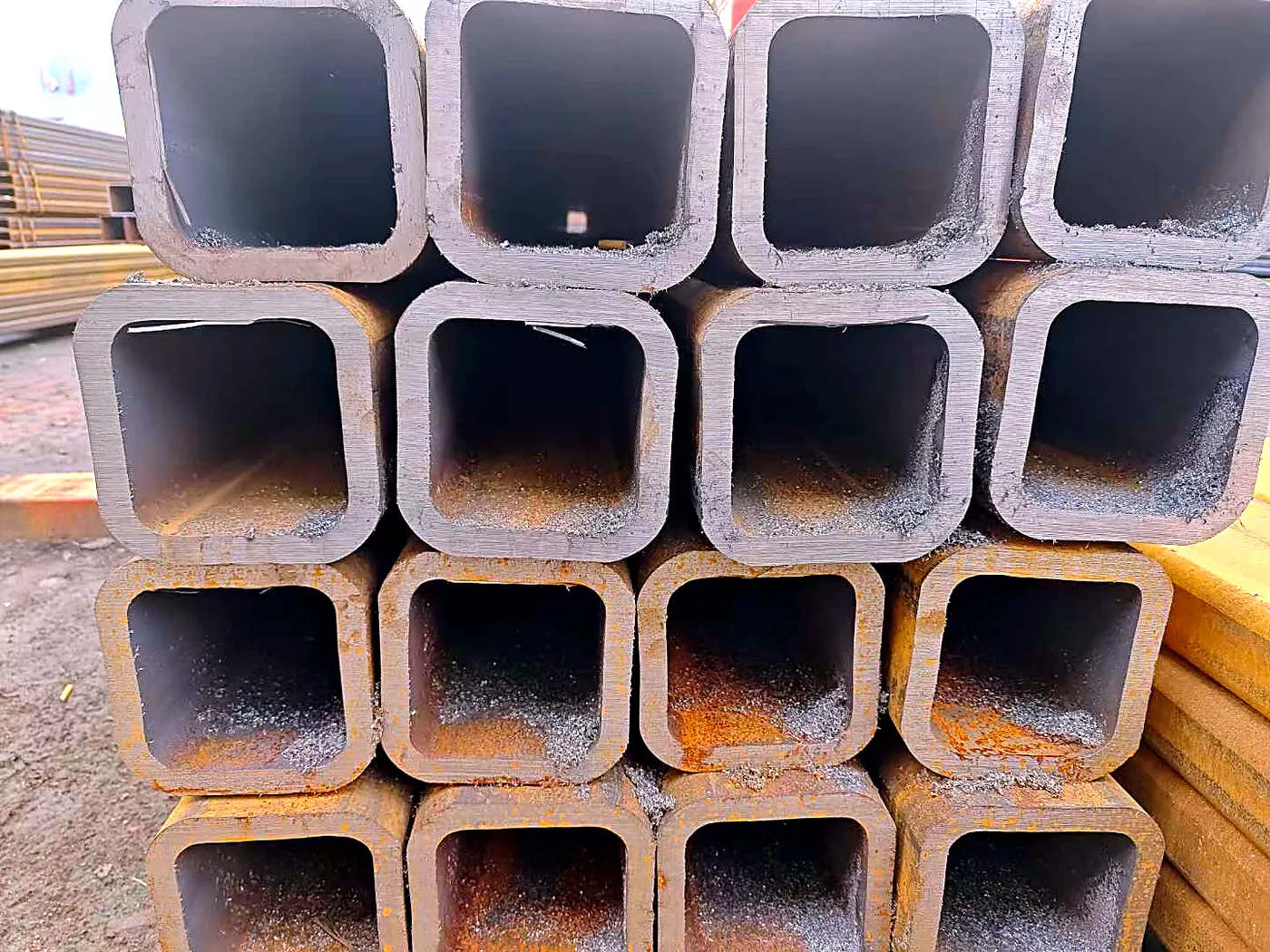
- No weld seam anywhere — The section carries no longitudinal weld, so there is no seam to fail in pressure service and no seam to act as a fatigue initiator.
- Even wall thickness — Formed from a seamless pipe, the section holds a substantially more uniform wall than a welded and squared section.
- Pressure and temperature capable — Base material to GB/T 8163, GB/T 3087 or ASTM A106 Gr.B, with hydrostatic testing and higher-temperature service in mind.
- Machining options — Cut to length, machined ends, honed bore and close-tolerance sections for cylinder and precision frame work.
- Two grades to suit the duty — 20# for general quality-carbon service and A106 Gr.B for elevated-temperature and pressure lines.
- Full traceability — Mill test certificate for the base heat plus the conversion inspection record, so the material can be traced from pipe heat to finished section.
Packaging, Delivery & Payment
- Packing: loose in bulk vessel, or bundled and containerised to your requirement. Galvanized and coated products get VCI paper, waterproof wrapping and edge protection. See our export packaging methods.
- Availability: both stock and custom production. Tell us the specification and we will confirm the route.
- MOQ: no strict minimum — one ton can ship.
- Lead time: stock dispatched to port within 3 days; orders needing export packaging about 1 week; custom production quoted per product.
- Payment: stock — 10% deposit, balance before shipment; custom production — 50% deposit, balance before shipment.
- Documents: EN 10204 3.1 mill test certificate with every shipment; third-party inspection (SGS / BV) on request.
Frequently Asked Questions
What is round-to-square conversion?
It is the process of turning a seamless round pipe into a square or rectangular section. The pipe is heated and pushed through a square die, or cold drawn and rolled to shape, so the wall is redistributed around the new profile without introducing a weld. The finished tube keeps the homogeneous, seamless wall of the original pipe.
What is the difference between seamless square tube and ordinary welded square tube?
Ordinary square tube is made from strip, welded along a seam and then squared, so it has a longitudinal weld in one face and is the economical choice for structures. Seamless square tube has no weld at all, holds an even wall, and resists pressure and fatigue far better. For normal building frames, welded square tube is the right product; for pressure or reversing-load duty, specify seamless.
What is the equivalent of ASTM A106 Gr.B seamless square tube?
20# to GB/T 699 is the closest Chinese equivalent to A106 Gr.B and is what we normally supply for that specification, with the pipe produced to GB/T 8163 or GB/T 3087. We can also supply material certified to A106 Gr.B itself where the project requires the ASTM certificate. Tell us which certificate the project will accept.
Which grade should I use for a hydraulic cylinder body?
Use 20# seamless square tube for general hydraulic and pneumatic cylinder bodies, or 45# where the component will be machined and hardened. For higher-pressure or higher-temperature service, A106 Gr.B is the appropriate specification. Send the working pressure, temperature and bore tolerance and we will confirm the grade and wall.
What pressure testing is carried out?
The base pipe can be hydrostatically tested to the applicable standard before conversion, and ultrasonic wall thickness checking is available to verify that the converted section has an even wall. Test reports travel with the shipment. State the test pressure and the standard on the enquiry so the testing is performed to your acceptance criteria.
How much wall thickness variation should I expect after conversion?
It depends on the size, the wall and the process route, and it is larger than the variation in the original round pipe because the material has to be redistributed around the square profile. We measure all four faces after conversion and report the figure. For machined or pressure parts, tell us the permissible variation so we can select the process that holds it.
Who supplies seamless square tube made by round-to-square conversion?
We do. Dayang supplies seamless square and rectangular tube to hydraulic equipment builders, machinery manufacturers and process plant contractors worldwide, in 20# and A106 Gr.B, with the conversion process and the inspection records documented for each order.
What is the minimum order quantity and lead time?
Because the section is produced by conversion rather than from stock, seamless square tube is normally made to order and the minimum quantity reflects that. Lead time is quoted with the price and is typically longer than for standard welded square tube. Send the size list and we will confirm both.
What documents are supplied?
An EN 10204 3.1 mill test certificate for the base pipe heat, an inspection record for the converted section covering dimensions and wall thickness, and hydrostatic or ultrasonic test reports where these have been specified. Commercial invoice, packing list and certificate of origin complete the shipping set.
Request a Quotation Export Packaging