
Cold-Drawn / Cold-Finished Round Bar (10#, 20#, 45#, Q235B)
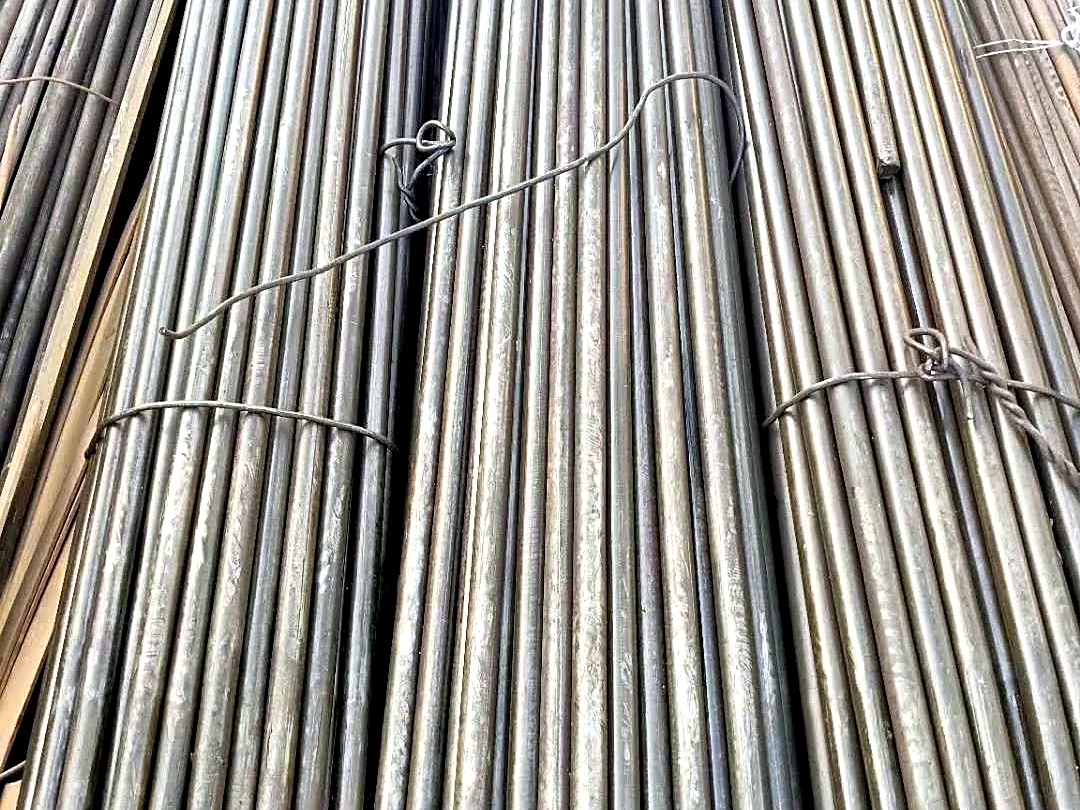
Cold-drawn round bar in bright, scale-free condition from 6 mm to 50 mm, in Q235B, 10#, 20# and 45#, to h11 as standard and h9 on request. Drawing through dies raises the strength by roughly 10 to 20 per cent over the hot-rolled parent bar while holding the diameter to about ±0.02 to 0.05 mm, so the bar goes to the machine with minimal roughing allowance.
Product Overview
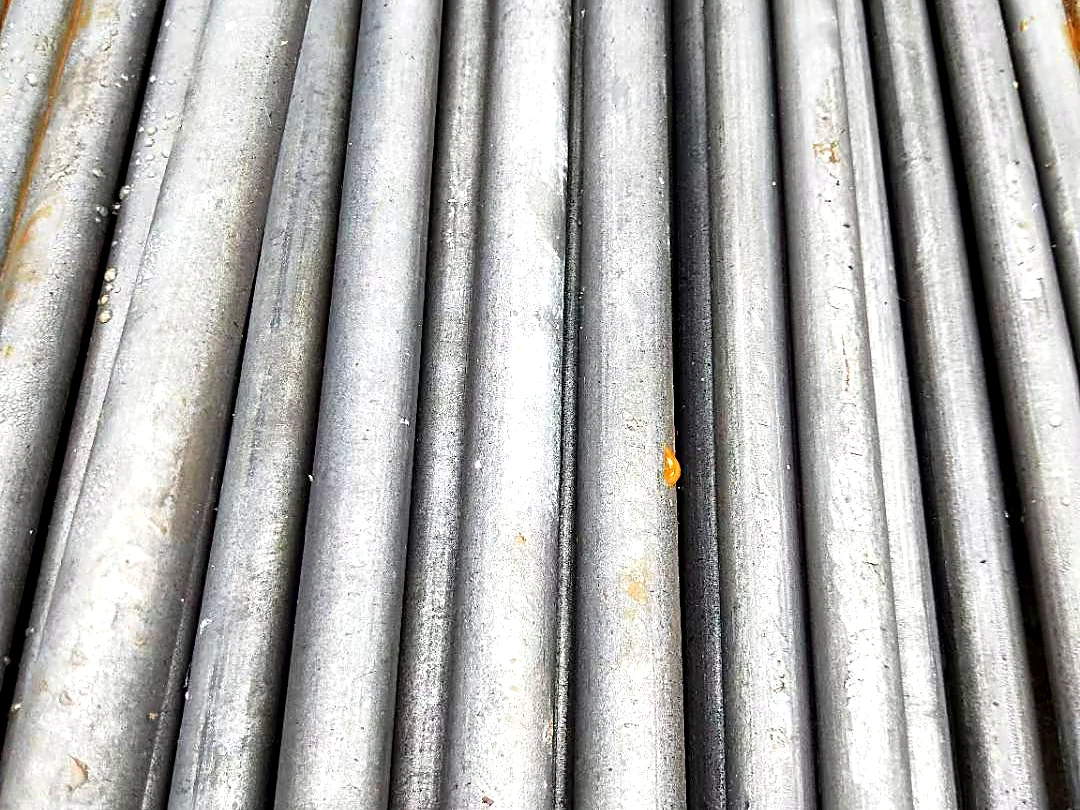
Cold-drawn round bar — also called cold-finished bar, bright bar or cold-reduced bar — is made by pulling a hot-rolled round bar through a die so that the diameter is reduced and the surface is sized. Two things follow from that. The bar comes out bright and free of the oxide scale that a hot-rolled bar carries, and the diameter is held to a close tolerance instead of a rolling tolerance. For a machined part that means less roughing, a shorter cycle time and less material turned into swarf, which is the whole reason cold-drawn bar is bought rather than ordinary black bar.
Cold drawing also work-hardens the steel, raising the tensile strength by roughly 10 to 20 per cent above the parent hot-rolled bar. That extra strength is useful in a shaft or a pin, but it matters for the machining process too: a cold-drawn bar is normally supplied in the annealed condition when it has to be machined heavily, and in the as-drawn condition when the strength is wanted. The bar can also be supplied straightened and cut to a fixed length, which removes the straightening operation from your own shop.
The grades we supply cover the usual range of duties. Q235B is the general structural grade in the group and is used where strength is not critical, such as brackets, frames and non-load-bearing parts. 10# and 20# are low-carbon quality grades with excellent cold formability and weldability, used for cold-headed and deep-drawn parts. 45# is the medium-carbon quality grade that responds well to quenching and tempering and is the standard choice for general-purpose shafts and machined components.
Specifications & Size Range
Diameter groups, grades, tolerances and the work each size is normally bought for. Cold-drawn bar from 6 mm to 50 mm is the standard range; larger sizes are normally supplied as peeled or turned bar rather than cold-drawn, because the drawing route becomes impractical.
| Diameter (mm) | Grade availability | Tolerance | Delivery length | Typical use |
|---|---|---|---|---|
| 6 / 8 / 10 | Q235B, 10#, 20#, 45# | h11 as standard, h9 on request | 3–6 m straight, or coil | Pins, small shafts, fasteners, hardware, gauges |
| 12 / 14 / 16 / 18 / 20 | Q235B, 10#, 20#, 45# | h11 as standard, h9 on request | 3–6 m straight | Motor shafts, pump shafts, valve stems, bolts |
| 22 / 25 / 28 / 30 | Q235B, 20#, 45# | h11 as standard, h9 on request | 3–6 m straight | Transmission shafts, hydraulic rods, spindles |
| 32 / 36 / 40 / 45 / 50 | 20#, 45# | h11 as standard, h9 on request | 3–6 m straight, cut to order | Heavy shafts, hydraulic piston rods, machined parts |
| Larger (to order) | 45# and alloy grades | on enquiry | cut to order | Large machined parts; normally supplied as peeled or turned bar |
Tolerances
Diameter tolerance is quoted in ISO 286 tolerance bands, with h11 as the standard for cold-drawn round bar and h9 available on request where a bearing fit or a precision shaft demands it. The diameter is typically held to about ±0.02 to 0.05 mm on the common sizes. Straightness, ovality and length tolerance are confirmed on the order acknowledgement, and a dimensional inspection record travels with the mill certificate.
Steel Grades & International Equivalents
All grades below are supplied with a mill test certificate. The right-hand column shows the material type and the Chinese standard the grade is produced to; the middle columns give the nearest recognised equivalent in other national standards. Exact equivalence for a specific project should be confirmed on the enquiry.
| GB (China) | ASTM / AISI (US) | EN (Europe) | JIS (Japan) | DIN (Germany) | Type / Standard |
|---|---|---|---|---|---|
| 10# | AISI 1010 | C10 (EN 10083) | S10C | CK10 | Quality carbon structural steel (GB/T 699) |
| 20# (20 carbon steel) | AISI 1020 / ASTM A29 1020 | C22 (EN 10083) | S20C (JIS G4051) | CK22 | Quality carbon structural steel (GB/T 699) |
| 45# (45 carbon steel) | AISI 1045 / ASTM A29 1045 | C45 (EN 10083) | S45C (JIS G4051) | CK45 | Quality carbon structural steel (GB/T 699) |
| Q235B | A36 / A283 Gr.C | S235JR (EN 10025-2) | SS400 (JIS G3101) | St37-2 | Carbon structural steel (GB/T 700) |
Grade Notes
- 10# — Very low carbon: excellent cold formability and weldability for deep-drawn and cold-headed parts.
- 20# (20 carbon steel) — Low-carbon quality steel with good weldability and cold formability. Standard material for seamless pipes, boilers and machined parts.
- 45# (45 carbon steel) — Medium-carbon steel for shafts, gears and axles. Responds well to quenching and tempering.
- Q235B — The workhorse structural grade in China. Fully weldable, excellent cost-performance, the closest Chinese equivalent to ASTM A36 / EN S235JR.
Chemical Composition (%, ladle analysis)
Typical specification limits. Actual heat values are reported on the mill test certificate supplied with every shipment.
| Grade | C | Si | Mn | P max | S max | Other elements |
|---|---|---|---|---|---|---|
| 10# | 0.07–0.14 | 0.17–0.37 | 0.35–0.65 | ≤0.035 | ≤0.035 | — |
| 20# (20 carbon steel) | 0.17–0.24 | 0.17–0.37 | 0.35–0.65 | ≤0.035 | ≤0.035 | — |
| 45# (45 carbon steel) | 0.42–0.50 | 0.17–0.37 | 0.50–0.80 | ≤0.035 | ≤0.035 | — |
| Q235B | ≤0.20 | ≤0.35 | ≤1.40 | ≤0.045 | ≤0.045 | — |
Mechanical Properties
Minimum values at room temperature unless stated. ReL = yield strength; Rp0.2 = 0.2% proof stress; Rm = tensile strength; A = elongation after fracture.
| Grade | Yield (ReL) | Proof (Rp0.2) | Tensile (Rm) | Elongation A | Impact / others | |
|---|---|---|---|---|---|---|
| 10# | ≥205 MPa | — | ≥335 MPa | ≥31% | — | — |
| 20# (20 carbon steel) | ≥245 MPa | — | ≥410 MPa | ≥25% | — | — |
| 45# (45 carbon steel) | ≥355 MPa | — | ≥600 MPa | ≥16% | — | — |
| Q235B | ≥235 MPa | — | 370–500 MPa | ≥26% | +20 °C, ≥27 J | — |
Standards & Documents
- GB/T 905 — cold-drawn round, square and hexagonal steel bars: dimensions, shape and tolerances
- GB/T 699 — quality carbon structural steels (10#, 20#, 45#)
- GB/T 700 — carbon structural steel (Q235B)
- ISO 286-2 — limits and fits, the basis of the h11 and h9 tolerance bands used on this product
- ASTM A108 / EN 10278 — cold-finished carbon steel bar and bright steel products (international comparison)
- EN 10204 3.1 mill test certificate plus a dimensional inspection record; SGS or BV third-party inspection on request
Typical Applications
| Industry / Application | Typical use |
|---|---|
| Motor, pump & gear shafts | Shaft blanks in 45# or 20#, where the bright surface and tight diameter mean the bar can be centred and turned with a small roughing allowance. |
| Hydraulic & pneumatic rods | Piston rods and cylinder rods, where straightness, roundness and a clean surface matter because the rod runs through a seal. |
| Fasteners & fittings | Bolts, studs, pins, rivets, valve stems and general fastener blanks, using 10# and 20# for cold heading and 45# for higher-strength parts. |
| Precision pins & spindles | Locating pins, dowels, spindles and small precision parts, where h9 tolerance and a bright finish reduce or remove the finishing operation. |
| Automotive & motorcycle parts | Piston pins, spring seats, steering components and transmission parts, supplied as rough machined blanks in 20# and 45#. |
| Agricultural & earth-moving machinery | Conveyor rollers, chain pins, linkage pins and wear parts, where 45# gives the strength and wear resistance the duty requires. |
| Textile, printing & general machinery | Rollers, guide rods, cams and general machine parts, where a consistent bright stock bar keeps setup time down across a batch. |
Common Problems Buyers Face — and How We Prevent Them
These are the issues that most often cause claims on steel imports. Each one is controlled in our process before shipment.
Bright bar arrives with rust or staining
Why it happens: Cold-drawn bar has no coating and a bare bright surface that oxidises quickly, so a humid voyage will leave a rust film on the outside of the bundle even if the core is clean.
Our control: Bar is supplied lightly oiled, wrapped and shipped dry with desiccant where the route or season makes condensation likely. Where a rust-free arrival is essential, we can supply oiled and wrapped bundles or discuss a temporary protective coating for the voyage.
Bar is out of round or not straight enough for the machine
Why it happens: Cold-drawn bar inherits some of the straightness of the parent hot-rolled bar, and ovality and bow can both be present if the drawing and straightening process is not controlled.
Our control: Bar is straightened after drawing and checked against the agreed straightness limit, which is confirmed on the order acknowledgement. If the bar has to run through a guide bush or a collet, tell us the straightness and roundness you can accept and we will quote against that rather than against a default.
Bar is too hard to machine cleanly
Why it happens: Cold drawing work-hardens the surface, and a bar supplied as-drawn in a medium-carbon grade can arrive harder than the tooling and the cycle time assume.
Our control: State the machining process on the enquiry. Where heavy machining is planned, we supply the bar in the annealed or normalized condition with a hardness limit stated on the certificate, so that the tool life and cycle time you planned are actually achieved.
Cost compared with hot-rolled black bar
Why it happens: Cold-drawn bar costs more per ton than hot-rolled bar because of the extra drawing, straightening and inspection operations.
Our control: The comparison that matters is cost per finished part, not cost per ton: cold-drawn bar cuts roughing time, reduces the diameter that has to be removed and lowers scrap. Where the part is not dimensionally critical, we will say so and quote the cheaper hot-rolled black bar instead.
The grade supplied does not match the drawing
Why it happens: Bright bar in different grades looks the same once the bundle tag is lost, and a substitution only shows up at heat treatment or at a strength test on the finished part.
Our control: Every bundle is tagged by grade and heat number, the mill certificate is matched to the tag through loading, and the grade is confirmed against your drawing on the order acknowledgement rather than assumed from the previous order.
Our Supply & Manufacturing Advantages
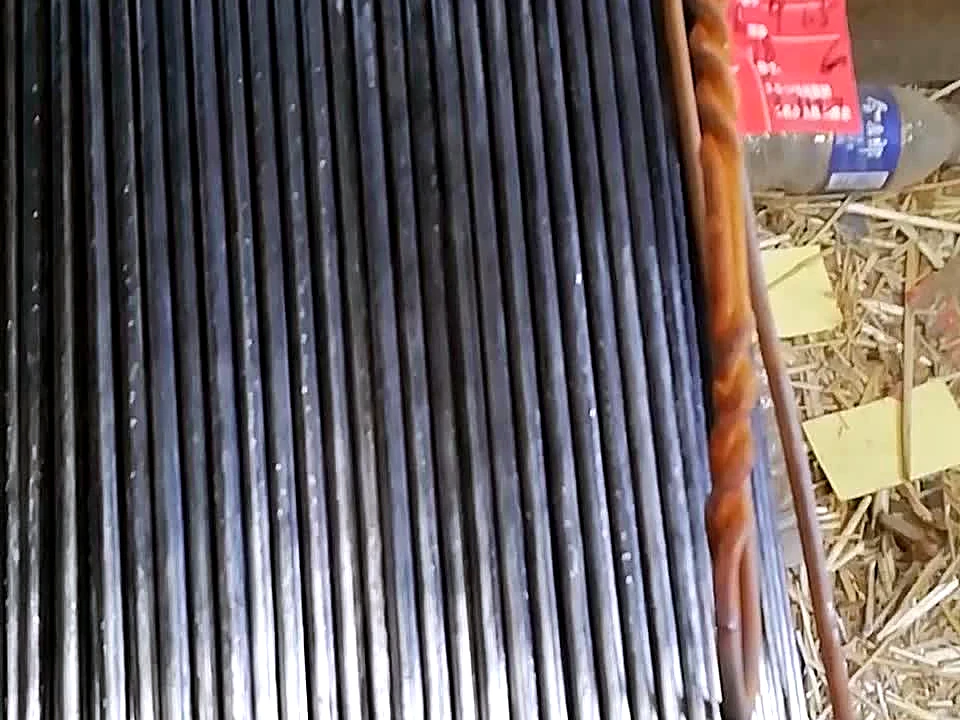
- Bright finish, tight diameter — Cold drawing gives a scale-free surface and an h11 diameter as standard, with h9 available when a precision fit or a guide bush demands it.
- Less machining per part — A tight, concentric bar reduces the roughing allowance, which shortens cycle time, cuts tool wear and reduces the material turned into swarf.
- Four grades from one supplier — Q235B, 10#, 20# and 45# in one order, so a machining shop can cover general parts, cold-headed parts and heat-treated shafts with one certificate set.
- Cut to your length — Bar can be cut to a fixed length before packing, which reduces offcut waste and freight weight and removes a sawing operation from your shop.
- Documented dimensions — An EN 10204 3.1 mill test certificate with composition and mechanical properties, plus a dimensional inspection record and, where required, a statement of the hardness condition.
- Grade equivalence support — Tell us the grade on your drawing (AISI 1010, 1020, 1045, C10, C22, C45) and we will nominate the Chinese grade and put the equivalence in writing before you commit to the order.
Packaging, Delivery & Payment
- Packing: loose in bulk vessel, or bundled and containerised to your requirement. Galvanized and coated products get VCI paper, waterproof wrapping and edge protection. See our export packaging methods.
- Availability: both stock and custom production. Tell us the specification and we will confirm the route.
- MOQ: no strict minimum — one ton can ship.
- Lead time: stock dispatched to port within 3 days; orders needing export packaging about 1 week; custom production quoted per product.
- Payment: stock — 10% deposit, balance before shipment; custom production — 50% deposit, balance before shipment.
- Documents: EN 10204 3.1 mill test certificate with every shipment; third-party inspection (SGS / BV) on request.
Frequently Asked Questions
What is the Chinese equivalent of AISI 1045 round bar?
AISI 1045 corresponds to the Chinese grade 45# to GB/T 699. The two are close in carbon and manganese content and in tensile strength, and 45# is normally supplied in the annealed condition for machining. If your drawing calls out AISI 1045 with a hardness limit, send us the limit and we will confirm that the 45# we ship will meet it rather than leaving the comparison at the grade name.
What is the Chinese equivalent of AISI 1010 and AISI 1020?
10# to GB/T 699 is the usual comparison for AISI 1010 and 20# for AISI 1020. Both are low-carbon quality grades, but the choice between them is usually driven by the forming operation rather than by the strength: 10# is very low carbon and is used for deep-drawn and heavily cold-headed parts, while 20# gives more strength with still-good weldability and is used for general machined and cold-formed components.
What is the difference between cold-drawn round bar and hot-rolled round bar?
Hot-rolled bar is produced at temperature, so it carries mill scale, has a wider diameter tolerance and is cheaper per ton. Cold-drawn bar is pulled through a die afterwards, which removes the scale, tightens the diameter to an h11 or h9 band and raises the strength by roughly 10 to 20 per cent. The practical question is whether the part needs that accuracy: if it does, cold-drawn bar saves machining time and material; if it does not, hot-rolled black bar is the more economical choice.
Which grade should I choose for a machined shaft?
For a general-purpose shaft use 45# cold-drawn bar, normally supplied annealed and then quenched and tempered after machining. For non-critical parts such as brackets, guards and frames, Q235B is adequate and cheaper. For parts that will be cold-headed, bent or deep-drawn before machining, choose 10# or 20# because they retain the ductility those operations need. If you send us the drawing and the heat-treatment you plan, we will confirm the grade and the delivery condition.
What tolerance can you hold on cold-drawn bar?
h11 is the standard tolerance band for cold-drawn round bar and h9 is available on request where a bearing fit, a guide bush or a precision shaft demands it, with the diameter typically held to about ±0.02 to 0.05 mm on the common sizes. The band you order is stated on the order acknowledgement and a dimensional inspection record is supplied with the mill certificate so the tolerance can be verified at receiving inspection.
Can you supply the bar in a soft condition for machining?
Yes. Where heavy machining is planned, the bar can be supplied in the annealed or normalized condition with a hardness limit stated on the certificate, so that the tool life and cycle time you have planned are achievable. Tell us the machining process and the hardness you need at the enquiry stage, because the delivery condition changes the price and the lead time.
What lengths are cold-drawn round bar supplied in?
The standard supply is 3 m to 6 m straight lengths, depending on diameter, with cut-to-length available to your own list. Small diameters can also be supplied in coil where a machine will feed from a coil rather than from a bar. Length tolerance and straightness on cut lengths are confirmed on the order acknowledgement.
What is your minimum order quantity and lead time?
There is no strict minimum order quantity and a trial shipment of one ton is possible. Stock sizes in the standard range reach the port within about 3 days; bar that has to be drawn to an h9 tolerance, annealed to a hardness limit or cut to a fixed length takes about one week. Send the drawing and the quantity and we will confirm which is achievable.
Who supplies cold-drawn round bar from China?
We supply cold-drawn round bar in Q235B, 10#, 20# and 45# from 6 mm to 50 mm, to h11 as standard and h9 on request, in the as-drawn or annealed condition, with an EN 10204 3.1 mill test certificate and a dimensional inspection record. Bar can be cut to your length before shipment. Send the drawing, the grade, the tolerance and the tonnage and we will confirm the price and the delivery schedule.
Request a Quotation Export Packaging