
Cold-Drawn Steel Wire (Cold-Drawn Low-Carbon Wire)
Cold-drawn low-carbon steel wire produced by pulling hot-rolled wire rod through reducing dies, giving a bright, scale-free surface, a diameter tolerance of about ±0.02 mm and a tensile strength roughly 40 to 60 per cent above the parent rod. Supplied in coils or straight cut lengths, with the standard range from 1.5 mm to 6 mm and heavier wire up to 12 mm produced to order.
Product Overview
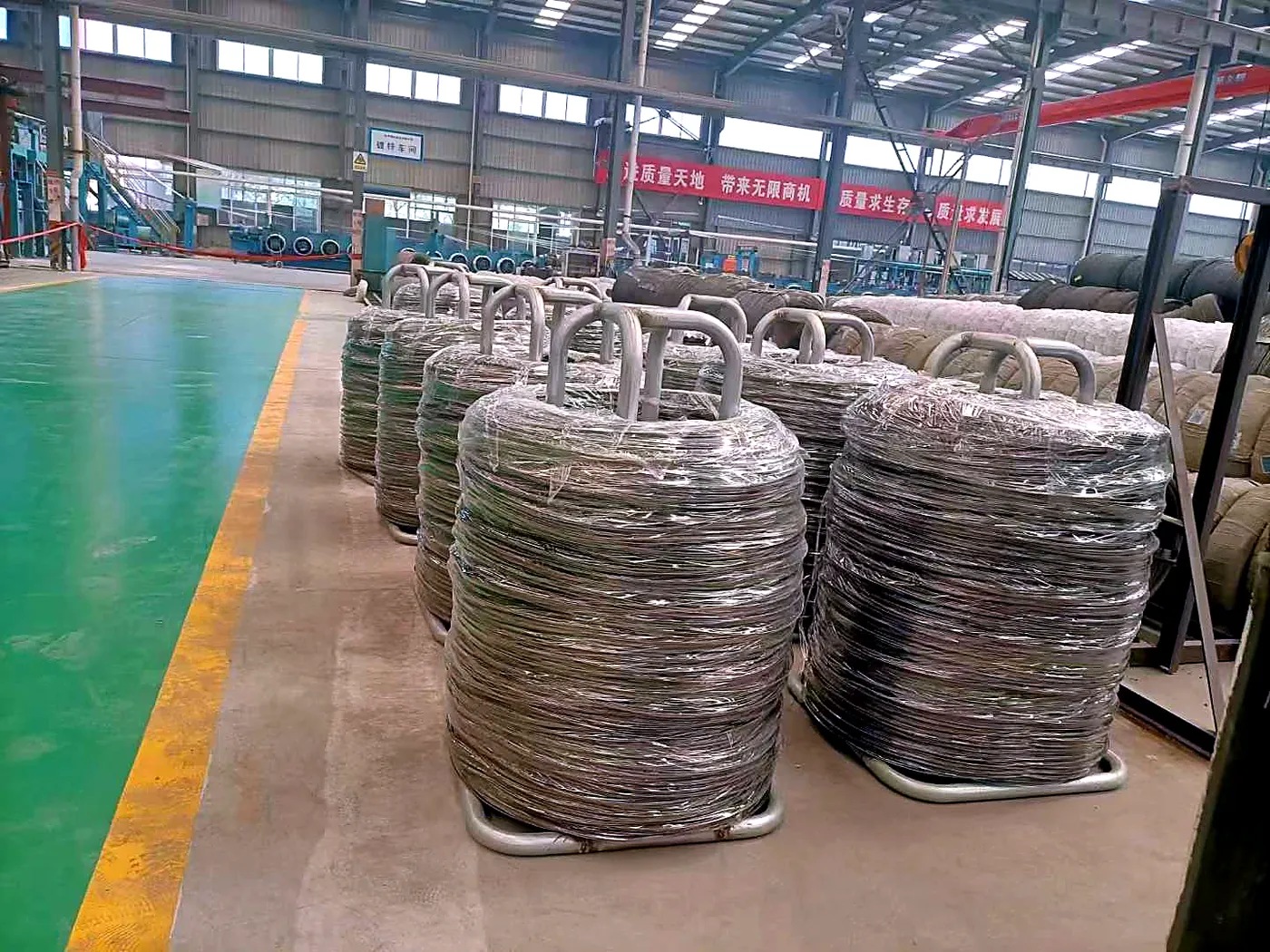
Cold-drawn steel wire — also called cold-drawn wire, hard-drawn wire or cold-drawn low-carbon wire — is made by pulling pickled wire rod through a series of reducing dies at room temperature. The process does two things at once. It cold-works the steel, so the tensile strength rises by roughly 40 to 60 per cent against the parent rod, and it sizes the wire accurately, so the diameter can be held to about ±0.02 mm and the surface comes out bright and free of oxide scale. Both effects are why cold-drawn wire is bought rather than hot-rolled rod: the wire arrives strong enough for its job and accurate enough to feed a machine or weave a mesh without further preparation.
Two strength classes cover most enquiries. Regular cold-drawn wire typically falls in the 600 to 900 MPa range and is used for mesh, fencing, binding and general wire products. High-strength cold-drawn wire reaches about 900 to 1300 MPa and is used where the wire has to carry a genuine load, such as prestressing and precast elements, spring and brush stock, and woven products that must hold their shape under tension. The wire is supplied either bright and lightly oiled, or hot-dip galvanized, and either in coils for machine feeding or in straight cut lengths.
The material is normally drawn from Q195 or from HPB300-grade low-carbon rod, both of which accept the reduction without breaking. Cold drawing is a hardening process rather than a heat treatment, so the properties are set by the amount of reduction, and if the wire has to be bent, coiled or welded after delivery the reduction schedule matters as much as the grade. Tell us the finished product and we will nominate the grade, the strength class and the diameter tolerance together.
Specifications & Size Range
Diameter groups, strength classes and delivery forms. The most commonly stocked range is 1.5 mm to about 5 mm in coil; heavier sizes from about 6 mm to 12 mm are produced to order and may be quoted as cold-drawn round bar rather than wire, because the drawing process and the handling are different at that size.
| Size group | Diameters (mm) | Typical tensile strength | Delivery form | Typical use |
|---|---|---|---|---|
| Fine wire | 1.5 / 1.8 / 2.0 | 600–900 MPa | Coil | Mesh, binding, light fencing, nail stock |
| Standard wire | 2.5 / 3.0 / 3.5 | 600–900 MPa | Coil | Welded mesh, chain link, concrete binding, staples |
| Heavy wire | 4.0 / 5.0 / 6.0 | 600–900 MPa | Coil or straight lengths | Fencing, spring and brush stock, nails, wire products |
| High-strength wire | 1.5 – 6.0 | 900–1300 MPa | Coil | Prestressed and precast elements, spring stock, woven products under tension |
| Heavier wire (to order) | 8.0 / 10.0 / 12.0 | confirmed per order | Coil or straight lengths | Heavy fencing, chain, woven mesh, machined pins and fasteners |
Tolerances
Diameter tolerance on cold-drawn wire is about ±0.02 mm for the common sizes, a consequence of drawing through a finishing die and much tighter than hot-rolled rod. The exact tolerance band for the size and strength class you order is confirmed on the order acknowledgement, and a tensile test report for the lot travels with the mill certificate. Straightness and length tolerance on straight cut lengths are confirmed per order.
Steel Grades & International Equivalents
All grades below are supplied with a mill test certificate. The right-hand column shows the material type and the Chinese standard the grade is produced to; the middle columns give the nearest recognised equivalent in other national standards. Exact equivalence for a specific project should be confirmed on the enquiry.
| GB (China) | ASTM / AISI (US) | EN (Europe) | JIS (Japan) | DIN (Germany) | Type / Standard |
|---|---|---|---|---|---|
| Q195 | A36 (approx.) | S185 (EN 10025-2) | SS330 (JIS G3101) | St33 | Carbon structural steel (GB/T 700) |
| HPB300 wire rod | A615 Gr.40 | B300 (EN 10080) | SR235 | BSt420S (approx.) | Hot-rolled wire rod / plain round bar (GB/T 1499.1) |
Grade Notes
- Q195 — Soft, highly formable. Standard grade for welded pipes, light sections and general fabrication.
- HPB300 wire rod — Wire rod and plain round bar in coil or straight lengths for drawing, mesh, fencing and general reinforcement.
Chemical Composition (%, ladle analysis)
Typical specification limits. Actual heat values are reported on the mill test certificate supplied with every shipment.
| Grade | C | Si | Mn | P max | S max | Other elements |
|---|---|---|---|---|---|---|
| Q195 | ≤0.12 | ≤0.30 | 0.25–0.50 | ≤0.035 | ≤0.040 | — |
| HPB300 wire rod | ≤0.25 | ≤0.55 | ≤1.50 | ≤0.045 | ≤0.045 | — |
Mechanical Properties
Minimum values at room temperature unless stated. ReL = yield strength; Rp0.2 = 0.2% proof stress; Rm = tensile strength; A = elongation after fracture.
| Grade | Yield (ReL) | Proof (Rp0.2) | Tensile (Rm) | Elongation A | Impact / others | |
|---|---|---|---|---|---|---|
| Q195 | ≥195 MPa | — | 315–430 MPa | ≥33% | — | — |
| HPB300 wire rod | ≥300 MPa | — | ≥420 MPa | — | — | — |
Standards & Documents
- GB/T 343 — cold-drawn low-carbon steel wire for general purpose
- GB/T 701 — hot-rolled low-carbon steel wire rod (the parent material)
- GB/T 700 — carbon structural steel (Q195)
- GB/T 1499.1 — hot-rolled plain round bar for reinforcement (HPB300), where reinforcement-grade rod is used as the base
- ISO 6935-2 and EN 10080 (B300) — international comparison for the plain round reinforcement grade
- EN 10204 3.1 mill test certificate plus a tensile test report for each lot; SGS or BV third-party inspection on request
Typical Applications
| Industry / Application | Typical use |
|---|---|
| Welded wire mesh | Mesh for slabs, screeds, fencing panels, gabions and industrial flooring, where uniform diameter and a clean surface give a consistent weld and a regular aperture. |
| Chain link & fencing | Chain link, barbed wire, field fencing and security mesh, using the regular strength class where ductility in weaving matters more than ultimate strength. |
| Concrete binding | Tying wire for reinforcement cages and mesh, supplied cut to length or in coils, where the wire has to be tied and twisted without snapping. |
| Nail & fastener stock | Nail, staple, screw and rivet stock, requiring consistent diameter and carbon content so that heading and pointing operations run without rejects. |
| Spring, brush & wire products | Light springs, brush filaments, hangers, baskets and hooks, often in the high-strength class where the wire must hold shape under load. |
| Precast & prestressed elements | Precast panels, slabs and hollow-core units where high-strength cold-drawn wire carries the prestress, using the 900 to 1300 MPa class. |
| Galvanized wire & hardware | Base wire for hot-dip galvanizing and for galvanized wire products, and general hardware and workshop fabrication. |
Common Problems Buyers Face — and How We Prevent Them
These are the issues that most often cause claims on steel imports. Each one is controlled in our process before shipment.
Wire cracks or snaps when bent or knotted on site
Why it happens: The wire has been drawn too far for the grade, or the wrong grade has been selected, so the strength is there but the remaining ductility is not enough for a bend or a knot.
Our control: Tell us that the wire will be bent, knotted or twisted after delivery, and we will select a reduction schedule and a grade that leaves enough ductility. Where the requirement is demanding we will state a tensile range rather than only a minimum, because an over-strong wire is as much of a problem as a weak one.
Rust on the coil between the wraps
Why it happens: Cold-drawn wire has no coating, and moisture trapped inside a tightly wound coil will start to rust the wire before the coil is opened.
Our control: Wire is supplied lightly oiled, shipped dry and covered, with desiccant added where the route or the season makes condensation likely. Where a rust-free arrival is essential, hot-dip galvanized wire or a heavier protective oil film can be supplied instead.
Diameter varies along the coil, so the mesh or the feed jams
Why it happens: Wear on the finishing die, or a coil drawn to the plus side of tolerance, produces a wire that will not pass through a welding head or a feed finger sized for nominal diameter.
Our control: The drawing tolerance is about ±0.02 mm on the common sizes and the tolerance band is confirmed on the order acknowledgement. If your equipment needs a one-sided tolerance, say so and we will quote the wire against that band.
A strength class mismatch against the finished product
Why it happens: Regular class wire and high-strength wire can look and measure the same, but a product designed for the high-strength class will fail a load test if regular wire is used, and a product that must deform will crack if high-strength wire is used.
Our control: We confirm the strength class on the order and supply a tensile test report for the lot with the mill certificate. Where a nominal tensile value is written on your drawing, we will quote against that value rather than against a class description.
Galvanized wire supplied when bright wire was needed, or the reverse
Why it happens: Surface condition is sometimes left off the enquiry, and galvanized wire cannot be welded or drawn further in the same way as bright wire.
Our control: State whether the wire will be welded, drawn further, bent or left exposed outdoors, and we will confirm bright, oiled or galvanized on the order acknowledgement so that the surface condition matches the process rather than the price.
Our Supply & Manufacturing Advantages
- Strength and tolerance in one product — Cold drawing raises tensile strength by roughly 40 to 60 per cent over the parent rod while holding the diameter to about ±0.02 mm, so the wire is usable as delivered.
- Regular and high-strength classes — Both the 600 to 900 MPa class and the 900 to 1300 MPa class are supplied, so mesh and fencing wire and load-carrying prestressing wire can be ordered together.
- Common sizes in real stock — 1.5 mm to about 5 mm is a stocked range rather than a special order, which is what most mesh, binding and fencing enquiries actually need.
- Coil or straight lengths — Wire can be supplied in coil for machine feeding, or straightened and cut to fixed lengths for binding and manual operations.
- Documented and tested — An EN 10204 3.1 mill test certificate plus a tensile test report for the lot, with SGS or BV inspection available on request.
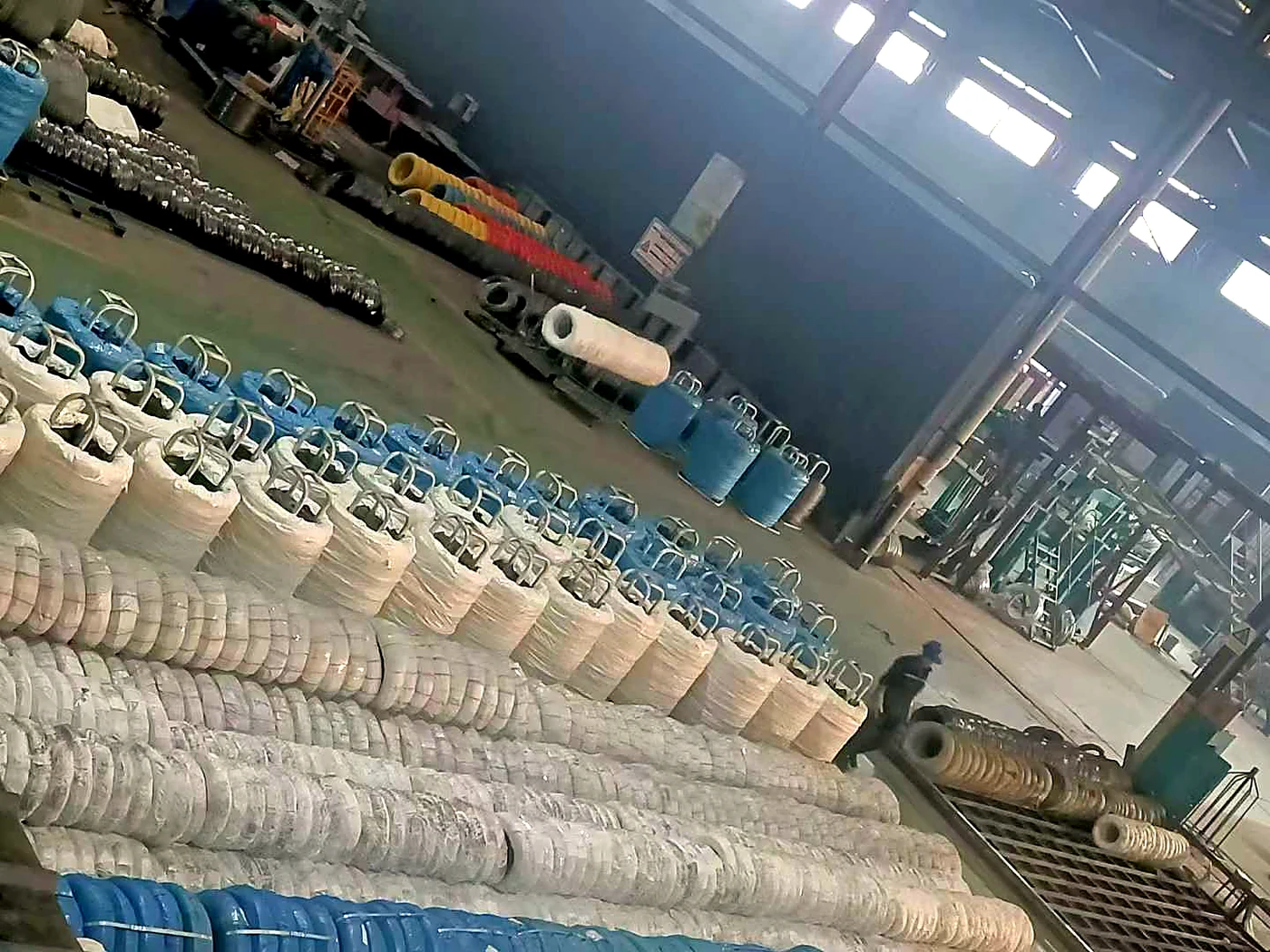
- Galvanized option — Hot-dip galvanized cold-drawn wire is available where the wire will be exposed outdoors, using the same drawn base wire and a coating weight agreed on the order.
Packaging, Delivery & Payment
- Packing: loose in bulk vessel, or bundled and containerised to your requirement. Galvanized and coated products get VCI paper, waterproof wrapping and edge protection. See our export packaging methods.
- Availability: both stock and custom production. Tell us the specification and we will confirm the route.
- MOQ: no strict minimum — one ton can ship.
- Lead time: stock dispatched to port within 3 days; orders needing export packaging about 1 week; custom production quoted per product.
- Payment: stock — 10% deposit, balance before shipment; custom production — 50% deposit, balance before shipment.
- Documents: EN 10204 3.1 mill test certificate with every shipment; third-party inspection (SGS / BV) on request.
Frequently Asked Questions
What is the difference between cold-drawn wire and ordinary iron wire?
Cold-drawn wire has been pulled through reducing dies, which cold-works the steel and raises the tensile strength by roughly 40 to 60 per cent over the parent rod, while also sizing the diameter accurately and leaving a bright, scale-free surface. Ordinary iron wire is annealed or lightly worked and is intended to be soft and easily bent rather than to carry a load. For mesh, prestressing, springs and any product that must hold tension, cold-drawn wire is the correct material.
What strength can cold-drawn wire be supplied to?
Two classes cover most enquiries. Regular cold-drawn wire typically falls in the 600 to 900 MPa tensile range, which suits mesh, fencing, binding and general wire products. High-strength cold-drawn wire reaches about 900 to 1300 MPa and is used for prestressed and precast elements, spring and brush stock, and woven products that must hold shape under tension. A tensile test report for the lot is supplied with the mill certificate.
What is the difference between cold-drawn wire and cold-drawn round bar?
It is mainly a matter of size and handling. Cold-drawn wire is supplied in coils in diameters from about 1.5 mm upward and is used for mesh, fencing, binding or further drawing. Cold-drawn round bar starts at about 6 mm, comes in straight lengths, and is bought as machining stock for shafts, pins and fasteners. Both are made by the same cold reduction principle, but the finishing, packing and end use differ, so the two are quoted separately.
Can the wire be bent, knotted or welded after delivery?
Bending, knotting and twisting are all possible, but how much ductility remains depends on how far the wire has been drawn. Tell us the operation when you enquire and we will select a reduction schedule that leaves enough ductility, stating a tensile range rather than only a minimum. Welded mesh is best made from the regular strength class, because very high strength wire welds and bends less readily.
Do you supply galvanized cold-drawn wire?
Yes. Hot-dip galvanized cold-drawn wire is available for outdoor service, using the same drawn base wire and a coating weight agreed on the order so that it matches the atmosphere the product will be exposed to. Note that galvanizing changes the welding and further-drawing behaviour, so if the wire will be welded or drawn further, bright wire is usually the better choice.
What is your minimum order quantity and lead time?
There is no strict minimum order quantity and a trial shipment of one ton is possible. Stock sizes in the common range reach the port within about 3 days; wire that has to be drawn to a specific strength class, cut to length or galvanized takes about one week. Because wire is dense, freight per ton is favourable and small trial quantities are practical.
What documents come with a cold-drawn wire shipment?
An EN 10204 3.1 mill test certificate showing heat number, chemical composition and mechanical properties, plus a tensile test report for the lot, together with the commercial invoice, packing list and certificate of origin. SGS or BV inspection and sampling can be arranged before loading where the project or the letter of credit requires it.
How is cold-drawn wire packed for export?
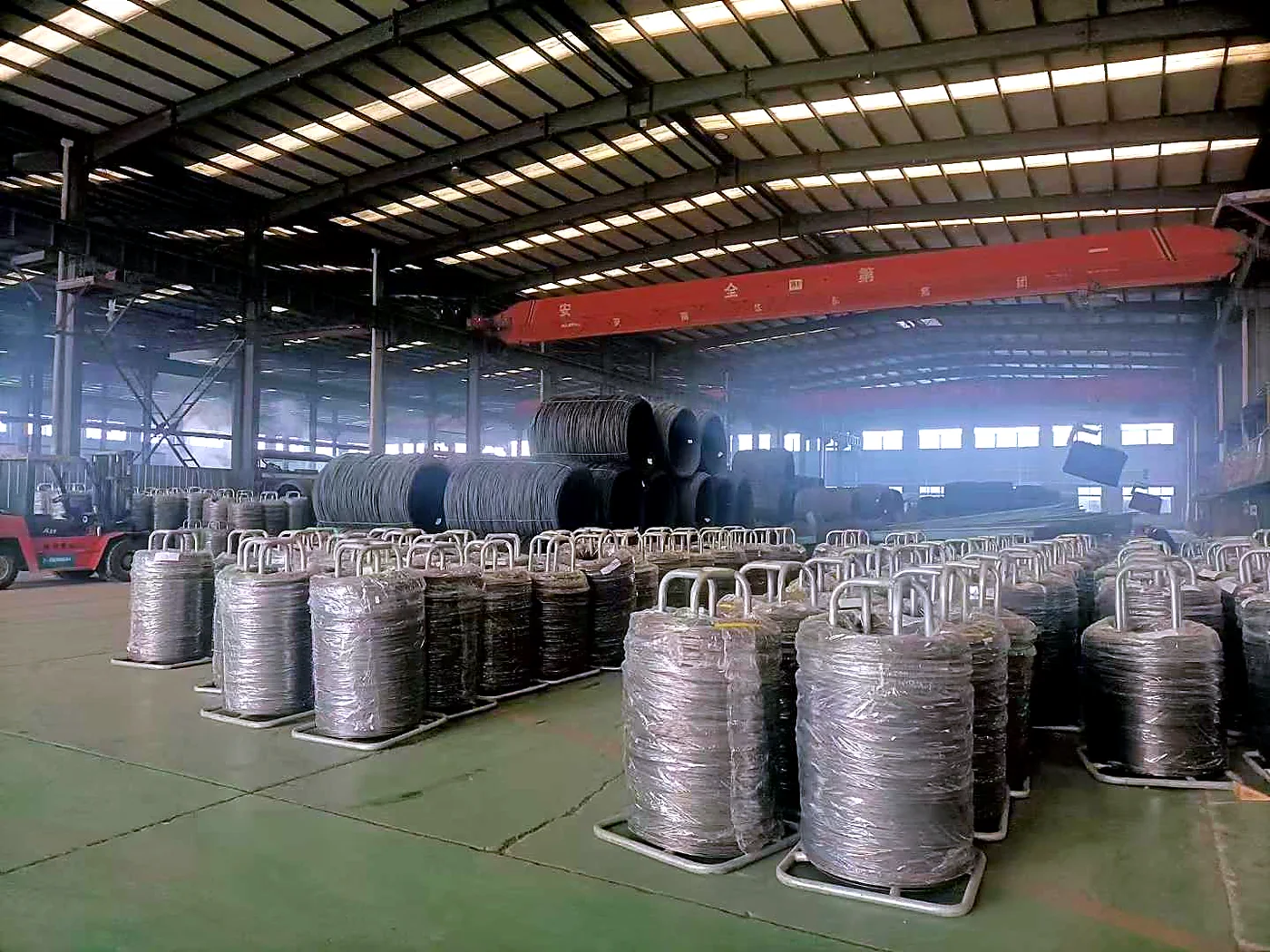
Wire is supplied in coils strapped at several points, or in straight cut lengths bundled and strapped to your specified length. Coils are stacked so that the coil eye is vertical and chocked so the wraps cannot shift, and the packing list states coil weight and diameter so the coils can be lifted and fed without cutting the straps.
Who supplies cold-drawn steel wire from China?
We supply cold-drawn low-carbon steel wire drawn from Q195 and HPB300-grade rod, in the regular and high-strength classes, in coils or straight cut lengths, with an EN 10204 3.1 mill test certificate and a tensile test report for every lot. Tell us the finished product, the diameter and the strength class you need and we will confirm the grade, the tolerance band and the delivery schedule.
Request a Quotation Export Packaging