
Hot-Rolled Flat Steel Bar (Q235B, Q355B, SS400)
Hot-rolled flat steel bar for structural, fabrication and hardware work, supplied 10 mm to 200 mm wide and 3 mm to 60 mm thick in carbon and high-strength grades. Standard 6 m and 12 m lengths, or cut to your cutting list before packing. Mill test certificate with every heat.
Product Overview
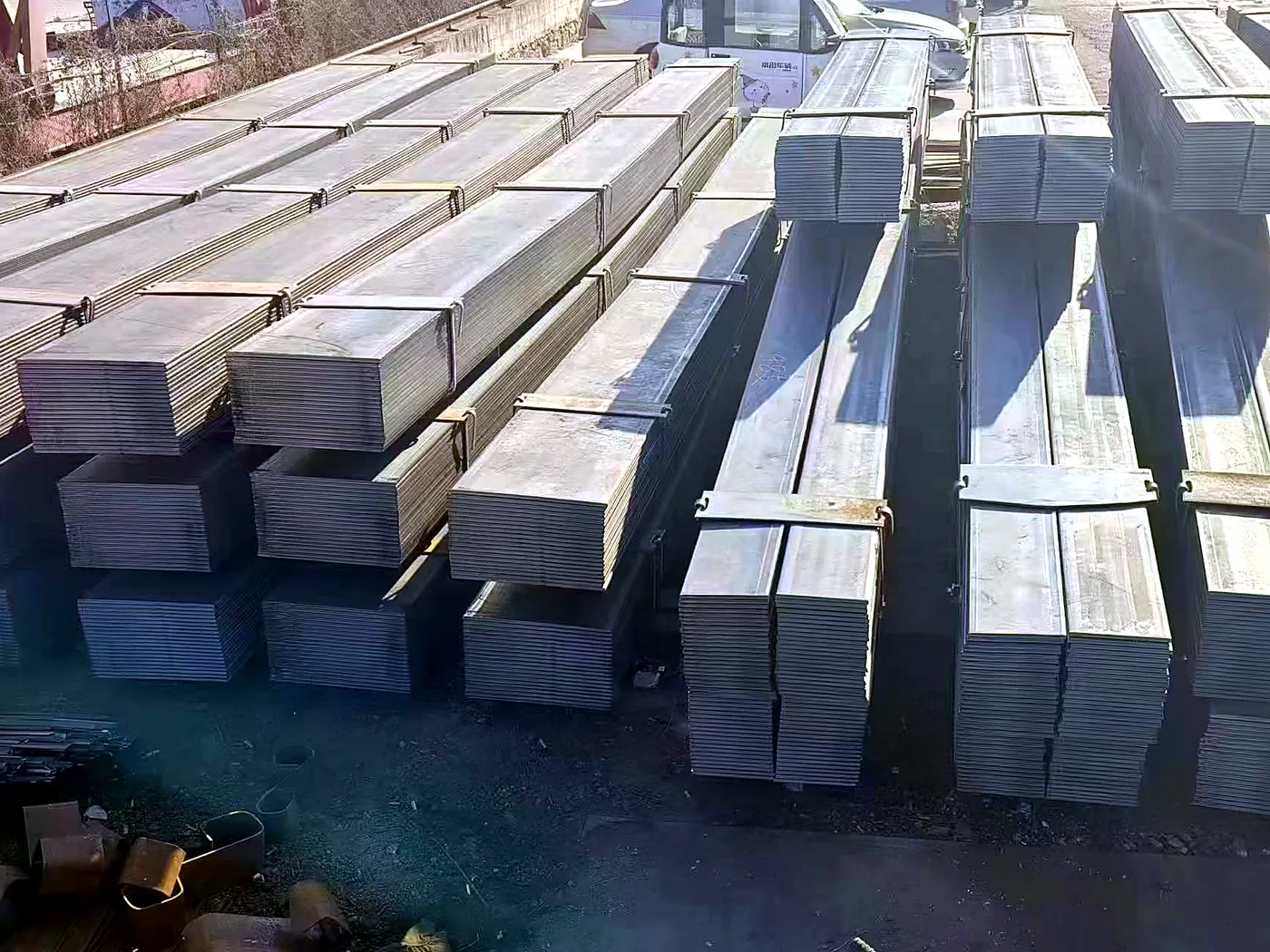
Flat steel bar — also called flat iron or flat strip — is a rectangular solid section rolled from billet, with a width several times its thickness. The simple section distributes stress evenly, gives flat faces for bolting and welding, and shears, punches and bends without difficulty, which is why it is the default material for connection plates, stirrups, clamps, frames and hardware blanks.
We supply the full export range: plain carbon Q235B for general structures and welded fabrication, high-strength Q355B where a lighter member has to carry the same load, and SS400 for buyers who work to Japanese standards. Widths run from 10 mm to 200 mm and thicknesses from 3 mm to 60 mm, in 6 m and 12 m lengths or cut to length on request.
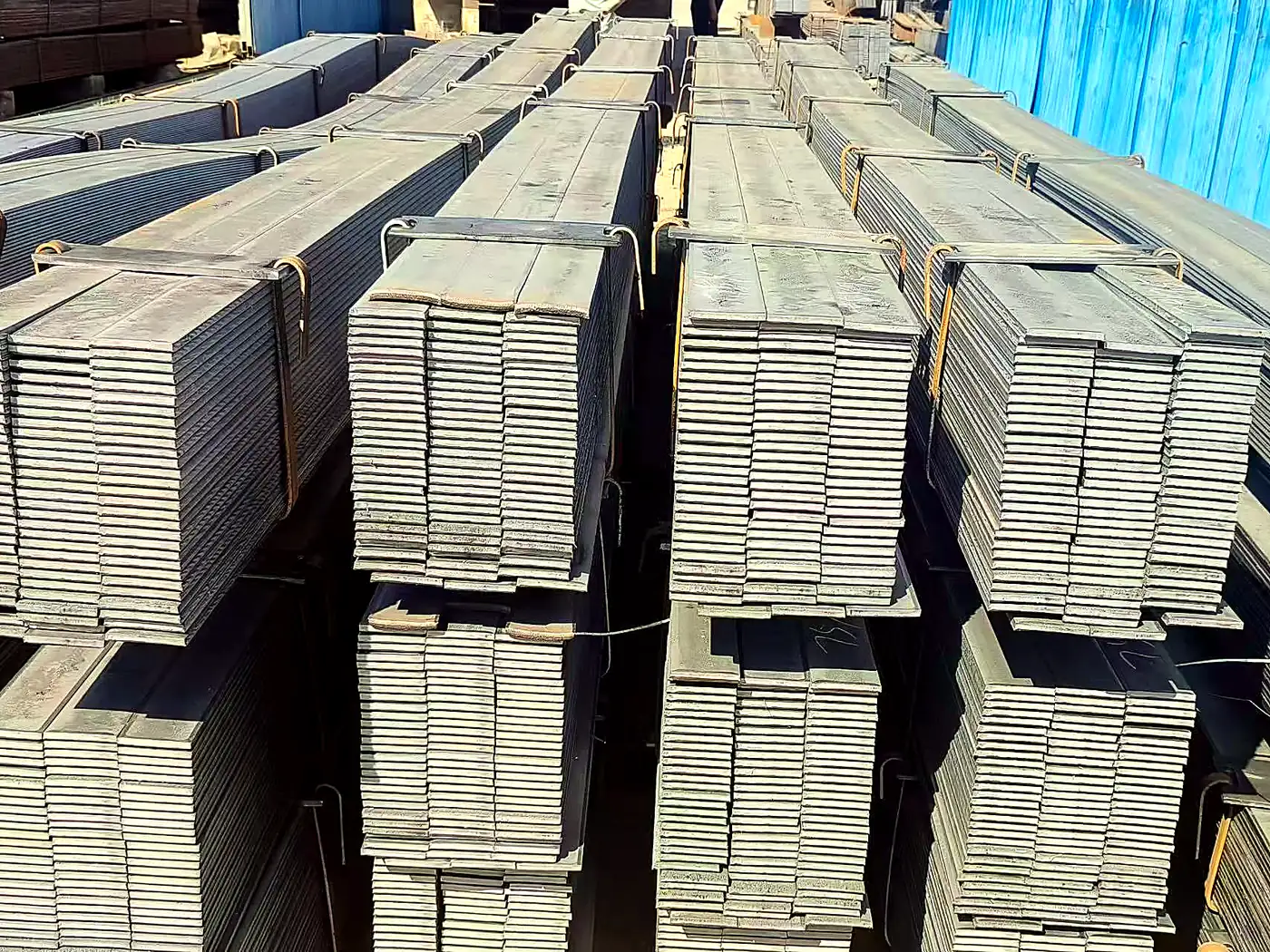
Every bundle is tagged by heat number and grade and ships with an EN 10204 3.1 mill test certificate showing chemical composition and mechanical properties, so the material can be checked against your specification before it is cut. Where a coated or bright finish is needed, the same section is available hot-dip galvanized or cold drawn.
Specifications & Size Range
Common production sizes grouped by width. Intermediate widths and thicknesses, non-standard lengths and cut-to-length orders are quoted on request. Send us the finished part size and we will propose the nearest mill standard section so offcut waste stays low.
| Width group | Common widths (mm) | Thickness range (mm) | Standard length | Typical use |
|---|---|---|---|---|
| Light flat bar | 10, 12, 16, 20, 25, 30 | 3 – 5 | 6 m / 12 m, or cut to order | Hardware blanks, brackets, stirrups, gates, small clamps |
| Medium flat bar | 40, 50, 60, 70, 75, 80 | 3.5 – 9.75 | 6 m / 12 m | Connection plates, machinery supports, base rails, frames |
| Heavy flat bar | 100, 120, 150, 160, 180, 200 | 10 – 60 | 6 m / 12 m, cut to order | Embedded plates, structural stiffeners, bridge and trailer work |
| Punched / drilled bar | Any width above | as ordered | to drawing | Ready-to-fit members for earthing grids, racks and tower bracing |
Tolerances
Dimensions, shape and mass follow GB/T 702 for hot-rolled flat bar. Width and thickness are measured at the mid-point clear of the rolled edge, and bundle mass is calculated from nominal dimensions. Cut ends are square cut within the length tolerance agreed on the order. Cold-drawn bar is available where a tighter width and thickness tolerance is needed.
Steel Grades & International Equivalents
All grades below are supplied with a mill test certificate. The right-hand column shows the material type and the Chinese standard the grade is produced to; the middle columns give the nearest recognised equivalent in other national standards. Exact equivalence for a specific project should be confirmed on the enquiry.
| GB (China) | ASTM / AISI (US) | EN (Europe) | JIS (Japan) | DIN (Germany) | Type / Standard |
|---|---|---|---|---|---|
| Q235B | A36 / A283 Gr.C | S235JR (EN 10025-2) | SS400 (JIS G3101) | St37-2 | Carbon structural steel (GB/T 700) |
| Q355B | A572 Gr.50 / A992 | S355JR (EN 10025-2) | SM490 (JIS G3106) | St52-3 | High-strength low-alloy (HSLA) steel (GB/T 1591) |
| SS400 (JIS) | A36 | S235JR | SS400 | St37-2 | Carbon structural steel (JIS G3101) |
Grade Notes
- Q235B — The workhorse structural grade in China. Fully weldable, excellent cost-performance, the closest Chinese equivalent to ASTM A36 / EN S235JR.
- Q355B — High-strength structural steel for heavy structures, bridges and towers. Equivalent to ASTM A572 Gr.50 / EN S355JR.
- SS400 (JIS) — Japanese standard grade widely accepted in Asia. Interchangeable with Q235B / A36 for general structures.
Chemical Composition (%, ladle analysis)
Typical specification limits. Actual heat values are reported on the mill test certificate supplied with every shipment.
| Grade | C | Si | Mn | P max | S max | Other elements |
|---|---|---|---|---|---|---|
| Q235B | ≤0.20 | ≤0.35 | ≤1.40 | ≤0.045 | ≤0.045 | — |
| Q355B | ≤0.24 | ≤0.55 | ≤1.60 | ≤0.035 | ≤0.035 | Ceq ≤0.45 |
| SS400 (JIS) | — | — | — | ≤0.050 | ≤0.050 | — |
Mechanical Properties
Minimum values at room temperature unless stated. ReL = yield strength; Rp0.2 = 0.2% proof stress; Rm = tensile strength; A = elongation after fracture.
| Grade | Yield (ReL) | Proof (Rp0.2) | Tensile (Rm) | Elongation A | Impact / others | |
|---|---|---|---|---|---|---|
| Q235B | ≥235 MPa | — | 370–500 MPa | ≥26% | +20 °C, ≥27 J | — |
| Q355B | ≥355 MPa (≤16 mm) | — | 470–630 MPa | ≥22% | +20 °C, ≥27 J | — |
| SS400 (JIS) | ≥245 MPa | — | 400–510 MPa | ≥21% | — | — |
Standards & Documents
- GB/T 702 — hot-rolled steel bars for general purposes (dimensions, shape, mass and tolerance)
- GB/T 700 — carbon structural steels, covering Q235B
- GB/T 1591 — high-strength low-alloy structural steels, covering Q355B
- JIS G3101 — general structural steels, covering SS400
- EN 10204 3.1 mill test certificate with every heat; third-party inspection by SGS or BV on request
- ASTM A36 and EN S235JR equivalences documented in writing when your drawing calls a non-Chinese grade
Typical Applications
| Industry / Application | Typical use |
|---|---|
| Connection plates & structural nodes | Gusset and splice plates, cleats, base plates and node stiffeners where a flat surface has to be drilled and bolted to adjoining members. |
| Stirrups, hoops & clamps | Column and beam hoops, pipe clamps, barrel bands and general binding work, normally in 40×4 or 50×5 for standard members and heavier sections for large components. |
| Machinery frames & equipment supports | Machine bases, guide rails, brackets and reinforcement ribs for industrial equipment and production lines. |
| Road, bridge & guard-rail work | Guard-rail posts and horizontal members, sign gantry reinforcement, drainage grating edges and municipal furniture frames. |
| Trailer, container & body building | Chassis rails, cross members, door frames and reinforcement for trailers, containers and commercial vehicle bodies. |
| Earthing & cable support | Earthing conductors, cable tray edges and support brackets, usually supplied hot-dip galvanized for outdoor and buried service. |
| Hardware blanks & general fabrication | Hinges, handles, latches, decorative bars and general workshop stock that is cut, punched and bent after delivery. |
Common Problems Buyers Face — and How We Prevent Them
These are the issues that most often cause claims on steel imports. Each one is controlled in our process before shipment.
Surface rust on the faces before the bar is used
Why it happens: As-rolled bar has no protective coating, and a long sea voyage through humid air will start surface oxidation within days.
Our control: Bundles ship dry and strapped, with VCI paper and desiccant on request for long or humid routes. Where the finished parts must arrive rust-free, we supply pickled and oiled bar, cold-drawn bar, or hot-dip galvanized flat bar.
Width or thickness running below nominal, so fabricated parts are undersize
Why it happens: Cheap flat bar can be rolled to the minus side of tolerance, or outside the standard altogether, and the loss only appears when the part is assembled.
Our control: We buy mill-certified material only and confirm the width and thickness tolerance band in writing before shipment. On parts where the drawing is tight, we quote cold-drawn bar, which is produced to a much narrower tolerance.
Bar arrives twisted or with a lengthwise bend
Why it happens: Thin, wide sections cool unevenly on the rolling line or are stacked badly after rolling, and the bow is only noticed at the punch or the press.
Our control: Straightness is checked before packing and against the GB/T 702 limit. For long slender bars we specify heavier thickness, and we pack with spacers and edge protection so the bundle is not deformed in handling or in the container.
Cut edges shear badly or the punch splits the bar
Why it happens: Hot-rolled bar has mill scale on the surface and a normal variation in hardness, so a die clearance set up for bright material will tear the edge.
Our control: Tell us at the enquiry if the bar will be sheared, punched or cold bent, and we will confirm the grade and the surface condition. For clean sheared edges and tight punching, cold-drawn bar gives a scale-free surface and more consistent hardness.
Two grades mixed in one bundle and no way to tell them apart
Why it happens: Q235B and Q355B look identical in black as-rolled condition, so identification errors are easy at the yard and impossible to see on arrival.
Our control: Every bundle is tagged with grade and heat number and ships with the matching mill certificate, and loading keeps heats separate. An identification check at your receiving bay then takes minutes rather than a full reinspection.
Our Supply & Manufacturing Advantages
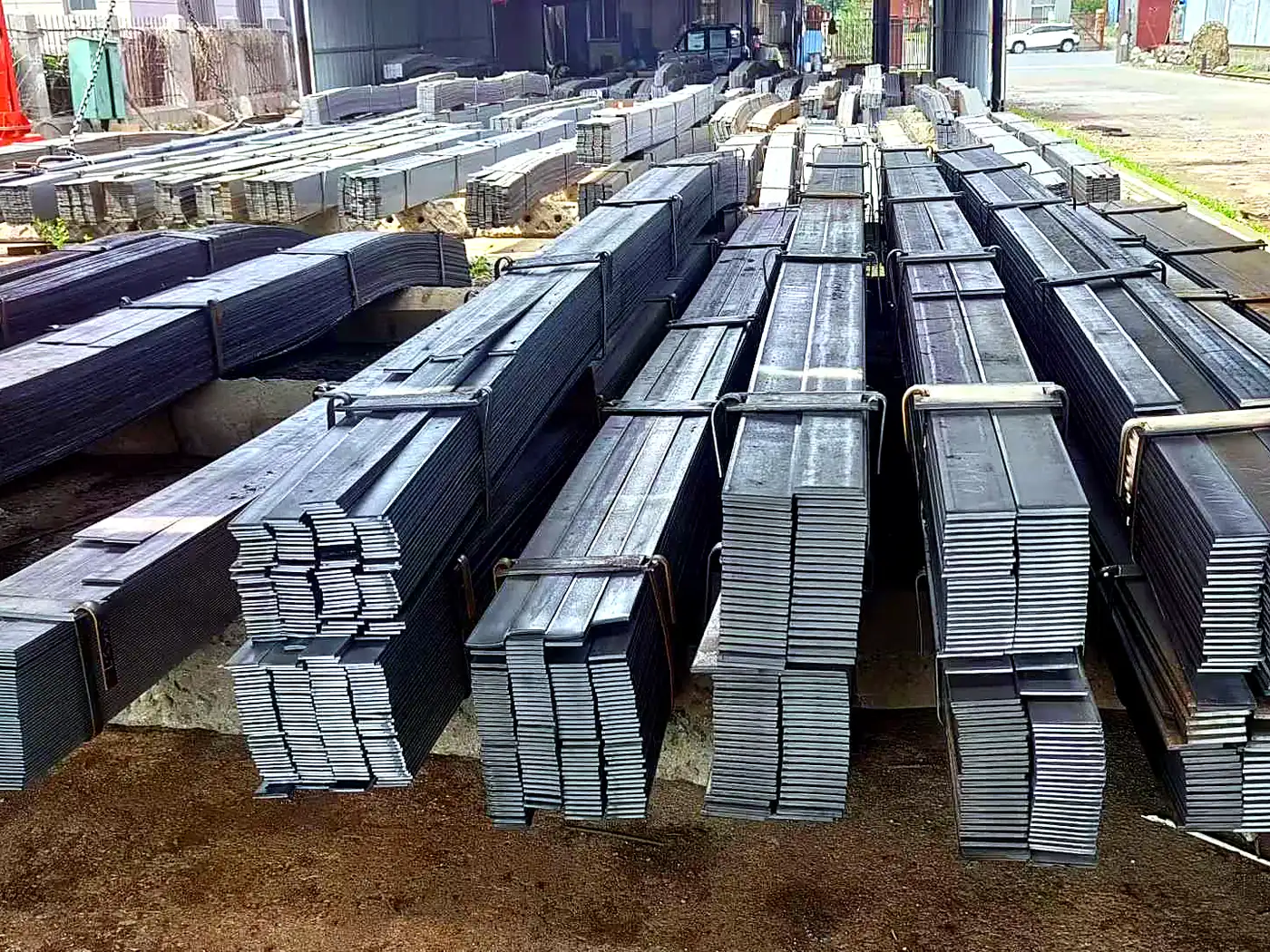
- Three grades from one order — Plain carbon Q235B, high-strength Q355B and JIS SS400 in the same shipment, so certificates and grades match across the whole project.
- Cut to your cutting list — We cut to finished part length before packing, which reduces offcut waste and takes weight out of the freight you pay for.
- Width and thickness to suit the job — A wide menu of width and thickness combinations, so you can pick the section that minimises machining rather than the nearest stocked size.
- Documented material — EN 10204 3.1 mill test certificate with composition and mechanical properties for every heat, plus third-party inspection on request.
- Grade-matching support — Send the drawing requirement or the grade you normally buy (ASTM A36, S235JR, SS400) and we will nominate the Chinese grade and confirm the equivalence in writing.
- Export packaging as standard — Bundled and strapped for container loading or loaded loose in a bulk vessel, with rust protection where the route demands it.
Packaging, Delivery & Payment
- Packing: loose in bulk vessel, or bundled and containerised to your requirement. Galvanized and coated products get VCI paper, waterproof wrapping and edge protection. See our export packaging methods.
- Availability: both stock and custom production. Tell us the specification and we will confirm the route.
- MOQ: no strict minimum — one ton can ship.
- Lead time: stock dispatched to port within 3 days; orders needing export packaging about 1 week; custom production quoted per product.
- Payment: stock — 10% deposit, balance before shipment; custom production — 50% deposit, balance before shipment.
- Documents: EN 10204 3.1 mill test certificate with every shipment; third-party inspection (SGS / BV) on request.
Frequently Asked Questions
What is the Chinese equivalent of ASTM A36 flat bar?
Q235B to GB/T 700 is the closest Chinese equivalent to ASTM A36 and is what we normally ship for A36 enquiries. Yield strength is specified at 235 MPa minimum against 250 MPa for A36, so for members designed to the full A36 yield we recommend Q355B instead. Tell us the governing stress and we will confirm the grade in writing.
Should I specify Q235B or Q355B?
Use Q235B for general structures, welded fabrications and hardware where cost matters most, and Q355B where a lighter section must carry the same load, or where ground movement and fatigue call for more strength. Q355B is also the better choice for heavily loaded connection plates and long-span members. Send the design load and we will nominate the grade and section size.
Is SS400 the same as Q235B?
They are close but not identical. SS400 is a JIS G3101 grade with a specified tensile range, while Q235B specifies 235 MPa minimum yield and an impact requirement at +20 degrees C. The two are routinely interchanged for general structures. If your drawing calls SS400 we can supply SS400-certified material, or Q235B with the equivalence documented.
What is the difference between flat bar and angle steel?
Both are solid long products, but for the same weight an angle has a much higher bending stiffness because its material sits away from the neutral axis, while flat bar is easier to shear, punch, drill and weld flat against another surface. Flat bar is normally chosen for connection plates, stirrups and binding, and angle for load-carrying frames and bracing.
Who supplies hot-rolled flat steel bar from China for export?
We do. Dayang supplies flat bar to importers, stockists and fabricators worldwide, in carbon and high-strength grades, cut to length if required, with mill test certificates and export packing arranged from our own mill network. Send the sizes, grade and quantity and you will receive a quotation with the size tolerance band stated.
Do you have a minimum order quantity?
There is no strict minimum and a trial order of one ton can ship, which is practical for a first order or for a grade you want to test before committing to a project. For mixed sizes we will tell you honestly where freight and packing costs make a larger consolidated order the better commercial choice.
What documents come with a flat bar shipment?
An EN 10204 3.1 mill test certificate showing heat number, chemical composition and mechanical properties, plus the commercial invoice, packing list and certificate of origin. Inspection by SGS, BV or another nominated agency can be arranged before loading if your specification requires it.
How is flat bar packed for sea freight?
Standard export packing is steel-strapped bundles sized for container loading, or loose bundles in a bulk vessel for large tonnage. Spacers are used where air circulation matters, and VCI paper or desiccant is added for humid routes. Cut-to-length orders are packed in the sequence of your cutting list where the order allows.
What is the lead time?
Standard sizes are dispatched to the port within about three days. Orders that need export packing, cutting to length or a specific certificate take roughly one week to reach the port. Non-standard widths, thicknesses or lengths are quoted with their own production lead time.
Request a Quotation Export Packaging