
Hot-Rolled Wire Rod & Plain Round Bar (Q195, Q235B, HPB300)
High-speed hot-rolled wire rod in coils from 5.5 mm to 16 mm, in low-carbon Q195 and Q235B and in HPB300 plain round bar, at a coil weight of about 1.5 to 2.5 tonnes. Supplied for wire drawing, welded mesh, fencing, nail and fastener stock, welding wire and general reinforcement, with a thin, uniform oxide scale that keeps pickling loss low.
Product Overview
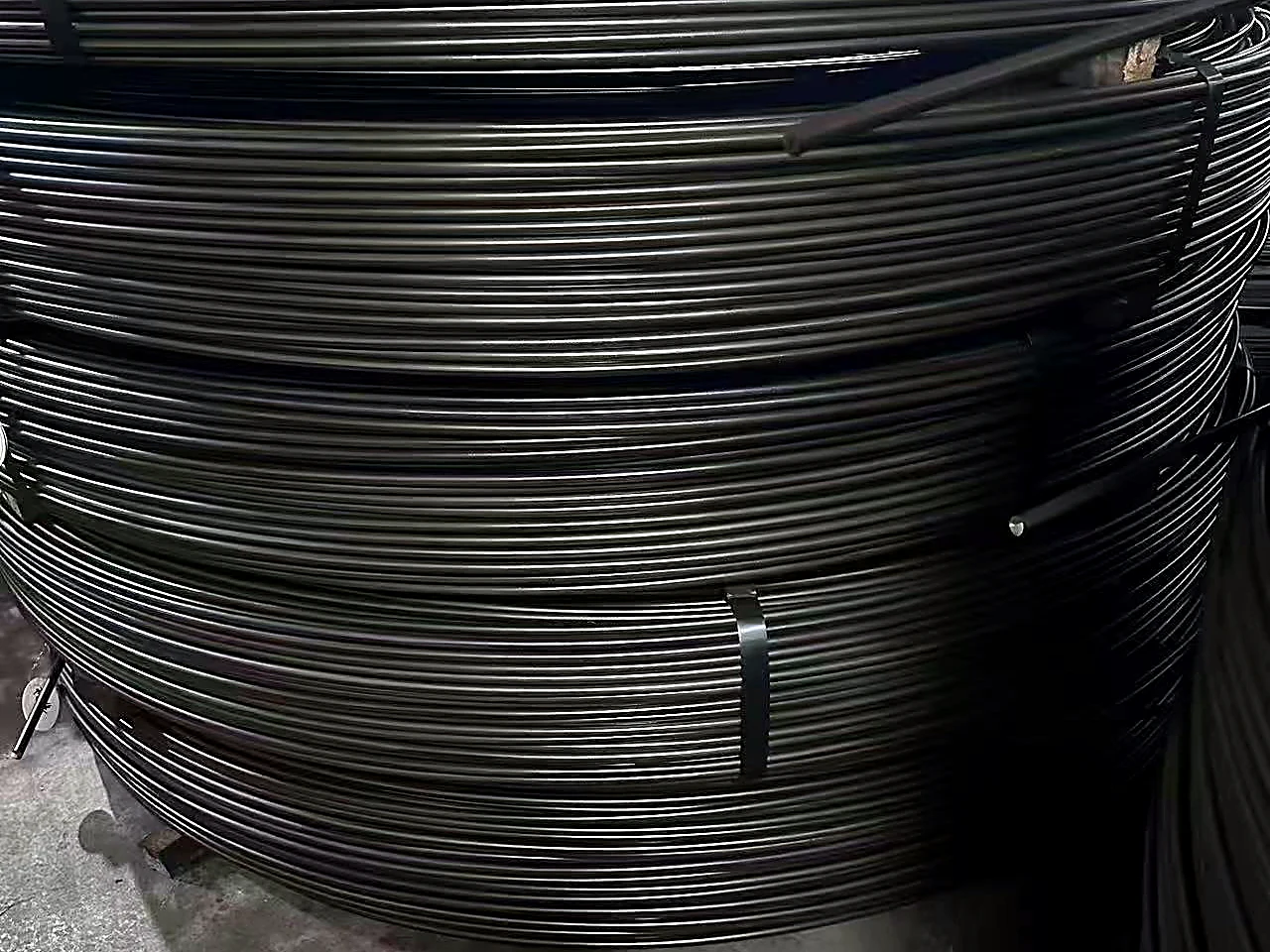
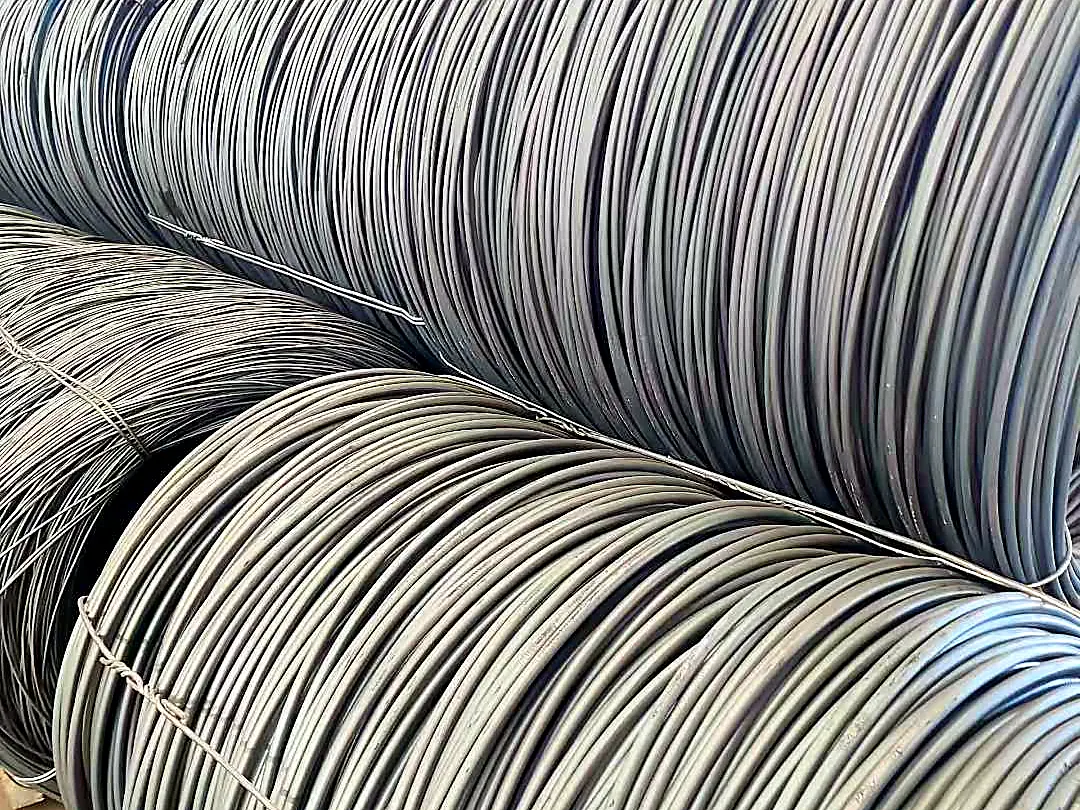
Wire rod — also called wire rod in coils, high-speed wire rod, or by the plain-bar designation plain round bar in coil — is rolled from continuously cast billet on a high-speed rod mill and delivered as a coil rather than as straight bar. The high-speed rolling route is what distinguishes good rod from ordinary rod: the mill holds a tight diameter tolerance, keeps the mechanical properties consistent from one end of the coil to the other, and leaves a thin, even oxide scale that comes off quickly in the pickling tank. That combination is what allows a drawing line to run at speed without breaking wire.
The two low-carbon grades cover most of the demand. Q195 is soft and highly formable with a minimum yield of 195 MPa, and is the usual choice when the rod will be drawn down to fine wire because it accepts heavy reduction without breaking. Q235B is stronger and is used where the finished product needs more strength, such as fencing, mesh and general drawn products. The HPB300 plain round bar grade is a reinforcement grade with a minimum yield of 300 MPa, used for stirrups, ties and light reinforcement where a plain round surface is acceptable.
Typical uses run from the obvious to the less obvious: welded wire mesh and wire fabric, chain link and barbed fencing, nail, screw and rivet stock, welding wire and electrode core wire, binding wire for reinforcement, galvanizing stock and general hardware. Rod is supplied in coil as standard; where a mesh line or a machine needs straight, fixed-length material, the coil can be straightened and cut to length before shipment so that it arrives ready to feed.
Specifications & Size Range
Common coil diameters, coil weights and the grades normally supplied. Diameters from 5.5 mm to about 16 mm are covered, with 5.5 mm, 6.5 mm, 8 mm, 10 mm, 12 mm and 14 mm the sizes most often ordered. Straightened and cut lengths are available against your cut list.
| Size group | Common diameters (mm) | Coil weight | Grades | Typical use |
|---|---|---|---|---|
| Fine rod | 5.5 / 6.5 | 1.5–2 t | Q195, HPB300 | Binding wire, fine drawing, nail stock, welded mesh |
| Standard rod | 8 / 10 | 2–2.5 t | Q195, Q235B | Welded mesh, fencing, welding wire stock, stirrups |
| Heavy rod | 12 / 14 | 2–2.5 t | Q195, Q235B | Nails, chain link, general drawing stock, concrete binding |
| Larger rod | 16 | confirmed per order | Q195, Q235B | Heavier drawn products and straightening to cut lengths |
| Straightened and cut | 5.5 – 16 | not applicable | Q195, Q235B, HPB300 | Fixed lengths for mesh lines and machine feed |
Tolerances
Diameter tolerance, ovality and coil weight follow the applicable wire rod standard, with the permitted limits for the ordered size stated on the mill certificate. Coil weight is supplied within an agreed band rather than to an exact figure. Where straightened and cut lengths are ordered, the length tolerance and the achieved straightness are confirmed on the order acknowledgement.
Steel Grades & International Equivalents
All grades below are supplied with a mill test certificate. The right-hand column shows the material type and the Chinese standard the grade is produced to; the middle columns give the nearest recognised equivalent in other national standards. Exact equivalence for a specific project should be confirmed on the enquiry.
| GB (China) | ASTM / AISI (US) | EN (Europe) | JIS (Japan) | DIN (Germany) | Type / Standard |
|---|---|---|---|---|---|
| HPB300 wire rod | A615 Gr.40 | B300 (EN 10080) | SR235 | BSt420S (approx.) | Hot-rolled wire rod / plain round bar (GB/T 1499.1) |
| Q195 | A36 (approx.) | S185 (EN 10025-2) | SS330 (JIS G3101) | St33 | Carbon structural steel (GB/T 700) |
| Q235B | A36 / A283 Gr.C | S235JR (EN 10025-2) | SS400 (JIS G3101) | St37-2 | Carbon structural steel (GB/T 700) |
Grade Notes
- HPB300 wire rod — Wire rod and plain round bar in coil or straight lengths for drawing, mesh, fencing and general reinforcement.
- Q195 — Soft, highly formable. Standard grade for welded pipes, light sections and general fabrication.
- Q235B — The workhorse structural grade in China. Fully weldable, excellent cost-performance, the closest Chinese equivalent to ASTM A36 / EN S235JR.
Chemical Composition (%, ladle analysis)
Typical specification limits. Actual heat values are reported on the mill test certificate supplied with every shipment.
| Grade | C | Si | Mn | P max | S max | Other elements |
|---|---|---|---|---|---|---|
| HPB300 wire rod | ≤0.25 | ≤0.55 | ≤1.50 | ≤0.045 | ≤0.045 | — |
| Q195 | ≤0.12 | ≤0.30 | 0.25–0.50 | ≤0.035 | ≤0.040 | — |
| Q235B | ≤0.20 | ≤0.35 | ≤1.40 | ≤0.045 | ≤0.045 | — |
Mechanical Properties
Minimum values at room temperature unless stated. ReL = yield strength; Rp0.2 = 0.2% proof stress; Rm = tensile strength; A = elongation after fracture.
| Grade | Yield (ReL) | Proof (Rp0.2) | Tensile (Rm) | Elongation A | Impact / others | |
|---|---|---|---|---|---|---|
| HPB300 wire rod | ≥300 MPa | — | ≥420 MPa | — | — | — |
| Q195 | ≥195 MPa | — | 315–430 MPa | ≥33% | — | — |
| Q235B | ≥235 MPa | — | 370–500 MPa | ≥26% | +20 °C, ≥27 J | — |
Standards & Documents
- GB/T 1499.1 — hot-rolled plain round bar for the reinforcement of concrete (HPB300)
- GB/T 701 — hot-rolled low-carbon steel wire rod
- GB/T 4354 — hot-rolled quality carbon steel wire rod
- GB/T 700 — carbon structural steels (Q195 and Q235B)
- ISO 6935-2 and EN 10080 (B300) — international comparison for the plain-bar reinforcement grade
- EN 10204 3.1 mill test certificate with every heat; SGS or BV third-party inspection and sampling on request
Typical Applications
| Industry / Application | Typical use |
|---|---|
| Wire drawing stock | The parent material for cold-drawn wire. Q195 is normally selected because it accepts heavy reduction without breaking, and the thin, uniform scale keeps pickling loss and acid consumption low. |
| Welded wire mesh & fabric | Mesh for slabs, screeds, fencing panels and industrial flooring, either welded from rod directly or from rod drawn to the finished mesh diameter first. |
| Fencing & chain link | Chain link, barbed wire, field fencing and security mesh, where Q235B is often chosen for the extra strength in the finished product. |
| Nails, screws & fasteners | Nail, screw, rivet and general fastener stock, requiring consistent carbon content and a clean, scale-free surface after pickling. |
| Welding wire & electrodes | Core wire and electrode stock, where consistent chemistry from end to end of the coil is what keeps deposition rate and weld quality stable. |
| Concrete binding & light reinforcement | Binding wire for cages, and HPB300 plain round bar for stirrups, ties and light reinforcement where a plain round surface is acceptable. |
| Galvanizing & general hardware | Stock for galvanized wire, wire products, baskets, hangers, brushes and general hardware fabrication. |
Common Problems Buyers Face — and How We Prevent Them
These are the issues that most often cause claims on steel imports. Each one is controlled in our process before shipment.
Heavy or uneven oxide scale causing high pickling loss
Why it happens: Rod rolled at lower speed or cooled unevenly carries a thick, patchy scale, so more acid and more time are needed to clean it and the yield of usable wire falls.
Our control: We supply high-speed rod with a thin, even scale, and where scale matters to your line we can discuss the mill scale condition or a pickled and coated rod. Tell us the pickling practice you use and we will source rod that suits it rather than rod that merely meets the grade.
Wire breaks early in the drawing line
Why it happens: The wrong grade for the reduction, or an oversize or oval coil, will show up as breaks and the line stops before the coil is half used.
Our control: We match the grade to the reduction schedule — Q195 for heavy reduction and fine sizes, Q235B for lighter reduction and stronger finished products — and confirm the diameter and ovality tolerance band before shipment so the die sequence you planned is achievable.
Coil tangled or broken during unwinding
Why it happens: A coil that has been compressed in stacking, or unwound from the wrong end, will tangle and the line has to be stopped and the coil re-wound by hand.
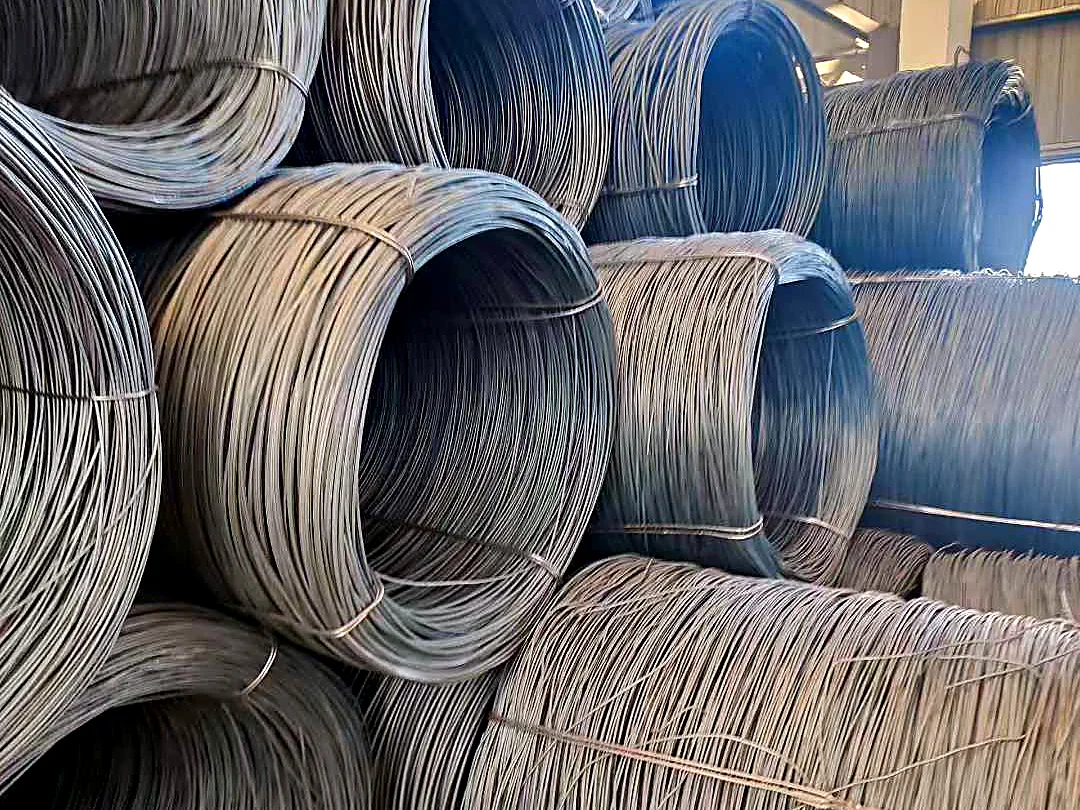
Our control: Coils are strapped, stacked so that the coil eye is vertical and loaded with timber chocks so the wraps cannot shift. The packing list states the coil weight, diameter and stacking arrangement so the coil can be lifted and unwound correctly.
Rust or white rust on the coil on arrival
Why it happens: Rod is supplied bare, and condensation inside a container over a long voyage will produce a rust film on the wrap faces, which is worse in a tightly wound coil where air cannot circulate.
Our control: Rod is shipped dry, strapped and covered, with desiccant where the route or season makes condensation likely. Where the rod will be stored before use, we can supply an oiled or otherwise protected surface on request.
Grade supplied does not match the drawing
Why it happens: Q195 and Q235B look identical in coil, and a mix-up only becomes visible when a drawing line breaks or a finished product fails a strength check.
Our control: Every coil is tagged by heat number and grade, coils are not mixed inside a bundle, and the mill certificate is matched to the tag through loading. The grade is also confirmed on the order acknowledgement against the grade your process actually requires.
Our Supply & Manufacturing Advantages
- Rod suited to the process, not just the grade — We ask what the rod will be used for — drawing, mesh, nails, welding wire — and select the grade and scale condition to suit it, rather than shipping whatever is nearest.
- Fine sizes properly covered — 5.5 mm and 6.5 mm are stock sizes rather than specials, which matters because those are the diameters drawing lines and binding-wire users actually run.
- Three grades from one supplier — Q195, Q235B and HPB300 plain round bar in one order, so a mesh plant or a hardware producer can cover several products with one certificate set.
- Straightened and cut on request — Where a mesh line or a machine needs straight fixed-length material, the rod can be straightened and cut before shipment and arrives ready to feed.
- Documented and traceable — An EN 10204 3.1 mill test certificate for every heat, with the coil tags retained through loading and listed on the packing list.
- Export packaging built in — Coils strapped at several points, stacked eye to sky and chocked for container loading, with the stacking plan shown on the packing list.
Packaging, Delivery & Payment
- Packing: loose in bulk vessel, or bundled and containerised to your requirement. Galvanized and coated products get VCI paper, waterproof wrapping and edge protection. See our export packaging methods.
- Availability: both stock and custom production. Tell us the specification and we will confirm the route.
- MOQ: no strict minimum — one ton can ship.
- Lead time: stock dispatched to port within 3 days; orders needing export packaging about 1 week; custom production quoted per product.
- Payment: stock — 10% deposit, balance before shipment; custom production — 50% deposit, balance before shipment.
- Documents: EN 10204 3.1 mill test certificate with every shipment; third-party inspection (SGS / BV) on request.
Frequently Asked Questions
What is the difference between wire rod and rebar?
Wire rod is a plain round product supplied in coils and used as the raw material for drawing, mesh, fencing, nails and welding wire; rebar is a deformed ribbed product with a guaranteed yield strength, made to a different standard and supplied mainly as straight lengths. The two overlap only at the plain round reinforcement grade, HPB300, which is used in coils for stirrups and ties. If you want a ribbed bar for structural concrete, you need the rebar family, not wire rod.
Should I choose Q195 or Q235B for wire drawing?
Q195 is the usual choice when the rod will be drawn down to fine wire, because its lower carbon content gives it the ductility to accept heavy reduction without breaking. Q235B is chosen where the finished product needs higher strength, or where the reduction is light, for example fencing, mesh and general drawn products. If you tell us the starting diameter, the finished diameter and the number of passes, we will nominate the grade and confirm it in writing.
What is high-speed wire rod and does it matter?
High-speed wire rod is rolled on a high-speed rod mill rather than an older line, which gives a tighter diameter tolerance, more consistent properties from end to end of the coil, and a thinner, more uniform oxide scale. In practice that means fewer wire breaks on a drawing line and lower pickling loss. It is the standard product we supply, and it is the reason the rod performs predictably rather than merely meeting the grade.
What is the coil weight and can you supply a specific weight?
The normal range is about 1.5 to 2.5 tonnes per coil, with the exact band agreed on the order so that it matches your handling equipment and your drawing line. Where a specific weight or a narrow band is important, it is confirmed on the order acknowledgement rather than left to the mill default, and a straightening and cutting service is available if you would rather not handle coils at all.
Can wire rod be supplied straightened and cut to length?
Yes. Rod can be straightened and cut to fixed lengths before shipment, which suits mesh lines, wire-feed machines and small sites that have no straightening equipment. Send the cut list with diameter, length and quantity and we will quote the straightened and cut version, including the packing needed to keep the bars straight and undamaged in transit.
What is your minimum order quantity and lead time?
There is no strict minimum order quantity and a trial shipment of one ton is possible. Stock coil sizes reach the port within about 3 days, and orders that require straightening and cutting or a specific coil weight band take about one week. Because rod is dense and coils stow well, freight per ton is normally favourable compared with straight bar.
What documents come with a wire rod shipment?
An EN 10204 3.1 mill test certificate showing heat number, chemical composition and mechanical properties, plus the commercial invoice, packing list and certificate of origin. SGS or BV inspection and sampling can be arranged before loading if your project, your customer or your letter of credit requires a third-party report.
How do you prevent rust on wire rod during sea transport?
Rod is shipped dry, strapped and covered, and desiccant is placed in the container where the route or season makes condensation likely. Air cannot circulate inside a tightly wound coil, so the wrap faces are the vulnerable area; if the rod will be stored outdoors before use, tell us and we will quote an oiled or otherwise protected surface treatment for the voyage.
Who supplies drawing-grade wire rod from China?
We supply Q195, Q235B and HPB300 wire rod in coils from 5.5 mm to 16 mm, sourced from major Chinese mills to GB/T 701, GB/T 4354 and GB/T 1499.1, with an EN 10204 3.1 mill test certificate for every heat. Send the finished product you are making, the reduction you are running and the tonnage, and we will nominate the grade and confirm the coil weight band and delivery schedule.
Request a Quotation Export Packaging