
Checkered / Chequered Steel Plate (Tear Plate), Diamond & Lentil
Hot-rolled checkered plate — also called chequered plate, tear plate or anti-slip plate — in Q235B and Q355B, base thickness 2.0 mm to 12 mm, with diamond, lentil and round-dot patterns. Widths 1250 mm to 1500 mm and lengths 2.4 m to 6 m, with cut-to-size flooring, treads and platform panels available before shipment.
Product Overview
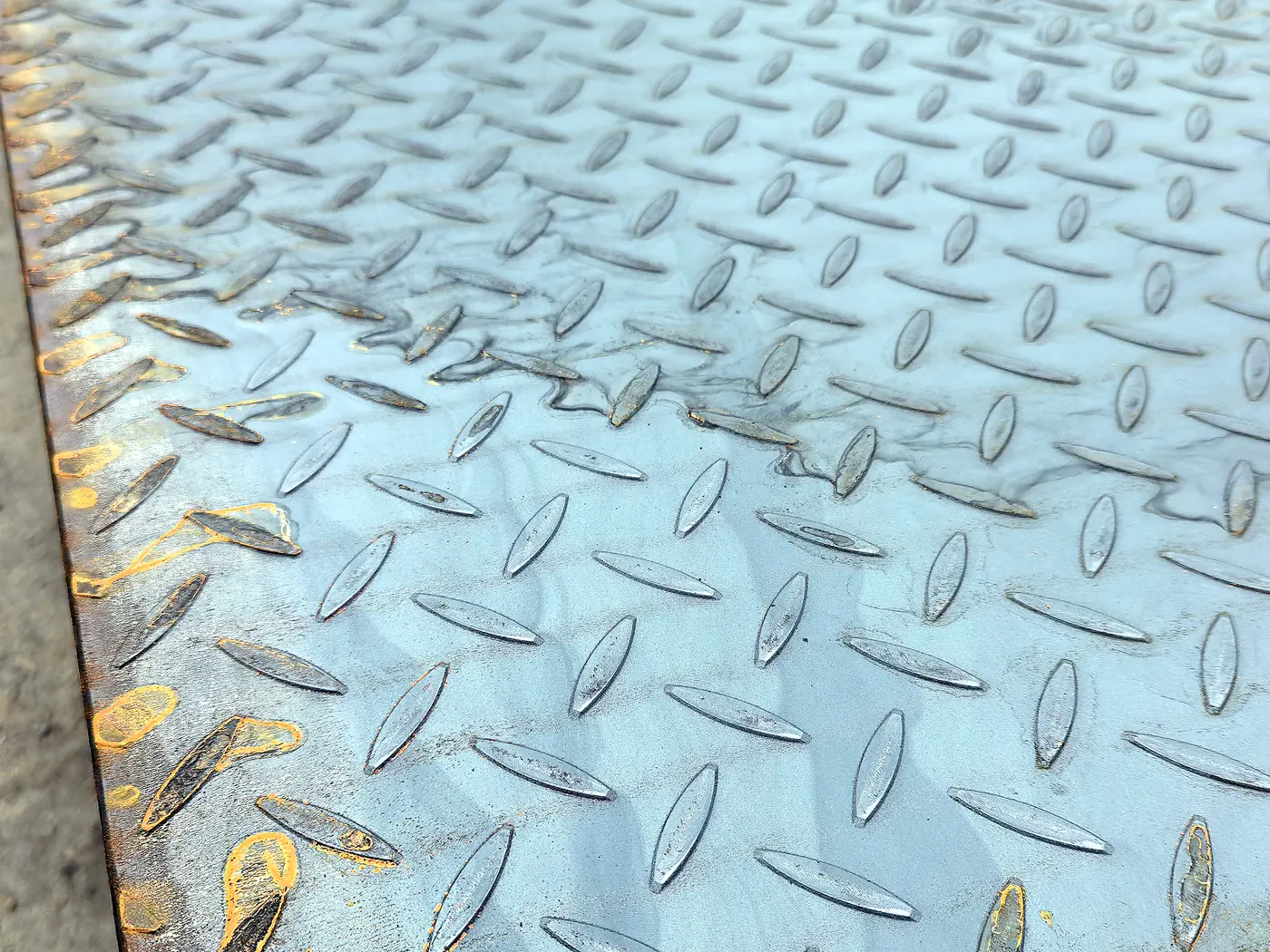
Checkered plate is a hot-rolled plate with a raised pattern rolled into one face. The pattern provides grip underfoot, which is why it is the standard material for walkways, stair treads, platforms, vehicle floors and any surface where people or equipment move over steel. It is supplied in the same Q235B and Q355B structural grades as plain plate, so a checkered panel welds and fabricates exactly like its plain equivalent.
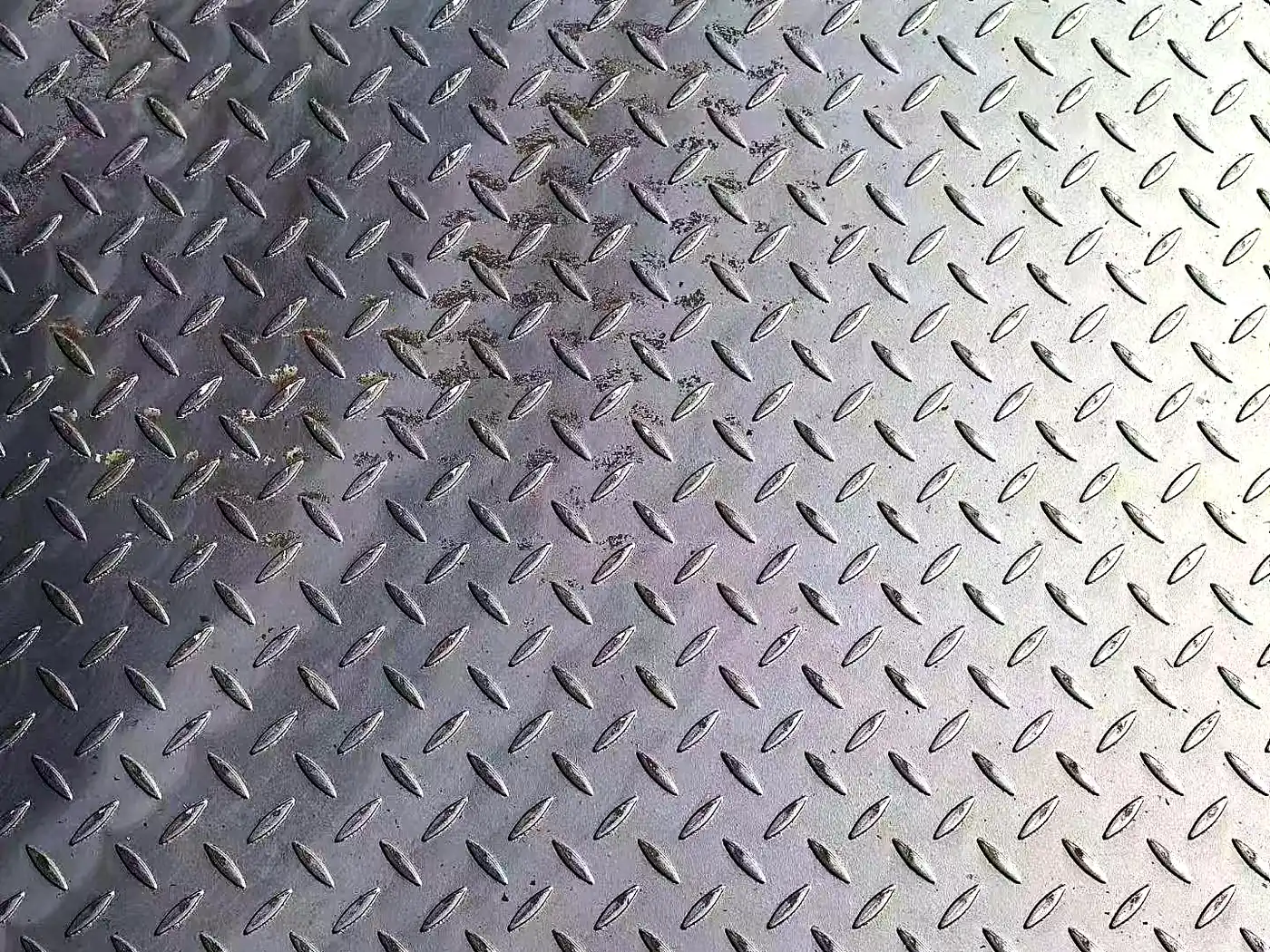
Three patterns are produced. Diamond pattern uses two rows of raised bars set at an angle to each other and is the most common general-purpose pattern. Lentil, also called teardrop, uses a rounded lozenge shape that gives a slightly gentler surface, often chosen for walkways where foot comfort matters. Round-dot pattern is used where a more uniform surface is wanted. Pattern height is modest in relation to the base plate, so the pattern is not counted in the theoretical weight — the weight is calculated on the base thickness, which is how it is quoted and how it is priced.
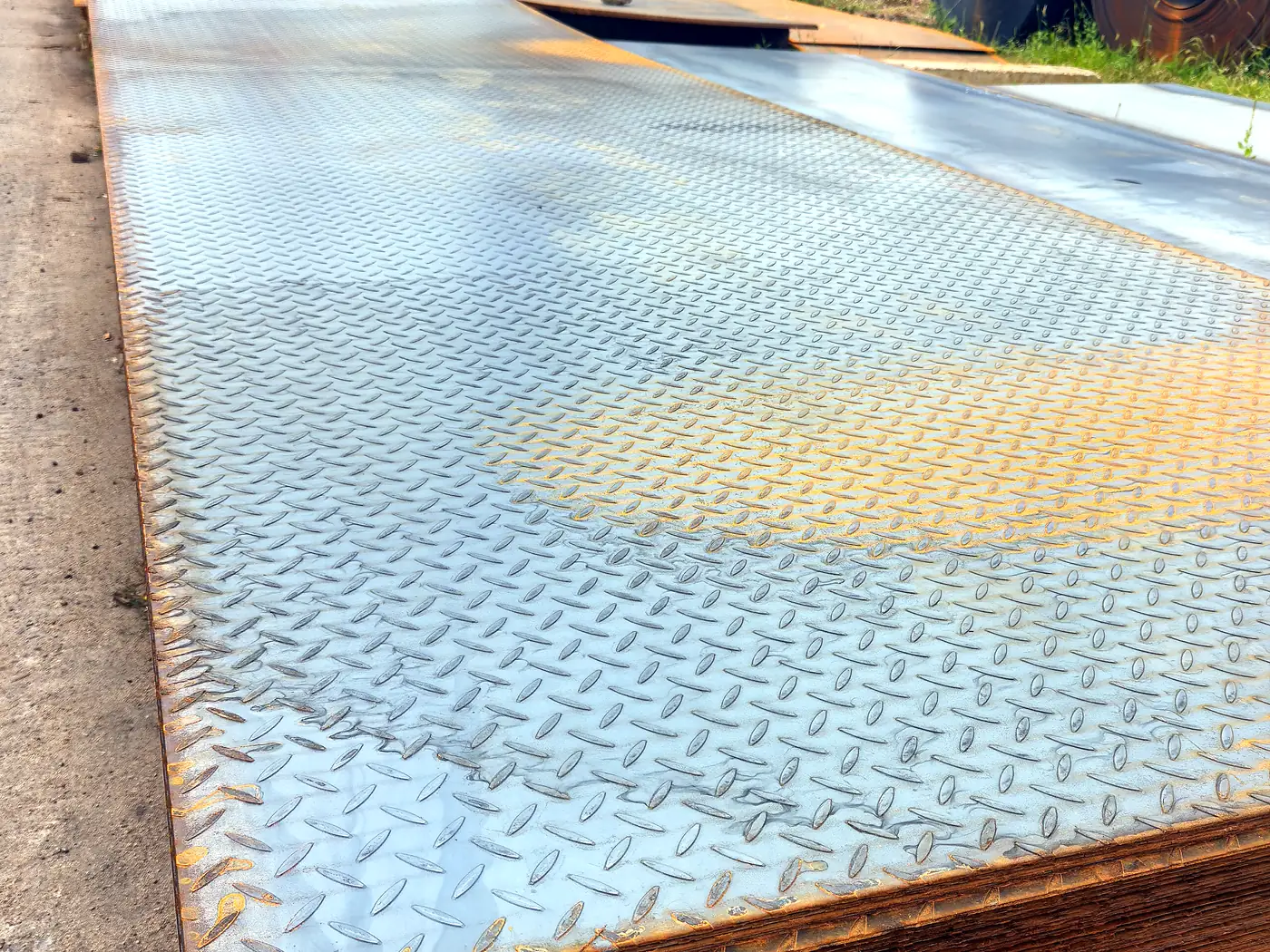
Two buying points decide whether a checkered plate order runs smoothly. The first is the base thickness: as with plain plate, nominal and measured thickness differ, so a nominal 6 mm checkered plate measures about 5.75 mm at the base and the pattern sits above that. The second is the cut: treads and platform panels are almost always cut to a drawing, and cutting to size before shipment avoids the offcut waste of buying full sheets and trimming them on site. Punched or drilled holes for fixings, edge folds and galvanizing can all be added as separate processes.
Specifications & Size Range
Base thickness, pattern type and stock sizes. Patterns are diamond, lentil and round-dot; the pattern height is additional to the base thickness but is not counted in the theoretical weight. Cut-to-size panels, drilled holes and edge folding are produced to your drawing.
| Base thickness range | Common base thicknesses (mm) | Pattern type | Standard sheet size | Typical use |
|---|---|---|---|---|
| Light checkered plate | 2.0, 2.5, 2.75, 3.0 | Diamond / lentil | 1250 × 2400 mm, 1500 × 3000 mm | Stair treads, vehicle floors, light walkways, machine covers |
| Medium checkered plate | 3.5, 3.75, 4.0, 4.5, 4.75 | Diamond / lentil | 1250 × 6000 mm, 1500 × 6000 mm | Platforms, mezzanine flooring, ramps, trailer decks |
| Heavy checkered plate | 5.0, 5.75, 6.0, 7.5, 7.75 | Diamond / lentil | 1250 / 1500 mm × 6000 mm | Heavy duty platforms, dock plates, equipment floors |
| Extra-heavy checkered plate | 8.0, 9.75, 10.0, 12.0 | Diamond / round-dot | 1500 mm × 6000 mm, cut to size | Mining and plant flooring, hopper linings, heavy access ways |
| Cut-to-size panels | any thickness above | as specified | to drawing | Stair treads, removable platform bays, trench covers, hole patterns |
Tolerances
Base thickness tolerance follows GB/T 709, and in commercial practice a nominal 3 mm plate measures about 2.75 mm and a nominal 6 mm plate about 5.75 mm, roughly 0.25 mm under nominal on the thin and medium gauges, widening to 0.5-1.0 mm on the heavier gauges. Full-thickness checkered plate is quoted on request. Pattern geometry is produced to the pattern standard in use, and the theoretical weight is calculated on the base thickness only.
Steel Grades & International Equivalents
All grades below are supplied with a mill test certificate. The right-hand column shows the material type and the Chinese standard the grade is produced to; the middle columns give the nearest recognised equivalent in other national standards. Exact equivalence for a specific project should be confirmed on the enquiry.
| GB (China) | ASTM / AISI (US) | EN (Europe) | JIS (Japan) | DIN (Germany) | Type / Standard |
|---|---|---|---|---|---|
| Q235B plate | A36 / A283 Gr.C | S235JR+N (EN 10025-2) | SS400 | St37-2 | Hot-rolled structural plate (GB/T 3274) |
| Q355B plate | A572 Gr.50 | S355JR (EN 10025-2) | SM490 | St52-3 | High-strength hot-rolled plate (GB/T 1591) |
Grade Notes
- Q235B plate — General structural plate for fabrication, welding and machining. Thickness tolerance to GB/T 709.
- Q355B plate — High-strength plate for bridges, heavy machinery, pressure structures and offshore fabrication.
Chemical Composition (%, ladle analysis)
Typical specification limits. Actual heat values are reported on the mill test certificate supplied with every shipment.
| Grade | C | Si | Mn | P max | S max | Other elements |
|---|---|---|---|---|---|---|
| Q235B plate | ≤0.20 | ≤0.35 | ≤1.40 | ≤0.045 | ≤0.045 | — |
| Q355B plate | ≤0.24 | ≤0.55 | ≤1.60 | ≤0.035 | ≤0.035 | Ceq ≤0.45 |
Mechanical Properties
Minimum values at room temperature unless stated. ReL = yield strength; Rp0.2 = 0.2% proof stress; Rm = tensile strength; A = elongation after fracture.
| Grade | Yield (ReL) | Proof (Rp0.2) | Tensile (Rm) | Elongation A | Impact / others | |
|---|---|---|---|---|---|---|
| Q235B plate | ≥235 MPa | — | 370–500 MPa | ≥26% | +20 °C, ≥27 J | — |
| Q355B plate | ≥355 MPa (≤16 mm) | — | 470–630 MPa | ≥22% | +20 °C, ≥27 J | — |
Standards & Documents
- GB/T 3277 — hot-rolled checkered steel plate: pattern dimensions, base thickness and tolerances
- GB/T 709 — dimensions, shape, weight and tolerances for hot-rolled plate and strip (base plate)
- GB/T 700 — carbon structural steels (Q235B); GB/T 1591 — high-strength structural steels (Q355B)
- GB/T 3274 — hot-rolled structural plate: technical delivery conditions
- Weight and pricing calculated on base thickness; pattern height is additional and not included in the theoretical weight
- EN 10204 3.1 mill test certificate with heat number, chemistry and mechanical properties; SGS or BV inspection available
Typical Applications
| Industry / Application | Typical use |
|---|---|
| Walkways & access platforms | Plant walkways, maintenance platforms, mezzanine floors and access routes, where the raised pattern provides grip even when the surface is wet or contaminated with oil. |
| Stair treads & landings | Industrial stair treads, outdoor escape stairs, landings and ramps, supplied cut to size and drilled or folded to the fabrication drawing. |
| Vehicle & trailer floors | Truck beds, trailer decks, service vehicle floors and equipment platform decks, where the pattern stops cargo and foot traffic sliding. |
| Industrial equipment flooring | Floors and access panels on crushers, screens, conveyors, tanks and skids, and walkways built into machine assemblies. |
| Drainage covers & municipal steelwork | Trench covers, drain gratings, gantry walkways and footbridge decking, where grip and load capacity are required together. |
| Docks, ramps & loading areas | Dock plates, loading ramps and workshop entry ramps needing a durable slip-resistant running surface. |
| Mining & heavy plant | Access flooring on crusher and screening structures, chute liners and wear surfaces in thicker base gauges where abrasion resistance matters. |
Common Problems Buyers Face — and How We Prevent Them
These are the issues that most often cause claims on steel imports. Each one is controlled in our process before shipment.
The plate is lighter than the weight calculation predicted
Why it happens: Pattern height is not included in the theoretical weight, and the base thickness is supplied to the minus side of the tolerance, so a buyer who calculates on nominal base thickness plus pattern finds less steel than expected.
Our control: The theoretical weight is calculated on base thickness only, and we state the actual base thickness on the quotation. If your platform design is calculated on a minimum section, order full-thickness base plate and we will quote it separately.
The pattern direction is wrong on stair treads and ramp panels
Why it happens: Grip depends on the pattern crossing the direction of travel, and an order placed without a pattern direction on the drawing arrives with the bars running the wrong way.
Our control: Mark the walking direction on the cutting drawing. We cut the panels with the pattern running across the direction of travel and, where access panels or treads of different widths share a sheet, plan the nesting so the direction is consistent throughout the delivery.
Slip resistance reduced by a coat of paint or by wear
Why it happens: Painting over the pattern fills the gaps between the raised bars and removes most of the grip, and soft base material wears smooth under heavy foot traffic.
Our control: For outdoor or wet service we recommend hot-dip galvanized checkered plate rather than painted material, which protects the steel and leaves the pattern intact. Where a painted finish is required, use a thin high-build coating rather than a thick film.
Cut panels arrive with distortion or a rounded pattern edge
Why it happens: Cutting checkered plate with the pattern on the cutting line, or with excessive heat input, distorts the panel and leaves a rough edge that is a handling hazard.
Our control: Panels are cut with the pattern direction and the cutting process agreed in advance, and cut edges are dressed where the panel will be handled. Where the panel is long and narrow, we recommend the flatness check before packing.
Rust between the pattern bars in transit or in store
Why it happens: The valleys of the pattern hold water and the raised bars protect it from drying, so bare checkered plate in a humid container rusts earlier than plain plate of the same thickness.
Our control: Bare checkered plate is shipped dry with VCI paper on long or humid routes, and for exposed or coastal service we supply the galvanized version. Where the end use is outdoors, galvanizing from the start is normally cheaper than painting twice.
Our Supply & Manufacturing Advantages
- Three pattern types from one supplier — Diamond, lentil and round-dot patterns, so the surface can be matched to the duty — from vehicle floors to pedestrian walkways — without changing supplier.
- Cut, drilled and folded to drawing — Treads, platform bays and covers arrive ready to fit, with holes for fixings and folds for edge stiffness already formed, avoiding site cutting of a patterned surface.
- Base thickness declared — The measured base thickness and the applicable under-tolerance are stated on the quotation, so the weight and the section of the finished platform are known before the order is placed.
- Galvanized option for outdoor service — The same plate is available hot-dip galvanized, which protects both the pattern and the cut edges and removes the need for repainting on exposed walkways.
- Two grades in one order — Q235B for general platforms and Q355B where a thinner plate is needed for the same load, with matching certificates across a single delivery.
- Documented material — EN 10204 3.1 mill test certificate with heat number, chemistry and mechanical properties for every heat, plus dimensional records and third-party inspection on request.
Packaging, Delivery & Payment
- Packing: loose in bulk vessel, or bundled and containerised to your requirement. Galvanized and coated products get VCI paper, waterproof wrapping and edge protection. See our export packaging methods.
- Availability: both stock and custom production. Tell us the specification and we will confirm the route.
- MOQ: no strict minimum — one ton can ship.
- Lead time: stock dispatched to port within 3 days; orders needing export packaging about 1 week; custom production quoted per product.
- Payment: stock — 10% deposit, balance before shipment; custom production — 50% deposit, balance before shipment.
- Documents: EN 10204 3.1 mill test certificate with every shipment; third-party inspection (SGS / BV) on request.
Frequently Asked Questions
What is checkered plate called in different markets?
The same product is sold as checkered plate, chequered plate, tear plate, anti-slip plate, tread plate and floor plate. In Chinese trade it is hua wen gang ban, meaning pattern plate. All of these refer to a hot-rolled plate with a raised anti-slip pattern rolled into one face, normally in diamond or lentil pattern.
What is the difference between diamond and lentil pattern?
Diamond pattern uses two rows of raised bars set at an angle to one another, which gives the highest grip and is the usual choice for vehicle floors and heavy platforms. Lentil, or teardrop, pattern uses a rounded lozenge shape that presents a slightly gentler surface and is often chosen for walkways and stairs where foot comfort matters. Both are made in the same base thicknesses and grades and both are slip resistant when wet.
Is the pattern height included in the weight?
No. Theoretical weight is calculated on the base thickness only, and the pattern is not counted. That is standard practice in the industry and it is why a 6 mm checkered plate weighs the same as a 6 mm plain plate on paper. When you compare quotations, compare the base thickness, because that is the number that carries the load.
What base thickness should I use for a stair tread?
For a normal industrial stair 3 mm base thickness is adequate, and for heavy traffic or industrial stairs 4.5 mm and above is normal. Where the tread is unsupported over a wide span, or where it will carry trolley wheels, size the base thickness on the load and the span rather than on the traffic. Send the tread drawing and we will confirm the thickness.
What is the Chinese equivalent of ASTM A36 checkered plate?
Q235B to GB/T 700 is the closest Chinese equivalent to ASTM A36 and is the standard base grade for checkered plate. It is close to A36 in yield strength, tensile range and weldability, and it is normally accepted where A36 is specified. Q355B, equivalent to ASTM A572 Gr.50, is used where higher strength or a thinner base plate is required.
Can checkered plate be galvanized?
Yes. The same plate is supplied hot-dip galvanized to GB/T 13912, ISO 1461 or ASTM A123, with a coating weight nominated against the atmosphere the platform will stand in. Galvanizing is the standard choice for outdoor walkways, docks and coastal installations, because the valleys of the pattern hold water and bare plate rusts there first.
What is the difference between checkered plate and checkered steel sheet?
It is the same product and the two names are used interchangeably. The base thickness decides how the material is treated commercially: up to about 3 mm it is usually called sheet, and above that plate. For walkways and treads the working range is normally 2.5 mm to 8 mm base thickness.
Can you cut and drill checkered plate to my drawing?
Yes, and we recommend it. Send the cutting drawing with the walking direction marked and we will nest the panels, cut to size, drill or punch the fixing holes and fold the edges where required. Processing before shipment avoids site cutting of a patterned surface and reduces freight weight.
What is the minimum order quantity and the lead time?
There is no strict minimum and one ton can ship, which is convenient for small platform or repair jobs. Common sizes reach the port in about 3 days; cut, drilled, folded or galvanized orders take about one week. Non-standard sizes and patterns are quoted per item.
Request a Quotation Export Packaging