
Medium & Heavy Steel Plate (Q235B, Q355B), 20-200 mm
Medium and heavy hot-rolled plate in Q235B and Q355B from 20 mm to 200 mm, for heavy fabrication, pressure-retaining structures, shipbuilding and mining equipment. Widths 1500 mm to 2500 mm, lengths 6 m to 12 m, with ultrasonic testing, thickness-direction (Z) properties and edge preparation available to order.
Product Overview
Medium and heavy plate is the material that carries the load in large welded structures. Where thin sheet is chosen for formability and appearance, heavy plate is chosen for stiffness and for its ability to resist high local loads and impact without distortion. Both Q235B and Q355B are fully weldable, and Q355B is the grade normally specified where the design has been calculated on stress rather than on deflection, allowing a thinner and lighter plate for the same duty.
The range runs from 20 mm to 200 mm. Plate up to 60 mm is the workhorse band and is widely held as standard material. From 60 mm to 200 mm the supply becomes a mill order, with availability depending on thickness, width and grade, so it should be confirmed before your design is frozen. Widths are normally 1500, 1800, 2000, 2200 and 2500 mm and lengths 6 m, 8 m and 12 m, with cut-to-size supply available for heavy parts that would otherwise be uneconomic to ship.
Two options matter in heavy plate and both are order-specific. Ultrasonic testing to NB/T 47013 detects internal laminations and inclusions, and is normally specified for pressure-retaining or safety-critical work. Thickness-direction (Z-direction) properties, quoted as Z15, Z25 or Z35, improve resistance to lamellar tearing where a weld is made through the plate thickness in a restrained joint. State the requirement on the enquiry, because both change the mill route and the certificate.
Specifications & Size Range
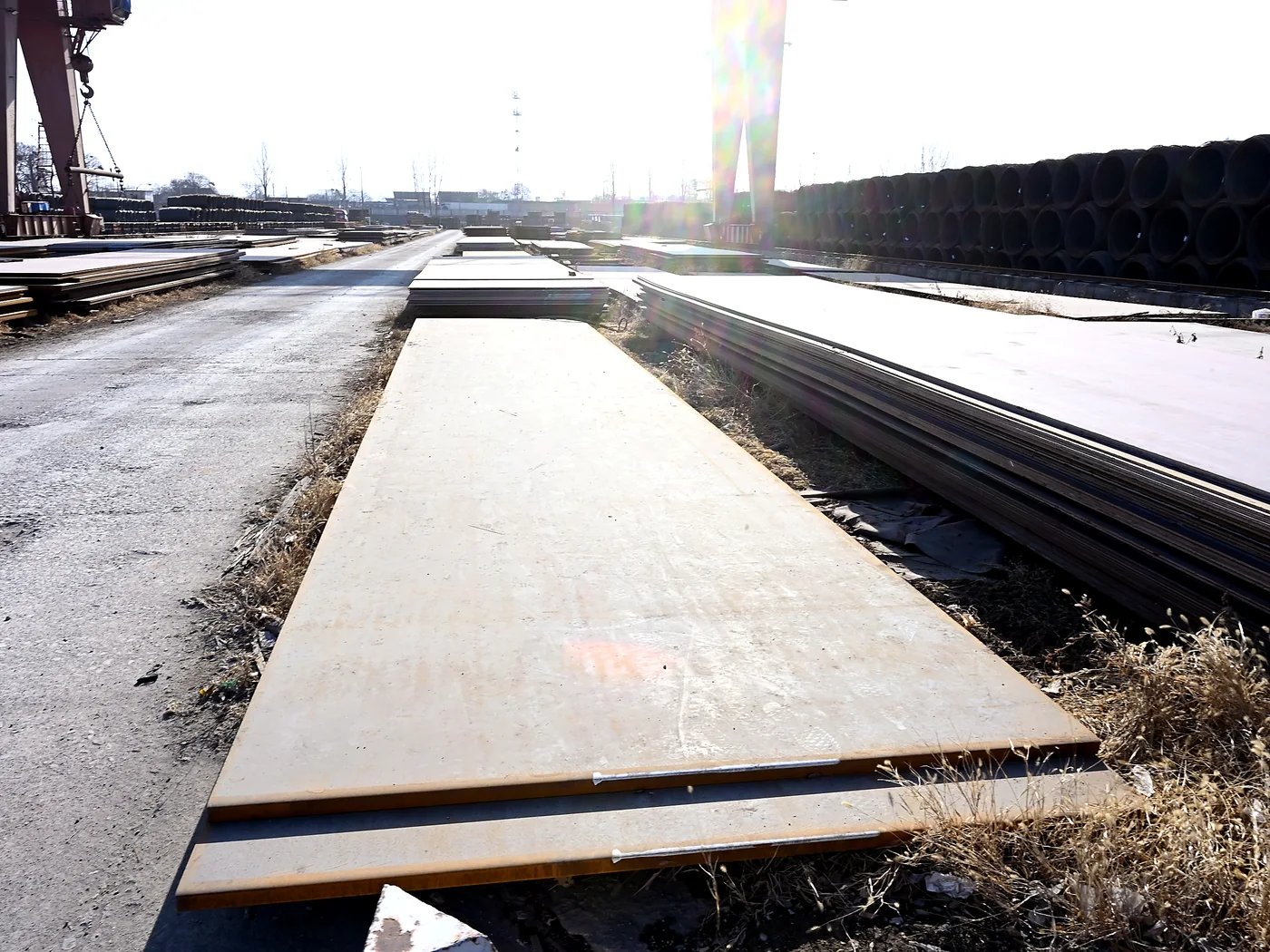
Thickness bands for medium and heavy plate. The band from 5 mm to 20 mm is also supplied when a project mixes plate sizes, so a single order can cover both light and heavy details. Availability in the 100-200 mm band depends on width and grade and is confirmed on the enquiry.
| Thickness band | Common thicknesses (mm) | Typical width (mm) | Standard length | Typical use |
|---|---|---|---|---|
| Medium plate | 20, 22, 25, 28, 30 | 1500 / 1800 / 2000 | 6 m / 8 m / 12 m | Equipment bases, hoppers, heavy brackets, weldments |
| Heavy plate | 32, 36, 40, 45, 50, 60 | 1800 / 2000 / 2200 | 6 m / 8 m / 12 m | Machine frames, crusher and mill bodies, ship structure |
| Very heavy plate | 70, 80, 90, 100 | 2000 / 2200 / 2500 | 6 m / 8 m, cut to size | Press bases, die plates, heavy plant structures |
| Extra-heavy plate | 110, 120, 150, 180, 200 | 2000 / 2500 | cut to size | Large machine beds, marine and offshore fabrications |
Tolerances
Thickness tolerance to GB/T 709: about 0.5-1.0 mm under nominal for plate above 10 mm, widening with thickness and width. Full-thickness plate is quoted on request. Where ultrasonic testing is specified it is carried out to NB/T 47013, and thickness-direction properties to Z15, Z25 or Z35 are certified by the mill when ordered. Width, length, camber and flatness follow GB/T 709 and GB/T 3274.
Steel Grades & International Equivalents
All grades below are supplied with a mill test certificate. The right-hand column shows the material type and the Chinese standard the grade is produced to; the middle columns give the nearest recognised equivalent in other national standards. Exact equivalence for a specific project should be confirmed on the enquiry.
| GB (China) | ASTM / AISI (US) | EN (Europe) | JIS (Japan) | DIN (Germany) | Type / Standard |
|---|---|---|---|---|---|
| Q235B plate | A36 / A283 Gr.C | S235JR+N (EN 10025-2) | SS400 | St37-2 | Hot-rolled structural plate (GB/T 3274) |
| Q355B plate | A572 Gr.50 | S355JR (EN 10025-2) | SM490 | St52-3 | High-strength hot-rolled plate (GB/T 1591) |
Grade Notes
- Q235B plate — General structural plate for fabrication, welding and machining. Thickness tolerance to GB/T 709.
- Q355B plate — High-strength plate for bridges, heavy machinery, pressure structures and offshore fabrication.
Chemical Composition (%, ladle analysis)
Typical specification limits. Actual heat values are reported on the mill test certificate supplied with every shipment.
| Grade | C | Si | Mn | P max | S max | Other elements |
|---|---|---|---|---|---|---|
| Q235B plate | ≤0.20 | ≤0.35 | ≤1.40 | ≤0.045 | ≤0.045 | — |
| Q355B plate | ≤0.24 | ≤0.55 | ≤1.60 | ≤0.035 | ≤0.035 | Ceq ≤0.45 |
Mechanical Properties
Minimum values at room temperature unless stated. ReL = yield strength; Rp0.2 = 0.2% proof stress; Rm = tensile strength; A = elongation after fracture.
| Grade | Yield (ReL) | Proof (Rp0.2) | Tensile (Rm) | Elongation A | Impact / others | |
|---|---|---|---|---|---|---|
| Q235B plate | ≥235 MPa | — | 370–500 MPa | ≥26% | +20 °C, ≥27 J | — |
| Q355B plate | ≥355 MPa (≤16 mm) | — | 470–630 MPa | ≥22% | +20 °C, ≥27 J | — |
Standards & Documents
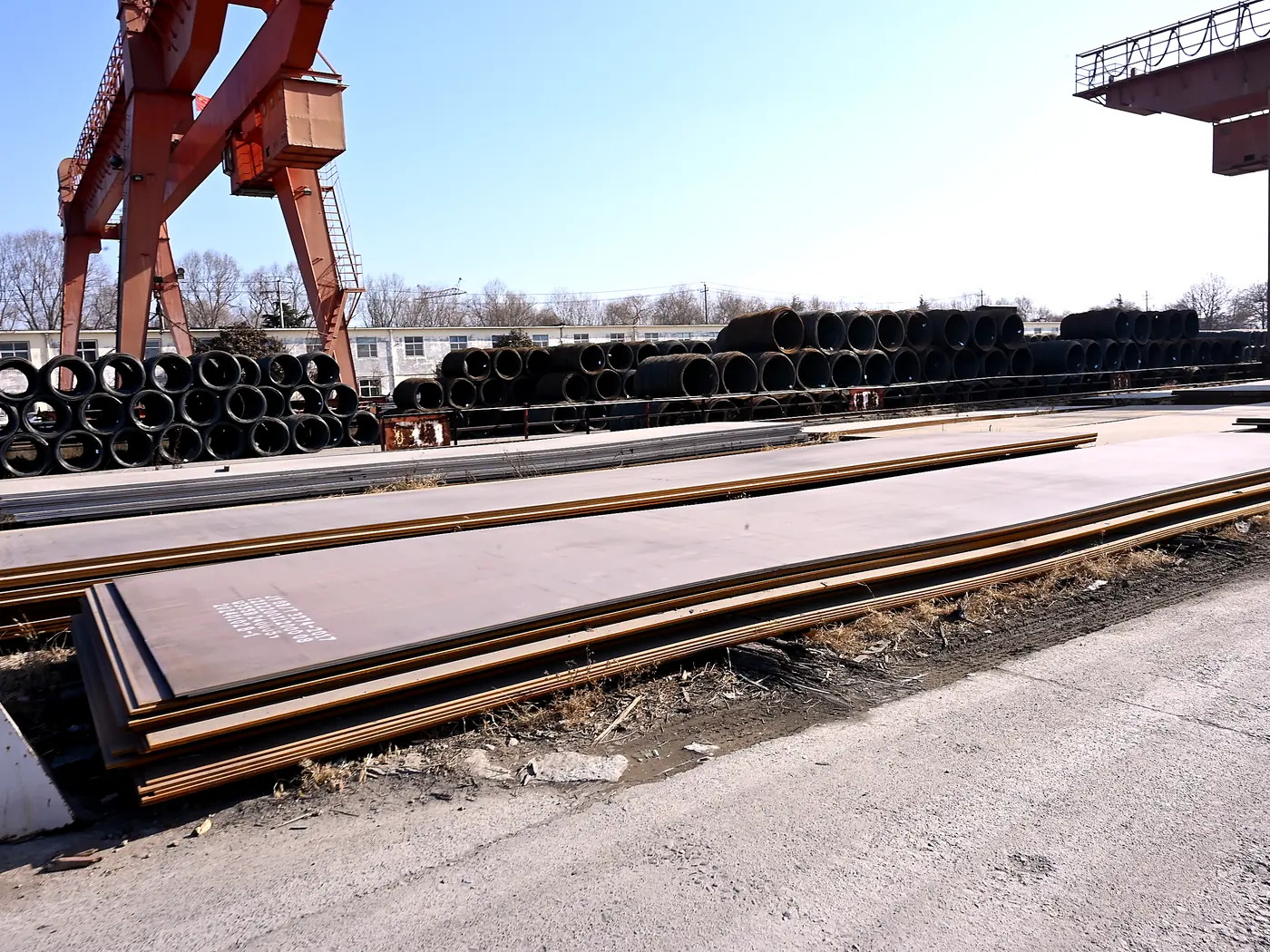
- GB/T 709 — hot-rolled steel plate and strip: dimensions, shape, weight and tolerances
- GB/T 3274 — hot-rolled structural steel plate and strip: technical delivery conditions
- GB/T 1591 — high-strength low-alloy structural steels (Q355B, Ceq and impact requirements)
- GB/T 700 — carbon structural steels (Q235B)
- Ultrasonic testing to NB/T 47013 when specified; thickness-direction properties Z15 / Z25 / Z35 on request
- EN 10204 3.1 mill test certificate with heat number, chemistry and mechanical properties; SGS or BV inspection available
Typical Applications
| Industry / Application | Typical use |
|---|---|
| Heavy steel structures | Plant columns, crane runway beams, transfer girders, thick base plates and heavily loaded connections, where a thick section is used rather than a built-up assembly. |
| Pressure-retaining & process equipment | Shell and head plate for reactors, columns, heat exchangers, autoclaves and process vessels. Tell us the design code and the pressure and temperature duty and we will nominate the plate grade and testing regime. |
| Shipbuilding & marine structures | Hull and deck plate in the thicker strakes, bulkheads, keel and rudder structures, barge and pontoon plate. Classification requirements are nominated against the class rule that applies. |
| Bridges & heavy civil work | Main girder plate, splice and cover plates, bearing stiffeners and diaphragms for road and rail bridges, where Q355B and documented impact properties are normally specified. |
| Mining, crushing & bulk handling | Crusher frames and jaws, screen bodies, mill liners, chute and bin plate, and dragline and excavator components subject to abrasion and impact. |
| Machinery beds & press bases | Bed plate, housings and bases for presses, shears, rolling mills and large machine tools, where thick plate provides the mass and rigidity the machine needs. |
| Storage tanks, silos & hoppers | Shell plate for large storage tanks, silos and hoppers in non-pressure service, with the thickness nominated against head, support spacing and the stored medium. |
Common Problems Buyers Face — and How We Prevent Them
These are the issues that most often cause claims on steel imports. Each one is controlled in our process before shipment.
Lamellar tearing after welding in a thick restrained joint
Why it happens: Standard plate has reduced ductility through its thickness, and a weld made through the thickness of a highly restrained joint can tear if inclusions sit near the weld zone.
Our control: Where the joint is critical, specify thickness-direction properties Z15, Z25 or Z35 so the mill supplies plate with controlled through-thickness ductility. We need the joint detail at the enquiry stage because the Z requirement changes the mill route and the lead time.
Internal lamination discovered only after cutting
Why it happens: Heavy plate can contain internal inclusions or laminations from the slab that are invisible from the surface but open up on a machined edge or a weld preparation.
Our control: For safety-critical or pressure-retaining work, specify ultrasonic testing to NB/T 47013 and the plate is examined before it leaves the mill. For general structural work, tell us if the plate will be machined on the edge and we will advise where testing adds value.
Thickness below nominal, so the weight and the weld preparation are short
Why it happens: Plate above 10 mm carries an under-tolerance of roughly 0.5 mm to 1.0 mm, which is normal commercial practice but is often assumed to be zero.
Our control: The applicable under-tolerance is stated on the quotation before the order is placed. If your design or your weight tolerance requires it, order full-thickness plate and we will quote that separately.
Heavy plate is difficult to handle and is damaged in transit
Why it happens: Thick plate is heavy, and lifting without spreader beams or stacking without timber bearers leads to bent edges, chipped corners and unsafe unloading at the receiving port.
Our control: Packing is planned around the plate weight and the unloading method, with lifting points marked, timber bearers between layers and edge protection fitted. Heavy consignments are shipped break-bulk or in flat racks so the stevedore can handle them safely.
Availability changes late in the project
Why it happens: Very heavy plate is a mill order rather than a stock item, and mills roll heavy plate to a campaign schedule, so a thickness that was available last month may not be next month.
Our control: We confirm availability against the actual mill schedule before the order is placed and tell you honestly where a design can be met from an alternative thickness or width. Orders with a fixed erection date are booked early rather than promised on a best-effort basis.
Our Supply & Manufacturing Advantages
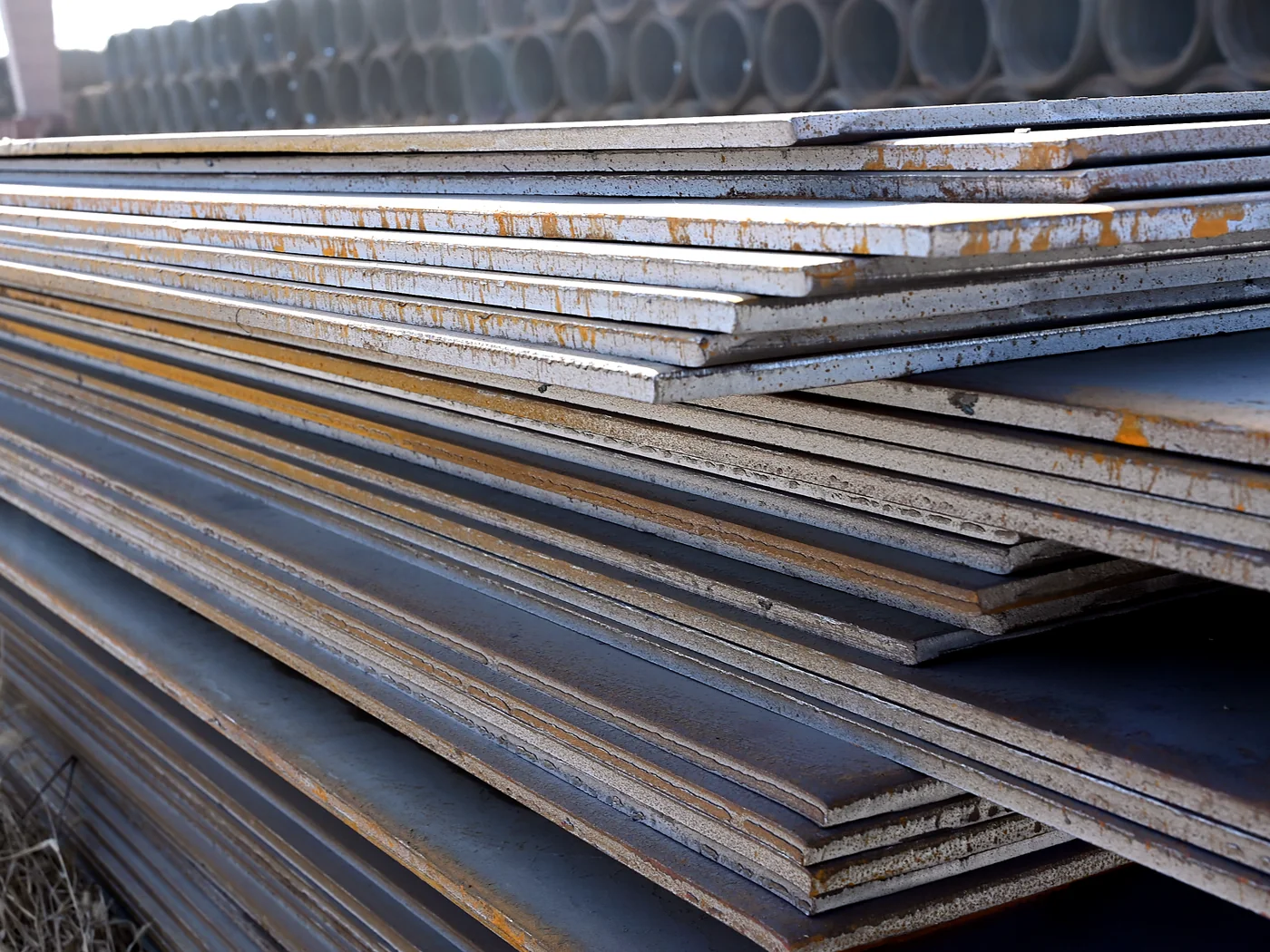
- Thick plate with testing options — Heavy plate supplied with ultrasonic testing to NB/T 47013 and thickness-direction properties Z15 / Z25 / Z35 when the joint design calls for them.
- Two grades in one shipment — Q235B and Q355B plate in the same order, so a mixed fabrication package arrives with a consistent set of certificates.
- Cut, bevelled and profiled before shipping — Heavy plate is cut to size, profiled and edge-bevelled in the workshop, which removes the hardest and heaviest work from your own shop floor.
- Widths and lengths matched to the part — Width and length are selected against your cutting plan so offcut weight and the number of welded joints are both reduced.
- Documented and traceable — EN 10204 3.1 mill test certificate with heat number, plus ultrasonic test reports and Z-direction certificates where these were specified.
- Export planning for heavy consignments — Break-bulk, flat-rack or container loading is chosen against the actual piece weight and the unloading equipment at your port, with lifting points marked.
Packaging, Delivery & Payment
- Packing: loose in bulk vessel, or bundled and containerised to your requirement. Galvanized and coated products get VCI paper, waterproof wrapping and edge protection. See our export packaging methods.
- Availability: both stock and custom production. Tell us the specification and we will confirm the route.
- MOQ: no strict minimum — one ton can ship.
- Lead time: stock dispatched to port within 3 days; orders needing export packaging about 1 week; custom production quoted per product.
- Payment: stock — 10% deposit, balance before shipment; custom production — 50% deposit, balance before shipment.
- Documents: EN 10204 3.1 mill test certificate with every shipment; third-party inspection (SGS / BV) on request.
Frequently Asked Questions
What is the difference between medium plate and heavy plate, and where does each start?
In Chinese trade usage the medium and heavy band starts at about 20 mm and runs to 200 mm, with plate from 5 mm to 20 mm normally treated as medium sheet. Plate up to about 60 mm is the readily available band; from 60 mm to 200 mm availability depends on thickness, width and grade, so it is confirmed against the mill schedule before the order is placed.
Which grade should I use for a heavy welded structure, Q235B or Q355B?
For general heavy fabrication Q235B is the economical choice and welds without difficulty. Where the design has been calculated on stress, where self-weight matters, or where a thinner plate can replace a thicker one, use Q355B — it gives a yield strength of 355 MPa or more at 16 mm and below, against 235 MPa for Q235B. Most bridge, crane and transport structures are specified in Q355B.
What is Z-direction steel and do I need it?
Z-direction plate has controlled ductility through its thickness, quoted as Z15, Z25 or Z35, and is ordered where a weld is made through the plate thickness in a heavily restrained joint. Without it, such a joint can suffer lamellar tearing. If your detail drawing shows a through-thickness weld in a stiff tee or corner joint, specify a Z grade and tell us at the enquiry stage.
Can the plate be supplied with ultrasonic testing?
Yes. Ultrasonic testing to NB/T 47013 can be specified, and for pressure-retaining and safety-critical work it is normally required. The test report travels with the mill certificate. Tell us the acceptance level you need so the plate is tested once, at the mill, rather than being rejected at your receiving inspection.
What plate grade is used for pressure vessels and boilers?
Pressure-retaining service is governed by the design code, which in turn fixes the permitted plate grade, impact requirements and testing. Send us the design code, the design pressure and temperature and the joint details, and we will nominate the matching plate grade and testing regime and quote against it.
Who supplies medium and heavy steel plate from China for export?
We do. Plate is bought from major Chinese mills and shipped with an EN 10204 3.1 mill test certificate, with ultrasonic testing and Z-direction certification added when specified. Send the plate schedule — grade, thickness, width, length and quantity — and we will confirm availability, tolerance and lead time.
Do you have a minimum order quantity?
There is no strict minimum and one ton can ship, though for heavy plate the freight economics favour a full container or a break-bulk parcel and we will tell you where the break point lies. Mixed thicknesses can be combined in one shipment.
How is heavy plate packed for sea freight?
Plate is bundled with steel straps for container loading, or shipped break-bulk or in flat racks for heavy tonnage. Timber bearers separate the layers, edge protection prevents corner damage, lifting points are marked and, on long or humid routes, desiccant is added inside the bundle.
What is the lead time for medium and heavy plate?
Plate up to about 60 mm in common sizes reaches the port in roughly one week including cutting and export packing. Thicknesses from 60 mm to 200 mm are a mill order and the lead time is confirmed against the rolling schedule when the enquiry is made.
Request a Quotation Export Packaging