
Cold-Rolled Steel Sheet SPCC, 0.3-3.0 mm
Cold-rolled steel sheet in SPCC from 0.3 mm to 3.0 mm, with a smooth, flat, scale-free surface and tight thickness control for stamping, bending, appliance panels and furniture. Widths 1000 mm to 1500 mm, sheets cut to length or supplied as coil and slit to your strip width, with mill test certificate and surface inspection before shipment.
Product Overview
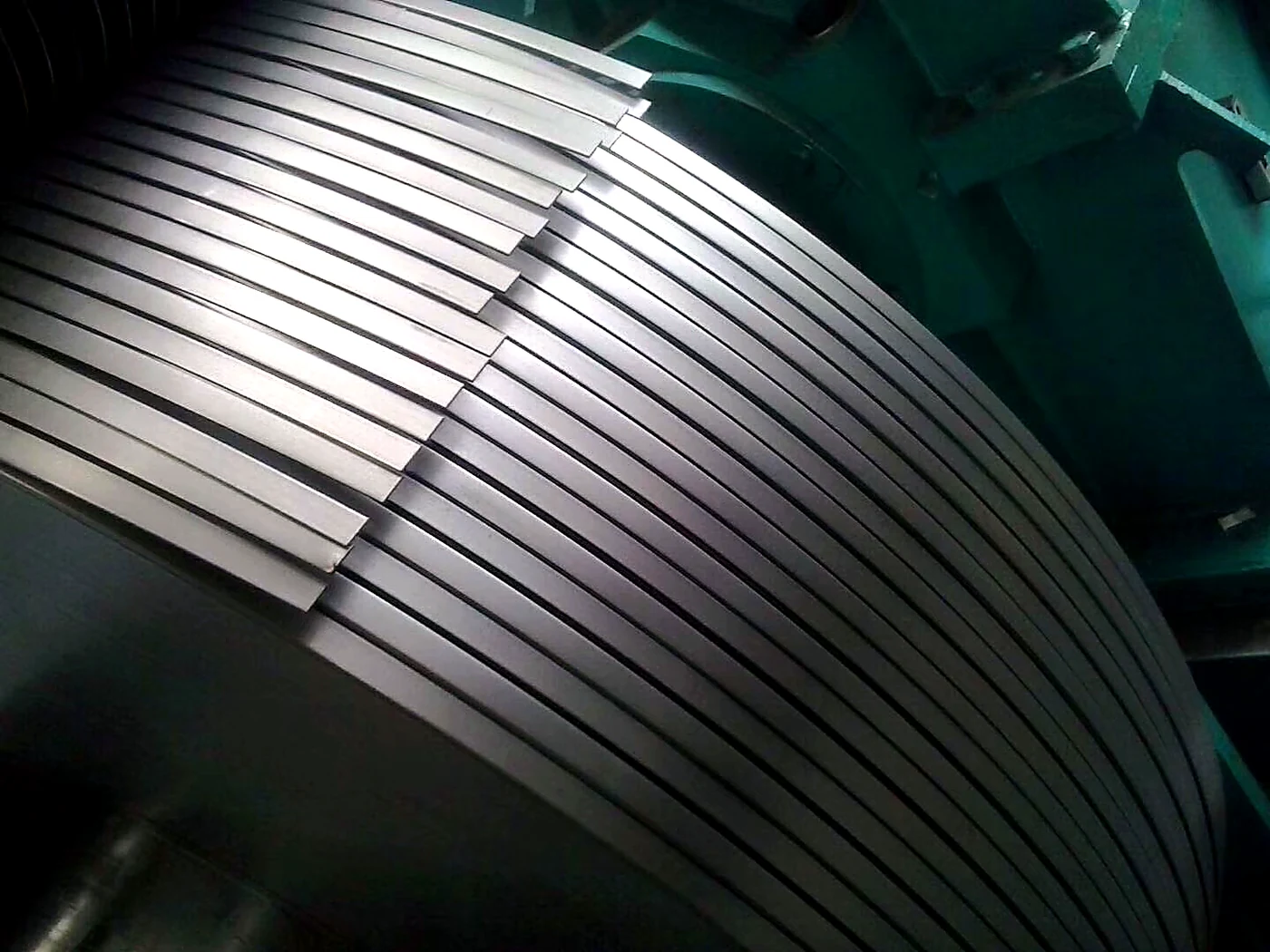
Cold-rolled sheet is produced by rolling hot-rolled coil at room temperature, then annealing and skin-passing it. Rolling at room temperature does not soften the surface scale the way hot rolling does, so the finished sheet is smooth, bright and dimensionally accurate, with thickness controlled far more closely than on hot-rolled material. That combination is what makes it the base material for parts that will be pressed, drawn, bent or painted.
The grade supplied is SPCC to JIS G3141, the commercial-quality cold-rolled grade, with yield strength between 140 and 280 MPa, tensile strength from 270 to 410 MPa and elongation of 28 per cent or more. That is enough ductility for ordinary press work, roll forming and bending without cracking. Where a part needs a deeper draw than SPCC can take, tell us the part and the draw depth rather than the grade, and we will nominate the correct forming grade and confirm it in writing.
Supply is flexible in three directions. Thickness is held across the 0.3 mm to 3.0 mm band in the sizes commonly used by appliance and panel manufacturers. Width is supplied at 1000 mm and 1250 mm as sheet, or coiled and slit to your strip width so your press line is fed with the exact width it uses. Length is cut to your sheet size, which removes the end trim and the handling that a coil would require in your own plant. Surface is inspected for scratches, edge damage and oiling before packing.
Specifications & Size Range
Standard thicknesses, widths and lengths. Widths 1000 mm and 1250 mm are the common supply widths, in lengths of 2000 mm and 2500 mm as sheet, or as coil for slitting. Intermediate thicknesses, custom sheet lengths and slit strip widths are produced to order.
| Product form | Thickness (mm) | Width (mm) | Supply length | Typical use |
|---|---|---|---|---|
| Thin sheet | 0.3, 0.4, 0.5, 0.6 | 1000 / 1250 | coil or cut sheet | Appliance casing, small pressings, closures, panels |
| General sheet | 0.7, 0.8, 0.9, 1.0, 1.2 | 1000 / 1250 / 1500 | 2000 mm / 2500 mm / coil | Cabinet and enclosure panels, shelving, furniture |
| Heavier sheet | 1.4, 1.5, 1.8, 2.0 | 1000 / 1250 / 1500 | 2000 mm / 2500 mm / coil | Structural brackets, chassis parts, deeper pressings |
| Thick cold-rolled sheet | 2.3, 2.5, 2.75, 3.0 | 1250 / 1500 | coil or cut sheet | Machine covers, thick pressings, load-bearing panels |
| Slit strip | 0.3-3.0 | to your width | coil | Roll forming, tube mills, press feed lines |
Tolerances
Thickness tolerance is tight and uniform across the sheet, holding to about plus or minus 0.03-0.05 mm in the thin gauges and about plus or minus 0.05-0.10 mm in the heavier gauges, in accordance with GB/T 708 and JIS G3141. Sheet is supplied flat with controlled flatness, with a bright skin-passed finish. Width and length tolerance, camber and squareness are confirmed on the order acknowledgement.
Steel Grades & International Equivalents
All grades below are supplied with a mill test certificate. The right-hand column shows the material type and the Chinese standard the grade is produced to; the middle columns give the nearest recognised equivalent in other national standards. Exact equivalence for a specific project should be confirmed on the enquiry.
| GB (China) | ASTM / AISI (US) | EN (Europe) | JIS (Japan) | DIN (Germany) | Type / Standard |
|---|---|---|---|---|---|
| SPCC (cold-rolled) | A1008 CS Type B | DC01 (EN 10130) | SPCC | St12 | Cold-rolled commercial-quality sheet (JIS G3141) |
| SPHC (hot-rolled sheet) | A1011 CS | DD11 (EN 10111) | SPHC | StW22 | Hot-rolled commercial-quality sheet (JIS G3131) |
Grade Notes
- SPCC (cold-rolled) — Cold-rolled sheet with smooth, flat surface for stamping, bending and painting.
- SPHC (hot-rolled sheet) — General hot-rolled pickled sheet for forming, welding and general fabrication.
Chemical Composition (%, ladle analysis)
Typical specification limits. Actual heat values are reported on the mill test certificate supplied with every shipment.
| Grade | C | Si | Mn | P max | S max | Other elements |
|---|---|---|---|---|---|---|
| SPCC (cold-rolled) | ≤0.12 | — | ≤0.50 | ≤0.040 | ≤0.045 | — |
| SPHC (hot-rolled sheet) | ≤0.10 | — | ≤0.50 | ≤0.040 | ≤0.040 | — |
Mechanical Properties
Minimum values at room temperature unless stated. ReL = yield strength; Rp0.2 = 0.2% proof stress; Rm = tensile strength; A = elongation after fracture.
| Grade | Yield (ReL) | Proof (Rp0.2) | Tensile (Rm) | Elongation A | Impact / others | |
|---|---|---|---|---|---|---|
| SPCC (cold-rolled) | 140–280 MPa | — | 270–410 MPa | ≥28% | — | — |
| SPHC (hot-rolled sheet) | ≥205 MPa | — | ≥270 MPa | ≥27% | — | — |
Standards & Documents
- JIS G3141 — cold-reduced carbon steel sheet and strip (SPCC dimensions, tolerance and properties)
- GB/T 708 — cold-rolled steel sheet and strip: dimensions, shape and weight tolerances
- EN 10130 — cold-rolled low carbon steel flat products (DC01 grade equivalent)
- ASTM A1008 — steel, sheet, cold-rolled, carbon, structural, high-strength low-alloy (CS Type B equivalent)
- ISO 3574 — cold-reduced carbon steel sheet of commercial and drawing qualities (CR1 equivalent)
- EN 10204 3.1 mill test certificate with heat number, chemistry and mechanical properties; surface inspection record on request
Typical Applications
| Industry / Application | Typical use |
|---|---|
| Appliance casings & enclosures | Refrigerator backs and liners, washing machine and air-conditioner casings, microwave and oven panels, where a smooth paint finish and consistent forming behaviour matter more than raw strength. |
| Pressings & stampings | Brackets, covers, housings, clips and general pressed parts produced from coil or blanked sheet. SPCC handles standard press work; the draw depth should be stated so the correct forming grade is nominated. |
| Panels, doors & furniture | Metal furniture, shelving, filing cabinets, lockers, partition panels and fire doors, usually finished with powder coating or paint over the cold-rolled surface. |
| Electrical & instrument enclosures | Switch and control boxes, instrument cases, cabinets and supports, where dimensional accuracy matters because the parts are assembled with fittings produced elsewhere. |
| Automotive & transport components | Inner panels, brackets, supports and trim parts for vehicles and trailers, where consistent thickness gives predictable press results and part weight. |
| Roll-formed & tube products | Cold-formed sections, door frames, tube and profile lines fed from slit strip, where a smooth, scale-free surface and tight thickness control are required for the forming rolls. |
| General manufacturing | Deep-drawn housings, metal containers, hardware and jobbing work needing a clean, paintable surface rather than the scaled surface of hot-rolled sheet. |
Common Problems Buyers Face — and How We Prevent Them
These are the issues that most often cause claims on steel imports. Each one is controlled in our process before shipment.
The press part tears or cracks during forming
Why it happens: The grade chosen is ductile enough for ordinary press work but not for the draw depth being attempted, or the wrong thickness was selected for the radius involved. The failure appears at the die, not at goods-inwards.
Our control: Send the part drawing, the material thickness and the draw depth at the enquiry stage. We nominate a forming grade with the ductility the operation needs, confirm it in writing and, where the part is critical, supply a sample coil so the die can be proved before the production order is placed.
Surface scratches or marks that show through the paint finish
Why it happens: Cold-rolled sheet is judged on appearance, and coil handling, slitting, stacking or unprotected transport will mark a bright surface that cannot be sanded out.
Our control: Sheet is handled with protective interleaving and felt-lined slitting to avoid roll marks. Bundles are packed with edge and face protection, shipped dry and, where the finish is critical, supplied with a protective film for the voyage.
Thickness variation causing press and roll-forming problems
Why it happens: Uneven thickness across the coil changes the blank weight and the formed shape, and shows up as a variation in the finished press or profile part.
Our control: Thickness is measured across the coil and along its length, and the crown and edge values are reported. Where a tight band is required for a forming operation, the target and the acceptable range are agreed in writing before the order is placed.
Rust appearing in storage or in transit
Why it happens: Cold-rolled sheet has no coating, and a bright surface with an incomplete oil film will oxidise quickly in humid conditions or in a container that sweats.
Our control: Sheet is supplied lightly oiled and shipped dry, with VCI paper and desiccant inside the bundle on long or humid routes. If parts must be stored for months before forming, ask for a heavier rust-preventive oil and we will match it to the storage time.
Coil or sheet arriving with edge damage
Why it happens: Thin cold-rolled coil has soft edges, and unprotected lifting with chains or slings at the port will crush the outer wraps of the coil.
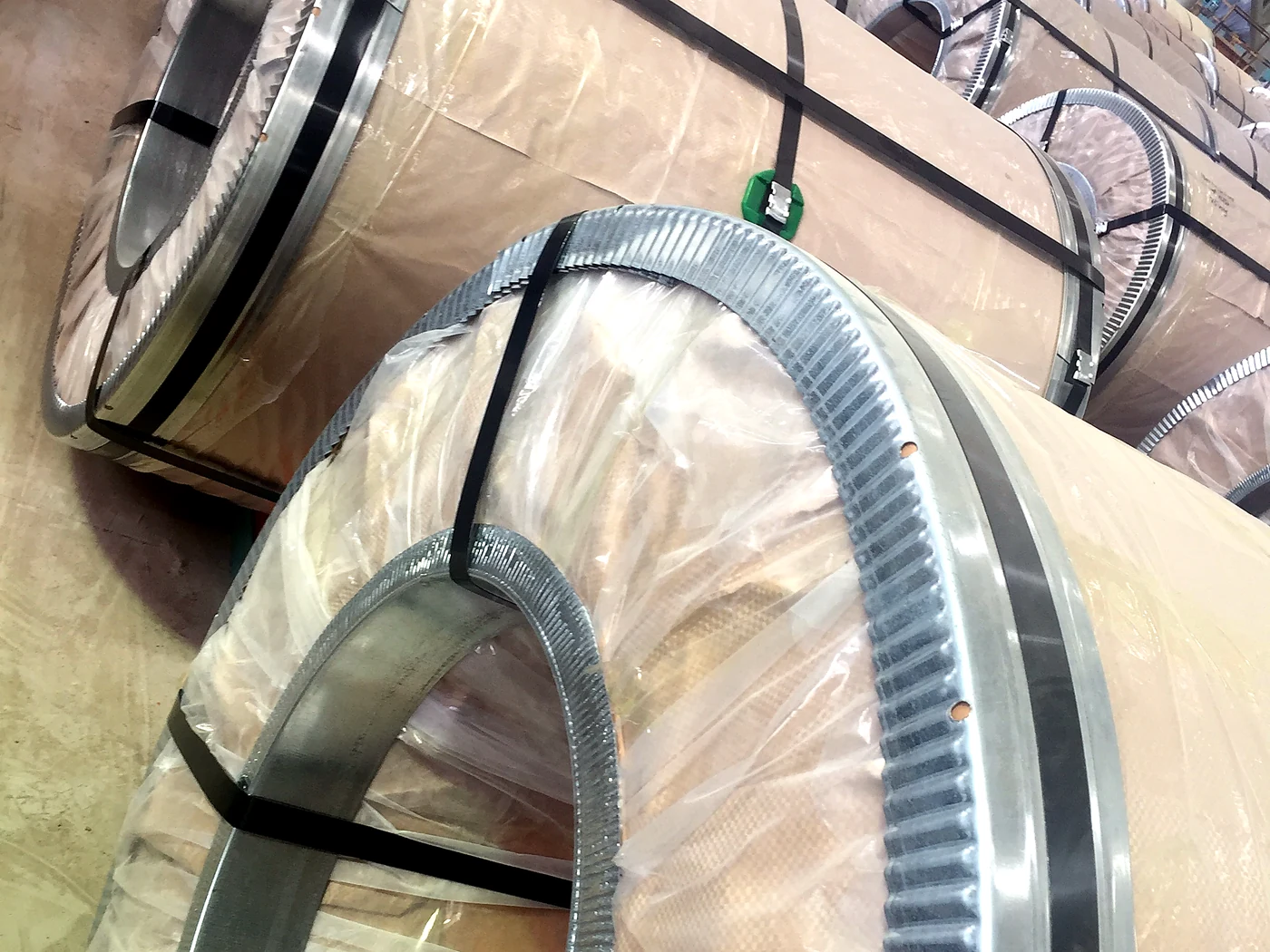
Our control: Coils are shipped on timber saddles with steel or plastic strapping and eye-to-sky loading guidance, and sheet bundles carry edge protectors. Where the receiving facility cannot handle coil, we supply cut sheet instead.
Our Supply & Manufacturing Advantages
- Tight and consistent thickness — Cold rolling holds thickness far more closely than hot rolling, so press results, blank weight and formed shape stay consistent from the first sheet to the last.
- Smooth, paintable surface — The bright skin-passed surface takes paint, powder coating and printing directly, with no scale removal or pickling step before the finishing line.
- Coil, cut sheet or slit strip — One order can be delivered as coils for your own line, as cut sheets ready to use, or as strip slit to the exact width your roll former or press feeds.
- Forming support — Send the part drawing and the draw depth and we will nominate the grade that will form it, rather than shipping a commercial grade and letting the die find the limit.
- Documented and inspected — EN 10204 3.1 mill test certificate for every heat, with thickness and surface inspection records, and third-party inspection on request.
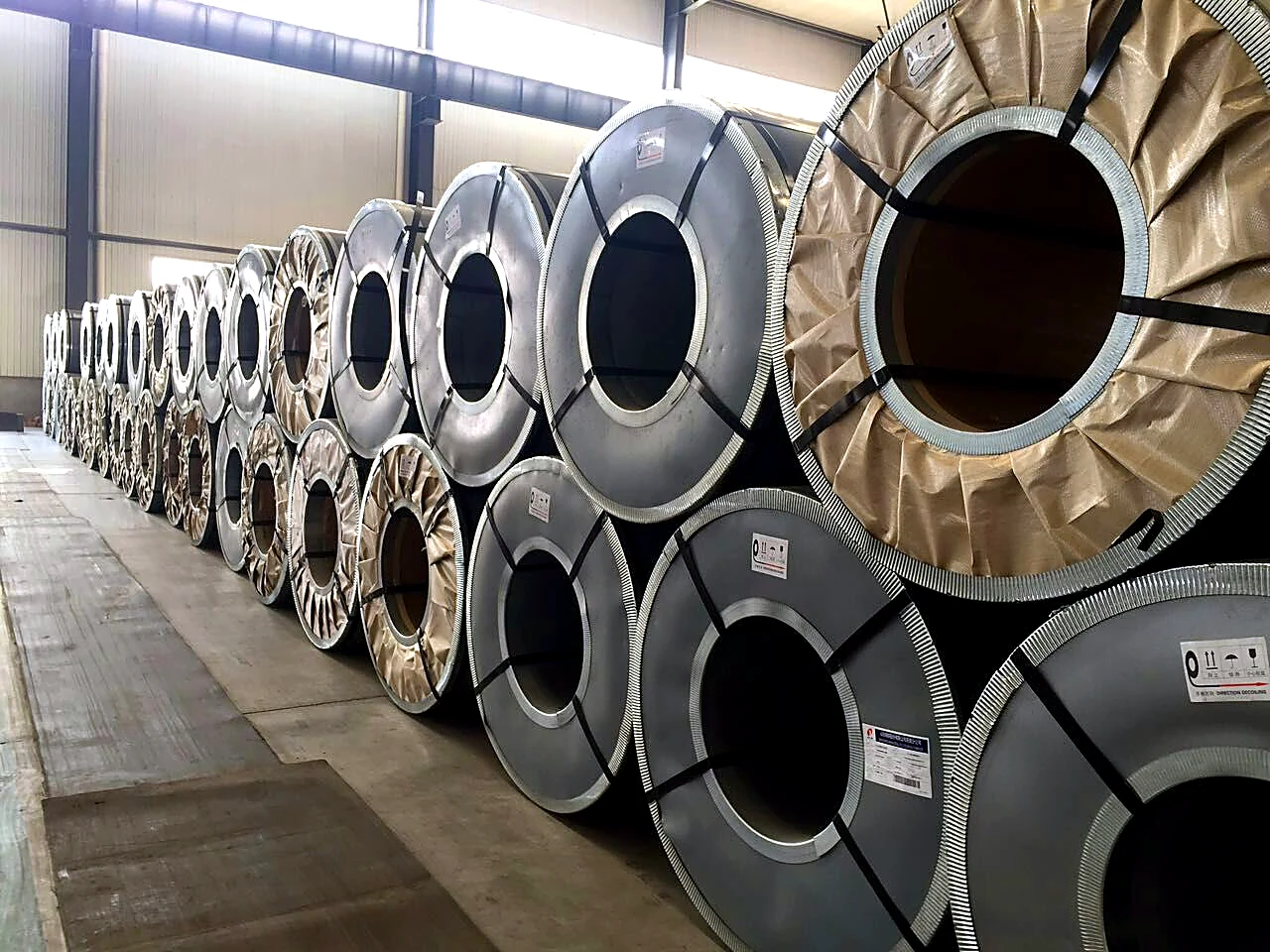
- Export packaging for thin sheet — Coils on timber saddles, sheet bundles with edge protection and interleaving, shipped dry with VCI paper where the route is long or humid.
Packaging, Delivery & Payment
- Packing: loose in bulk vessel, or bundled and containerised to your requirement. Galvanized and coated products get VCI paper, waterproof wrapping and edge protection. See our export packaging methods.
- Availability: both stock and custom production. Tell us the specification and we will confirm the route.
- MOQ: no strict minimum — one ton can ship.
- Lead time: stock dispatched to port within 3 days; orders needing export packaging about 1 week; custom production quoted per product.
- Payment: stock — 10% deposit, balance before shipment; custom production — 50% deposit, balance before shipment.
- Documents: EN 10204 3.1 mill test certificate with every shipment; third-party inspection (SGS / BV) on request.
Frequently Asked Questions
What is the difference between cold-rolled and hot-rolled steel sheet?
Hot-rolled sheet is rolled at high temperature and has a dark, scaled surface with a thickness range from about 1.5 mm upward, at the lower cost per ton. Cold-rolled sheet is rolled at room temperature from hot-rolled coil, giving a smooth bright surface, much tighter thickness control and better ductility, and is normally supplied between 0.3 mm and 3.0 mm. Choose hot-rolled for structure and welding, cold-rolled for appearance, pressing and painting.
What is the Chinese or Japanese equivalent of DC01 cold-rolled sheet?
SPCC to JIS G3141 is the commercial-quality cold-rolled grade used in China and Japan, and it is the direct commercial counterpart of DC01 to EN 10130 and of ASTM A1008 CS Type B. Properties are close enough that SPCC is routinely accepted where DC01 or CS Type B is specified, and we can supply the mill certificate with the equivalence stated for your records.
Which cold-rolled grade should I choose for a deep-drawn part?
SPCC handles ordinary press work and moderate drawing. For a deeper draw, the limiting factor is the ductility of the grade rather than the thickness, so send the part drawing and the draw depth and we will nominate a forming grade with the elongation and r-value the operation needs, and confirm it before the order is placed.
Can you supply coil and slit strip as well as cut sheet?
Yes. The material can be delivered as coil for your own decoiler and press line, as strip slit to the exact width you feed, or as cut sheets in the length you use. Slitting to width removes your own slitting cost and scrap, and cut sheet removes end trim and coil handling from your plant.
Who supplies cold-rolled steel sheet from China for export?
We do. SPCC cold-rolled sheet is sourced from major Chinese mills and shipped worldwide with a mill test certificate. Tell us the thickness, width, whether you want coil or cut sheet, and the quantity, and we will confirm availability and lead time. Trial quantities from one ton are accepted.
How should cold-rolled sheet be stored?
Keep it dry, off the floor and away from condensation, and leave the protective packing in place until the material is about to be used. Cold-rolled sheet has no coating, so a bright surface with a thin oil film will oxidise in humid air. For long storage ask for a heavier rust-preventive oil and we will match the oil to the storage time you expect.
What surface finish does the sheet have?
The standard finish is a bright, smooth, skin-passed surface, lightly oiled for protection in transit. It is suitable for direct painting, powder coating and printing. If your process needs a specific surface roughness or a dry, unoiled surface, state it on the enquiry and we will confirm what can be supplied.
Do you have a minimum order quantity and what is the lead time?
There is no strict minimum and one ton can ship, which suits trial and sample orders. Common sizes are dispatched to the port within about 3 days; orders requiring slitting, cut-to-length or protective packing take about a week. Custom widths and lengths are quoted per item.
What documents are provided with a cold-rolled sheet shipment?
An EN 10204 3.1 mill test certificate showing heat number, chemical composition and mechanical properties, plus the commercial invoice, packing list and certificate of origin. Thickness and surface inspection records can be added, and third-party inspection by SGS or BV can be arranged before loading.
Request a Quotation Export Packaging