
Crane Rail (QU70, QU80, QU100, QU120) in U71Mn
Crane rail in the QU series — QU70, QU80, QU100 and QU120 — in U71Mn rail steel, produced to GB/T 3426. The section is wide and low with a broad head, giving a large bearing area under the crane wheel and good resistance to overturning. Standard lengths 9 m, 12 m and 25 m, with cutting and drilling to your runway drawing.
Product Overview
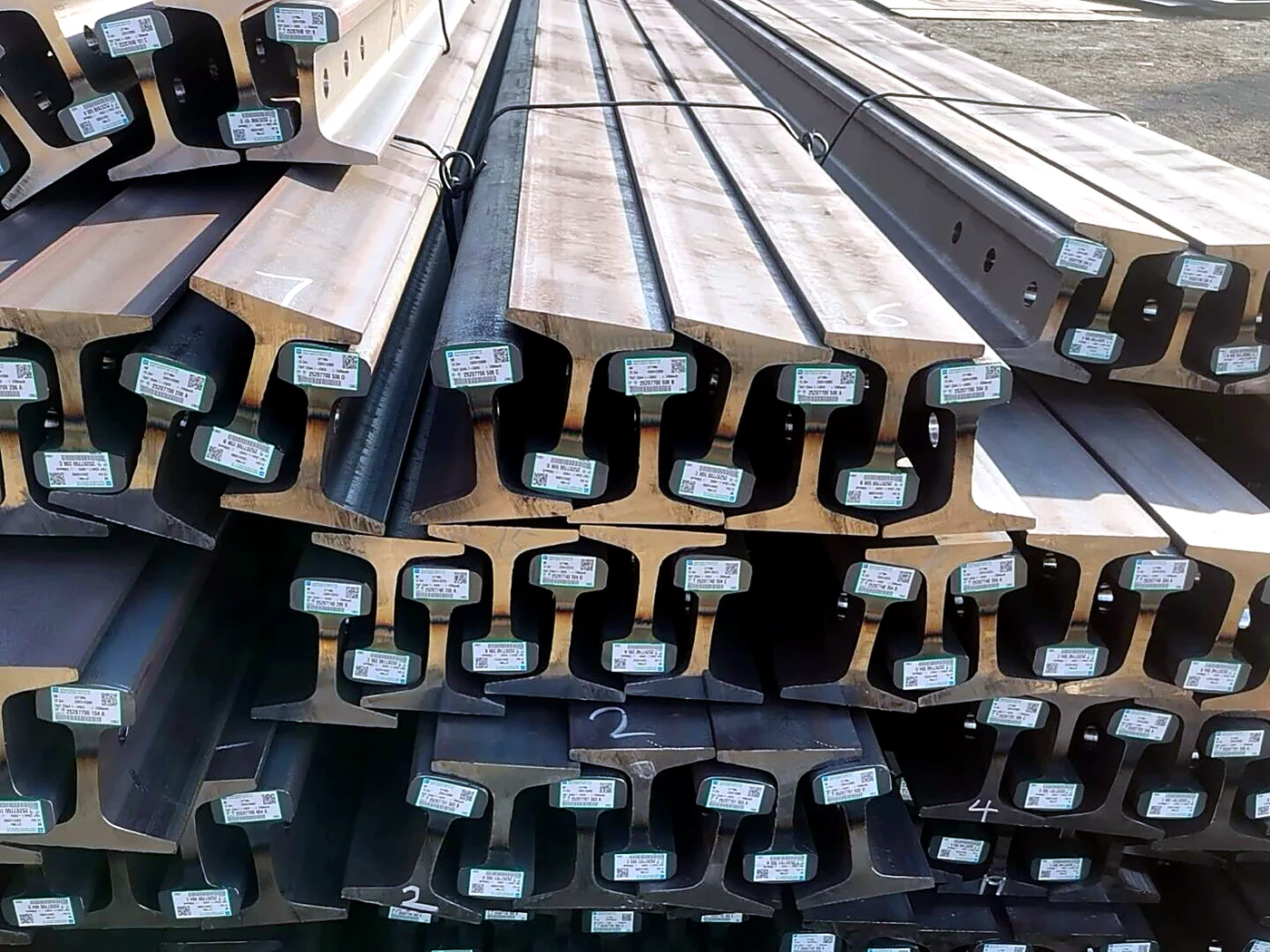
A crane rail is not a railway rail used for a different purpose: it is a different section shape designed for a different load case. A railway rail is tall and narrow, so that it can be fastened to sleepers and carry a wheel load along a track. A crane rail is wide and low with a broad flat head, because the load is a high wheel pressure applied at low travel speed, sometimes with the wheel flange bearing hard against the side of the head. The wide head spreads that pressure and the low section resists the overturning moment that a flanged wheel applies.
The QU series is the standard Chinese crane rail family and runs from QU70 to QU120, where the number is the nominal head width in millimetres. Wheel load capacity rises with the section, and as a working guide a light to medium duty workshop crane is served by QU70 or QU80, a heavier crane or a busy duty cycle calls for QU100, and a heavy or high-duty installation calls for QU120. Grade U71Mn gives the rail a minimum tensile strength of 880 MPa and a hardness of 250 HBW or more, which is what allows the head to resist flattening and spalling under repeated wheel passes rather than wearing into a groove.
Crane rail is normally supplied in 9 m, 12 m and 25 m lengths and is cut to the length of the runway panel before shipment. The details that matter on site are the joint position relative to the runway support, so that rail joints are not left unsupported between two brackets, and the method of fixing, whether the rail is clamped, welded to a base plate or fastened through drilled holes. Send us the runway drawing and we will supply the rail cut to length with the fixing holes drilled and the ends prepared to suit the joint.
Specifications & Size Range
The QU crane rail series with head width, approximate mass, standard lengths and the crane duty each section suits. Rails are cut to the runway panel length and drilled to the fixing detail on request. Base plates, clips and joint bars are quoted separately against your drawing.
| Rail type | Head width (mm) | Approx. weight (kg/m) | Standard length | Typical crane duty |
|---|---|---|---|---|
| QU70 | 70 | approx. 52.8 | 9 m / 12 m | Light and medium workshop cranes, monorail and hoist track |
| QU80 | 80 | approx. 63.7 | 9 m / 12 m | Medium duty overhead travelling cranes, gantry and portal track |
| QU100 | 100 | approx. 89.0 | 12 m / 25 m | Heavy duty overhead travelling cranes, port and yard cranes |
| QU120 | 120 | approx. 118.1 | 12 m / 25 m | Very heavy cranes, container cranes, steelworks and port duty |
| Cut and drilled rail | as above | as above | to runway drawing | Runway panels with joints, fixings and end stops to your detail |
Tolerances
Section dimensions, straightness and length follow GB/T 3426. The head width, section profile and straightness of the running surface are checked before packing, and hardness and mechanical properties are reported on the mill certificate. Cut length and drilled fixing holes are produced to the runway drawing with the dimensional tolerance confirmed on the order acknowledgement.
Steel Grades & International Equivalents
All grades below are supplied with a mill test certificate. The right-hand column shows the material type and the Chinese standard the grade is produced to; the middle columns give the nearest recognised equivalent in other national standards. Exact equivalence for a specific project should be confirmed on the enquiry.
| GB (China) | ASTM / AISI (US) | EN (Europe) | JIS (Japan) | DIN (Germany) | Type / Standard |
|---|---|---|---|---|---|
| QU70 / QU80 / QU100 / QU120 | AREMA Crane Rail (approx.) | EN 13674 (approx.) | JIS E1101 (approx.) | DIN 536 A (approx.) | Crane rail steel (GB/T 3426) |
| U71Mn | AREMA 115RE (approx.) | EN 13674-1 R260 (approx.) | JIS E1101 (approx.) | DIN 536 | Rail steel (high-carbon) (GB/T 2585) |
Grade Notes
- QU70 / QU80 / QU100 / QU120 — Crane rails in QU series for overhead travelling cranes, port cranes and heavy gantry tracks.
- U71Mn — Standard Chinese rail steel for railway tracks and crane rails; high wear resistance and fatigue strength.
Chemical Composition (%, ladle analysis)
Typical specification limits. Actual heat values are reported on the mill test certificate supplied with every shipment.
| Grade | C | Si | Mn | P max | S max | Other elements |
|---|---|---|---|---|---|---|
| QU70 / QU80 / QU100 / QU120 | 0.60–0.80 | 0.15–0.35 | 0.60–1.10 | ≤0.035 | ≤0.035 | — |
| U71Mn | 0.65–0.76 | 0.15–0.35 | 1.10–1.40 | ≤0.030 | ≤0.030 | — |
Mechanical Properties
Minimum values at room temperature unless stated. ReL = yield strength; Rp0.2 = 0.2% proof stress; Rm = tensile strength; A = elongation after fracture.
| Grade | Yield (ReL) | Proof (Rp0.2) | Tensile (Rm) | Elongation A | Impact / others | |
|---|---|---|---|---|---|---|
| QU70 / QU80 / QU100 / QU120 | — | — | ≥880 MPa | — | — | — |
| U71Mn | — | — | ≥880 MPa | ≥9% | — | — |
Standards & Documents
- GB/T 3426 — crane rail sections: QU70, QU80, QU100 and QU120 dimensions and tolerances
- Crane rail composition: C 0.60-0.80 per cent, Si 0.15-0.35 per cent, Mn 0.60-1.10 per cent, P and S 0.035 per cent maximum each
- Crane rail mechanical properties: tensile strength 880 MPa minimum, hardness 250 HBW minimum
- Rail steel grade U71Mn: tensile strength 880 MPa minimum, elongation 9 per cent minimum, hardness 260 HBW minimum
- Grade equivalence: QU series is comparable to AREMA crane rail sections, DIN 536 A and ISO 5003 rail steels
- EN 10204 3.1 mill test certificate with heat number, chemistry and mechanical properties; third-party inspection on request
Typical Applications
| Industry / Application | Typical use |
|---|---|
| Overhead travelling cranes | Runway track for single and double girder overhead travelling cranes in workshops, warehouses and production halls, sized to the wheel load and the duty class. |
| Gantry & portal crane track | Ground level and elevated track for gantry, portal and semi-portal cranes, including outdoor yards where the rail is seated on a foundation or a runway beam. |
| Port & container handling | Ship-to-shore, yard and container crane track, normally in QU100 or QU120 where wheel loads are high and the duty cycle is continuous. |
| Steelworks & heavy metallurgy | Foundry and casting crane track, ladle crane runways and heavy plant cranes, where heat, scale and high wheel pressures are combined. |
| Storage & logistics installations | Stacker, reclaimer, transfer car and automated storage crane track in bulk handling yards and distribution centres. |
| Monorail & hoist systems | Monorail hoist track and lighter travelling systems, where a QU70 or QU80 section is adequate for the wheel load. |
| Turntables & transfer systems | Circular and straight rail for turntables, transfer cars and furnace charging equipment, cut and curved to the drawing where required. |
Common Problems Buyers Face — and How We Prevent Them
These are the issues that most often cause claims on steel imports. Each one is controlled in our process before shipment.
Crane wheel and rail head wear or spalling
Why it happens: Rail head damage is caused by insufficient hardness for the wheel load, by misalignment between the rails, or by a rail that is under-supported and flexes as the crane passes.
Our control: Crane rail is supplied to the specified hardness of 250 HBW minimum, reported on the certificate. On site, the rail must be seated fully on its support along its whole length with no gaps at joints, and the two rails of a runway must be parallel and level, because misalignment loads the wheel flange against the head.
Rail joints falling between runway supports
Why it happens: Rails are supplied in standard lengths and cut on site without reference to the support spacing, so a joint lands in mid-span and the rail flexes at every wheel pass.
Our control: Send the runway drawing or the support spacing with the order and the rails are cut so that every joint falls on or immediately adjacent to a support. This is the single most effective thing a buyer can do to extend runway life.
The rail is loose or creeps along the runway
Why it happens: Fixing detail is left to site improvisation, so the clips or fasteners do not restrain longitudinal movement and the rail creeps towards the end of the runway.
Our control: Confirm the fixing detail at the enquiry stage. Rails can be supplied with drilled holes to your clip or base plate arrangement, and we will confirm the hole pattern against the drawing so the site work is assembly rather than fabrication.
Rail delivered straight but twisted after cutting
Why it happens: A long section of rail cut with a high heat input, or cut and stacked without support, will move as the internal stresses are released.
Our control: Cutting is carried out with a controlled process and rails are stacked on bearers along their length after cutting and before packing. Straightness is checked after cutting rather than assumed from the incoming rail.
Corrosion in an outdoor or wash-down environment
Why it happens: Crane rail is supplied in the black hot-rolled condition with no coating, and outdoor runways or wet processes corrode the web and foot, and binding the rail to the support.
Our control: Rails are shipped dry and protected on long or humid routes. In service, keeping the runway drained and the rail clear of standing water or process spillage does more for life than coating the head, which would be worn off by the wheels in any case. Ask us at the enquiry stage and we will advise on protection for the non-running surfaces.
Our Supply & Manufacturing Advantages
- The QU series in all four sections — QU70, QU80, QU100 and QU120 from one supplier, so a multi-crane installation is covered by one delivery and the sections can be matched to each crane duty.
- Rail cut to runway panel length — Rails are cut so joints fall at the supports, with the cut list agreed before production, which removes site cutting of a heavy section and the risk of an unsupported joint.
- Fixing holes drilled to your detail — Holes for clips, base plates or fasteners are drilled to your drawing so the runway is assembled on site rather than fabricated at height.
- Hardness and strength certified — U71Mn and QU rail steel supplied with tensile strength and hardness reported on the mill test certificate for every heat, so the wheel load capacity is backed by a document.
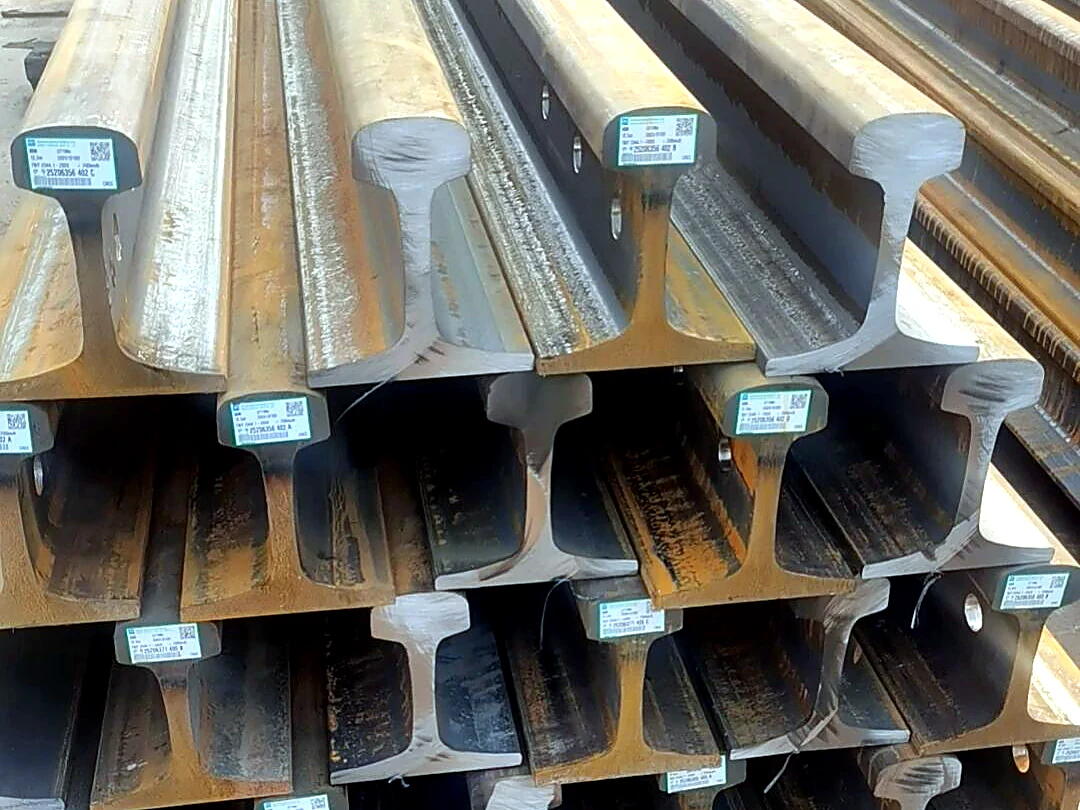
- Heavy section handling planned — Bundled, strapped and supported along the length, with lifting points marked and shipping arranged around the actual section weight and length.
- Documented and traceable — EN 10204 3.1 mill test certificate with heat number, chemistry and mechanical properties, with third-party inspection available on request.
Packaging, Delivery & Payment
- Packing: loose in bulk vessel, or bundled and containerised to your requirement. Galvanized and coated products get VCI paper, waterproof wrapping and edge protection. See our export packaging methods.
- Availability: both stock and custom production. Tell us the specification and we will confirm the route.
- MOQ: no strict minimum — one ton can ship.
- Lead time: stock dispatched to port within 3 days; orders needing export packaging about 1 week; custom production quoted per product.
- Payment: stock — 10% deposit, balance before shipment; custom production — 50% deposit, balance before shipment.
- Documents: EN 10204 3.1 mill test certificate with every shipment; third-party inspection (SGS / BV) on request.
Frequently Asked Questions
What is the difference between a crane rail and a railway rail?
The section shape and the load case are different. A crane rail is wide and low with a broad head, so the high wheel pressure of a slow-moving flanged crane wheel is spread over a large bearing area and the section resists overturning. A railway rail is tall and narrow because it must be fastened to sleepers and carry a wheel along a track at speed. Crane rails and railway rails are not interchangeable, and a runway should be built with a crane rail section.
Which QU section do I need for my crane?
As a working guide, QU70 or QU80 suits light and medium duty workshop cranes, QU100 suits heavy duty overhead travelling cranes and port equipment, and QU120 is used for very heavy installations such as container cranes and steelworks cranes. The deciding factors are the maximum wheel load, the wheel diameter and the duty classification. Send us those three figures and we will confirm the section.
What steel are QU crane rails made from?
QU crane rails are made from rail steel in grade U71Mn, a high-carbon steel with about 0.71 per cent carbon and 1.2 per cent manganese, giving a minimum tensile strength of 880 MPa and a hardness of 250 HBW or more on the crane rail section. That hardness is what allows the head to resist flattening and spalling under repeated wheel passes in service.
Can crane rails be supplied cut to length with holes drilled?
Yes, and it is the preferred way to buy them. Send the runway drawing and we will cut each rail so the joints fall at the supports and drill the fixing holes to your clip or base plate detail. The cut list and the hole positions are confirmed before production, and the dimensional tolerance is stated on the order acknowledgement.
How does crane rail weight compare with railway rail?
The QU series is heavier per metre than a railway rail of similar head width, because the section carries more steel in the head and foot to spread the wheel load. QU80 is roughly 64 kg per metre and QU120 roughly 118 kg per metre, against 43 to 60 kg per metre for the common railway rails. The weight matters for two reasons: the runway beam design, and the lifting equipment needed at the receiving port.
Who supplies crane rail from China for export?
We do. QU70, QU80, QU100 and QU120 are produced to GB/T 3426 in U71Mn and shipped with an EN 10204 3.1 mill test certificate. Send the section, length, quantity and any drilling or cutting detail, and we will confirm availability and lead time. Trial quantities from one ton are accepted.
What is the difference between QU100 and QU120?
Both are crane rail sections in the same family and differ mainly in size and load capacity. QU100 has a nominal head width of 100 mm and weighs about 89 kg per metre, while QU120 has a 120 mm head and weighs about 118 kg per metre. QU100 is used for heavy duty overhead travelling cranes and port cranes, and QU120 for the very heaviest installations such as container cranes and steelworks cranes.
How is crane rail packed for shipping?
Rails are bundled and strapped with lifting points marked, supported along their length on bearers so they are not bent during handling, and shipped in bundles for container or break-bulk loading depending on the quantity and length. Bundle labels show the section, grade, heat number and cut length.
Do you have a minimum order quantity and what is the lead time?
There is no strict minimum and one ton can ship. Stock sections reach the port in about 3 days; rails that must be cut to a runway schedule and drilled take about one week. Base plates, clips and joint bars are quoted separately against your drawing.
Request a Quotation Export Packaging