
Steel Rail (Heavy & Light Rail), U71Mn, 8-75 kg/m
Hot-rolled steel rail in U71Mn, from 8 kg/m light rail to 75 kg/m heavy rail, with 43, 50 and 60 kg/m as the standard heavy sections and 8, 12, 15, 18, 22 and 24 kg/m as the standard light sections. Lengths 8 m and 12 m for light rail and 12.5 m and 25 m for heavy rail, with cutting, end preparation and fishbolt drilling to your drawing.
Product Overview
Steel rail is a hot-rolled section with a head, a web and a foot, designed so that the wheel load is spread over a wide base while the head provides a hard, wear-resistant running surface. It is classified by mass per metre. Heavy rail is generally taken as 38 kg/m and above and is used for railway main line, metro and heavy industry track. Light rail runs from 8 kg/m to about 30 kg/m and is used for mine haulage, narrow gauge lines, workshop and warehouse track, and temporary or relocatable installations where the axle loads are lower.
The standard grade supplied is U71Mn, a high-carbon rail steel with 0.65 to 0.76 per cent carbon and 1.10 to 1.40 per cent manganese, giving a minimum tensile strength of 880 MPa, elongation of at least 9 per cent and a hardness of 260 HBW or more. That combination of hardness and fatigue resistance is what allows a rail to carry repeated wheel passes without head wear or fatigue cracking. The standard sections are 43, 50 and 60 kg/m for heavy rail — 60 kg/m is the usual specification for metro and main line track — and 8, 12, 15, 18, 22, 24 and 30 kg/m for light rail, with 38 and 75 kg/m available in the heavy range.
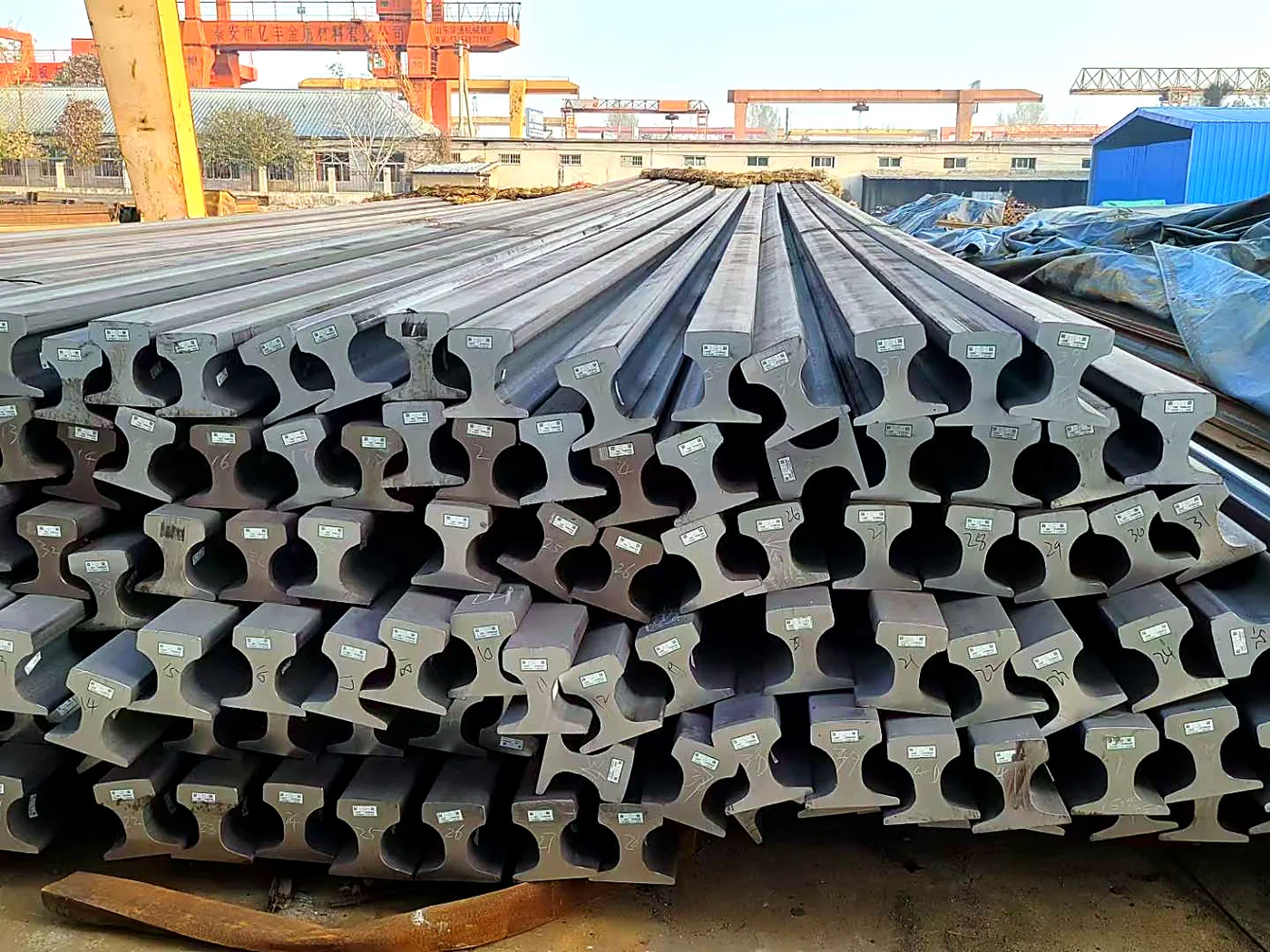
Two details decide whether a rail order is usable on site. The first is length: heavy rail is supplied in 12.5 m and 25 m lengths, and light rail in 8 m and 12 m, with longer strings normally produced by welding on site or at a depot. The second is end preparation. Rails are supplied with square-cut or chamfered ends, and fishbolt holes are drilled to the joint bar drawing rather than left to site drilling, because a mis-drilled hole weakens the rail web and a mis-matched hole pattern prevents the joints from closing.
Specifications & Size Range
Standard rail sections by mass per metre, with supply lengths and end preparation. Heavy rail is normally supplied in 12.5 m and 25 m lengths and light rail in 8 m and 12 m, with cutting to shorter lengths available. Fishbolt holes and end chamfers are drilled and cut to your joint bar drawing.
| Rail type | Standard sections (kg/m) | Typical length | End preparation | Typical use |
|---|---|---|---|---|
| Light rail, small | 8, 12, 15 | 8 m / 12 m | cut square, drilled to drawing | Mine cars, narrow gauge lines, workshop track, turntables |
| Light rail, medium | 18, 22, 24, 30 | 8 m / 12 m | cut square, drilled to drawing | Mine haulage, industrial siding, construction and temporary track |
| Heavy rail, medium | 38, 43 | 12.5 m / 25 m | drilled to joint bar drawing, chamfered ends | Industrial railway, port and yard track, branch lines |
| Heavy rail, main line | 50, 60 | 12.5 m / 25 m | drilled to joint bar drawing, chamfered ends | Main line and metro track, heavy industry rail systems |
| Heavy rail, heavy duty | 75 | 12.5 m / 25 m | drilled to joint bar drawing, chamfered ends | High axle load freight lines, mining and plant rail haulage |
Tolerances
Dimensions, section profile, straightness and length follow GB/T 2585 for heavy rail and GB 11264 for light rail. Cross-section dimensions and the straightness of the running surface are checked before packing, and the hardness and mechanical properties are reported on the mill certificate. Fishbolt hole positions, diameter and end chamfer are produced to the joint bar drawing supplied with the order.
Steel Grades & International Equivalents
All grades below are supplied with a mill test certificate. The right-hand column shows the material type and the Chinese standard the grade is produced to; the middle columns give the nearest recognised equivalent in other national standards. Exact equivalence for a specific project should be confirmed on the enquiry.
| GB (China) | ASTM / AISI (US) | EN (Europe) | JIS (Japan) | DIN (Germany) | Type / Standard |
|---|---|---|---|---|---|
| U71Mn | AREMA 115RE (approx.) | EN 13674-1 R260 (approx.) | JIS E1101 (approx.) | DIN 536 | Rail steel (high-carbon) (GB/T 2585) |
| QU70 / QU80 / QU100 / QU120 | AREMA Crane Rail (approx.) | EN 13674 (approx.) | JIS E1101 (approx.) | DIN 536 A (approx.) | Crane rail steel (GB/T 3426) |
Grade Notes
- U71Mn — Standard Chinese rail steel for railway tracks and crane rails; high wear resistance and fatigue strength.
- QU70 / QU80 / QU100 / QU120 — Crane rails in QU series for overhead travelling cranes, port cranes and heavy gantry tracks.
Chemical Composition (%, ladle analysis)
Typical specification limits. Actual heat values are reported on the mill test certificate supplied with every shipment.
| Grade | C | Si | Mn | P max | S max | Other elements |
|---|---|---|---|---|---|---|
| U71Mn | 0.65–0.76 | 0.15–0.35 | 1.10–1.40 | ≤0.030 | ≤0.030 | — |
| QU70 / QU80 / QU100 / QU120 | 0.60–0.80 | 0.15–0.35 | 0.60–1.10 | ≤0.035 | ≤0.035 | — |
Mechanical Properties
Minimum values at room temperature unless stated. ReL = yield strength; Rp0.2 = 0.2% proof stress; Rm = tensile strength; A = elongation after fracture.
| Grade | Yield (ReL) | Proof (Rp0.2) | Tensile (Rm) | Elongation A | Impact / others | |
|---|---|---|---|---|---|---|
| U71Mn | — | — | ≥880 MPa | ≥9% | — | — |
| QU70 / QU80 / QU100 / QU120 | — | — | ≥880 MPa | — | — | — |
Standards & Documents
- GB/T 2585 — hot-rolled steel rails for railway: heavy rail sections, dimensions and technical delivery conditions
- GB 11264 — light steel rails for railway: 8 kg/m to 30 kg/m sections and tolerances
- U71Mn rail steel composition: C 0.65-0.76 per cent, Si 0.15-0.35 per cent, Mn 1.10-1.40 per cent, P and S 0.030 per cent maximum each
- U71Mn mechanical properties: tensile strength 880 MPa minimum, elongation 9 per cent minimum, hardness 260 HBW minimum
- Grade equivalence: U71Mn is comparable to EN 13674-1 R260, AREMA 115RE and ISO 5003 rail steels
- EN 10204 3.1 mill test certificate with heat number, chemistry and mechanical properties; third-party inspection on request
Typical Applications
| Industry / Application | Typical use |
|---|---|
| Railway main line & branch track | Track for main line and branch railway work, in 50 and 60 kg/m sections with fishbolt holes drilled to the joint bar drawing so the track can be laid and joined without site drilling. |
| Metro & urban rail systems | Metro and light rail track, normally specified in 60 kg/m heavy rail with a documented certificate and controlled section profile. |
| Mining & mineral haulage | Mine haulage and tram track, where 22 kg/m and 30 kg/m light rail is common and heavier sections are used where the axle load or the curve radius demands it. |
| Industrial sidings & plant track | Factory, port and yard rail systems, transfer tracks, and rail circuits inside steelworks, cement and power plants. |
| Temporary & relocatable track | Construction and tunnelling track, portable rail sections and relocatable layouts where light rail can be recovered and re-laid as the work front advances. |
| Turntables, transfer cars & trolleys | Curved and straight rail track for transfer cars, kiln and furnace transfer systems, and workshop equipment running on rail. |
| Crane & gantry foundations | Rail track for lighter gantry and travelling systems, where the rail is seated on a foundation rather than carried by a fabricated crane runway; heavier wheel loads normally call for a dedicated crane rail section instead. |
Common Problems Buyers Face — and How We Prevent Them
These are the issues that most often cause claims on steel imports. Each one is controlled in our process before shipment.
Fishbolt holes do not line up with the joint bars on site
Why it happens: Rail is supplied with plain ends by default, or the holes are drilled to a generic pattern that does not match the joint bar actually being used.
Our control: Send the joint bar drawing or the hole pattern with the order and the rails are drilled to that pattern and checked against it before packing. End chamfer and hole edge condition are also checked, because a burred hole is where a fatigue crack in the rail web begins.
Rail arrives bent or with a twisted running surface
Why it happens: Rail is a long slender section, and lifting with chains, stacking without support along the length and handling at the port will all introduce bow or twist.
Our control: Rails are bundled and strapped, handled with slings rather than chains, and stacked on bearers at close centres. Straightness is checked before loading so the running surface is within the standard tolerance on arrival.
Head wear or shelling appears earlier than expected
Why it happens: Head wear depends on the hardness and quality of the rail steel and on the wheel load and lubrication of the track, so a rail that is not to the specified chemistry will wear at an unacceptable rate.
Our control: U71Mn rail is supplied to the specified carbon and manganese range with a hardness of 260 HBW minimum, verified on the mill certificate. For very high axle loads or tight curves, raise the specification with us at the enquiry stage and we will confirm what is available and what the lead time is.
Corrosion in store or in service
Why it happens: Rail is supplied in the black hot-rolled condition with no coating, so rail stored outdoors or used in a damp tunnel will corrode on the web and foot, and light surface rust on the running surface becomes a problem if it is left.
Our control: Rail is shipped dry with protection on long or humid routes. For storage, keep rails off the ground on bearers and under cover where possible. Where corrosion protection is needed in service, tell us at the enquiry and we will advise on the coating and protection options that apply to rail sections.
Mixed sections delivered against a track drawing
Why it happens: Adjacent rail sections look similar in a bundle, particularly between 43 and 50 kg/m, and a mixed bundle is only discovered when the track will not align.
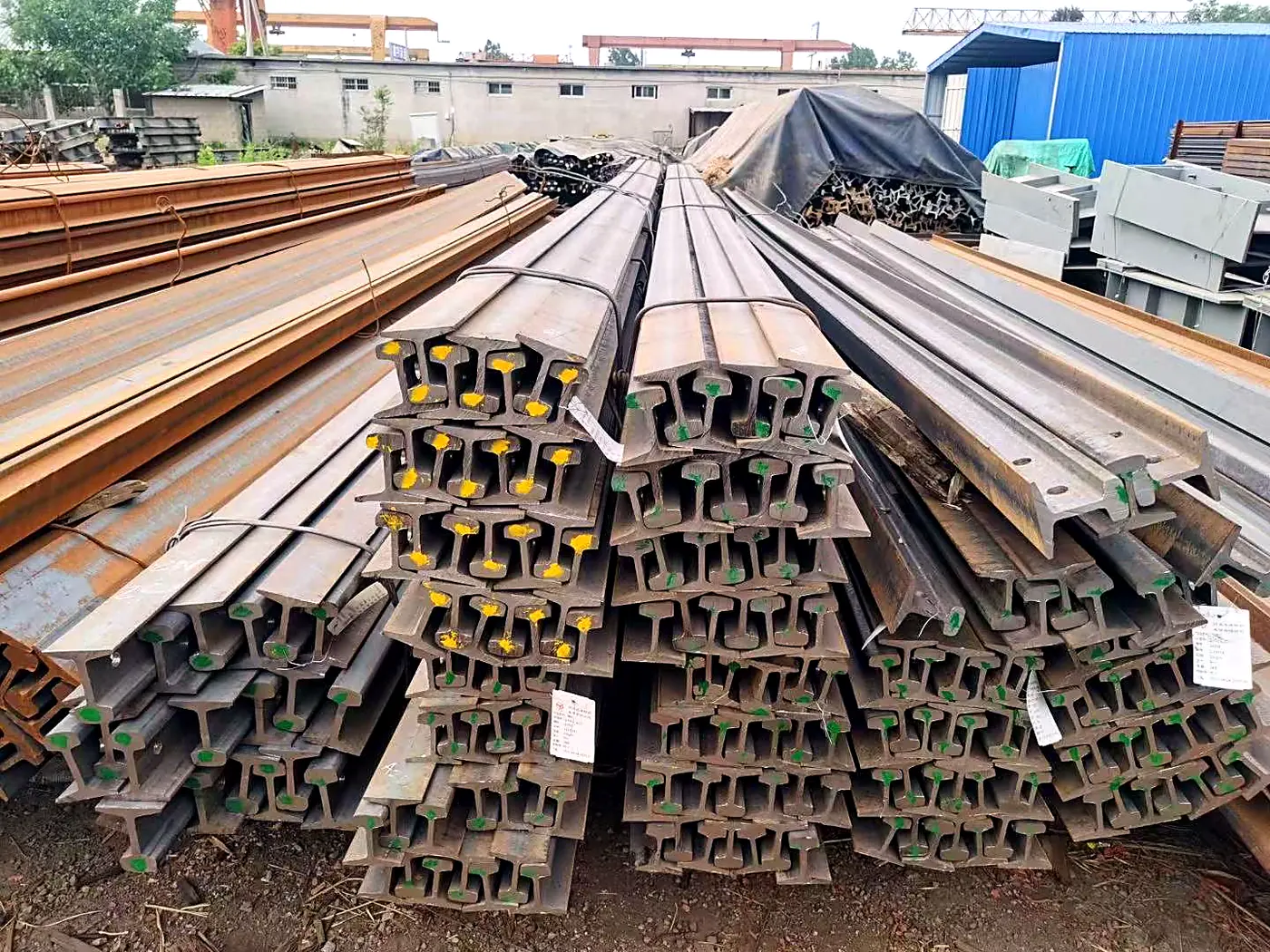
Our control: Every bundle is tagged by section, grade, heat number and length, and packed in the sequence of your requisition where the order allows. The section and mass per metre are shown on the bundle label so a check at the receiving bay does not need a tape measure and a standard.
Our Supply & Manufacturing Advantages
- Heavy and light rail from one supplier — Sections from 8 kg/m to 75 kg/m in a single order, so a project that needs a heavy main line and light plant track is covered by one shipment and one set of certificates.
- Ends prepared to your joint bar — Fishbolt holes drilled to the joint bar drawing and ends cut or chamfered before shipment, so the rail can be laid and joined without site drilling and the risk of a wrongly drilled web.
- Grade verified on the certificate — U71Mn supplied to the specified chemistry range with tensile strength, elongation and hardness reported on the mill test certificate for every heat.
- Lengths matched to the track — Heavy rail at 12.5 m and 25 m and light rail at 8 m and 12 m as standard, with cut lengths to your track layout where the order calls for them.
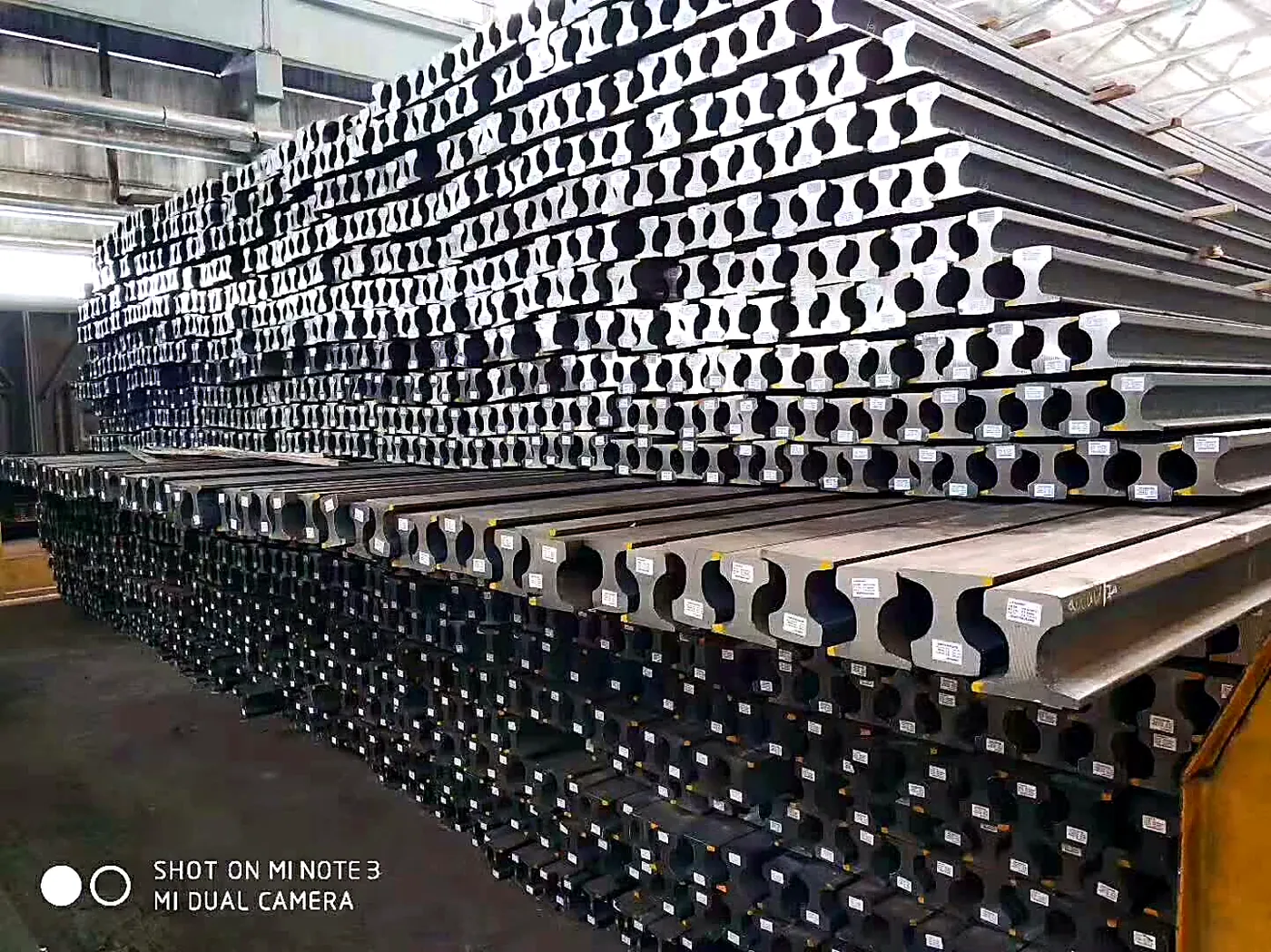
- Export packing for long sections — Bundled, strapped and supported along the length, loaded in bundles or as a bulk parcel, with lifting points marked so the rail is not bent during handling.
- Documented and traceable — EN 10204 3.1 mill test certificate with heat number, chemistry and mechanical properties for every heat, with third-party inspection available before loading.
Packaging, Delivery & Payment
- Packing: loose in bulk vessel, or bundled and containerised to your requirement. Galvanized and coated products get VCI paper, waterproof wrapping and edge protection. See our export packaging methods.
- Availability: both stock and custom production. Tell us the specification and we will confirm the route.
- MOQ: no strict minimum — one ton can ship.
- Lead time: stock dispatched to port within 3 days; orders needing export packaging about 1 week; custom production quoted per product.
- Payment: stock — 10% deposit, balance before shipment; custom production — 50% deposit, balance before shipment.
- Documents: EN 10204 3.1 mill test certificate with every shipment; third-party inspection (SGS / BV) on request.
Frequently Asked Questions
What is the difference between heavy rail and light rail?
The difference is mass per metre and therefore the load the rail can carry. Heavy rail is generally 38 kg/m and above and is used for railway main line, metro and heavy industry track, with 43, 50, 60 and 75 kg/m as the standard sections. Light rail runs from 8 kg/m to about 30 kg/m and is used for mine haulage, narrow gauge, workshop and temporary track. A heavier rail takes a higher wheel load and usually gives a longer service life, at a higher cost per metre.
What is U71Mn steel and what are its equivalents?
U71Mn is the standard Chinese high-carbon rail steel, with about 0.71 per cent carbon and 1.2 per cent manganese, giving a minimum tensile strength of 880 MPa and a hardness of 260 HBW or more. It is comparable to EN 13674-1 R260, AREMA 115RE and ISO 5003 rail steels, and is the grade most Chinese rail is produced in for both railway and crane rail service.
Which rail section should I use for a given axle load?
As a general guide, 8 to 24 kg/m light rail suits mine cars, trolleys and light industrial track; 38 and 43 kg/m suits industrial railway and yard work; and 50 and 60 kg/m is used for main line and metro track, with 60 kg/m being the common specification for metro. Send us the axle load, the track gauge and the curve radius and we will confirm the section and the length.
Can rails be supplied with the fishbolt holes drilled?
Yes, and we recommend it. Send the joint bar drawing or the hole pattern with the order and the rails arrive drilled to that pattern, with the ends cut square or chamfered as specified. Drilling in a controlled workshop gives a clean, correctly positioned hole, whereas a hole drilled inaccurately on site weakens the rail web and will not match the joint bar.
Can steel rail be welded into longer strings?
Yes, rail is welded into long strings indefinitely by flash butt welding in a depot and by aluminothermic welding on site. The rail steel supplied is suitable for both processes. Where welded track is planned, confirm the section and grade at the enquiry stage so the welding procedure and the rail specification are matched.
Who supplies steel rail from China for export?
We do. Rail in U71Mn is sourced from major Chinese mills and shipped with an EN 10204 3.1 mill test certificate showing heat number, chemistry and mechanical properties. Send the section, grade, length, quantity and any hole pattern, and we will confirm availability, end preparation and lead time.
Do you have a minimum order quantity and what is the lead time?
There is no strict minimum and one ton can ship, though rail freight economics favour a full container or a bulk parcel and we will tell you where the break point lies. Common sections reach the port in about 3 days; orders requiring drilling, cutting to length or export packing take about one week.
How is rail packed and shipped?
Rail is bundled and strapped with lifting points marked, supported along its length with bearers, and protected against bending during handling and stowage. It is shipped in bundles for container or break-bulk loading depending on the quantity and length, with the bundle labels showing section, grade and heat number.
What documents come with a rail shipment?
An EN 10204 3.1 mill test certificate with heat number, chemical composition and mechanical properties, plus the commercial invoice, packing list and certificate of origin. Inspection by SGS or BV can be arranged before loading if your project requires it.
Request a Quotation Export Packaging